
Disclosure: Buytoplab is reader-supported. If you buy through links on this page we may earn a small commission at no extra cost to you. We never accept payment for a ranking or a review, and we publish the downsides as plainly as the upsides. How we rank products.
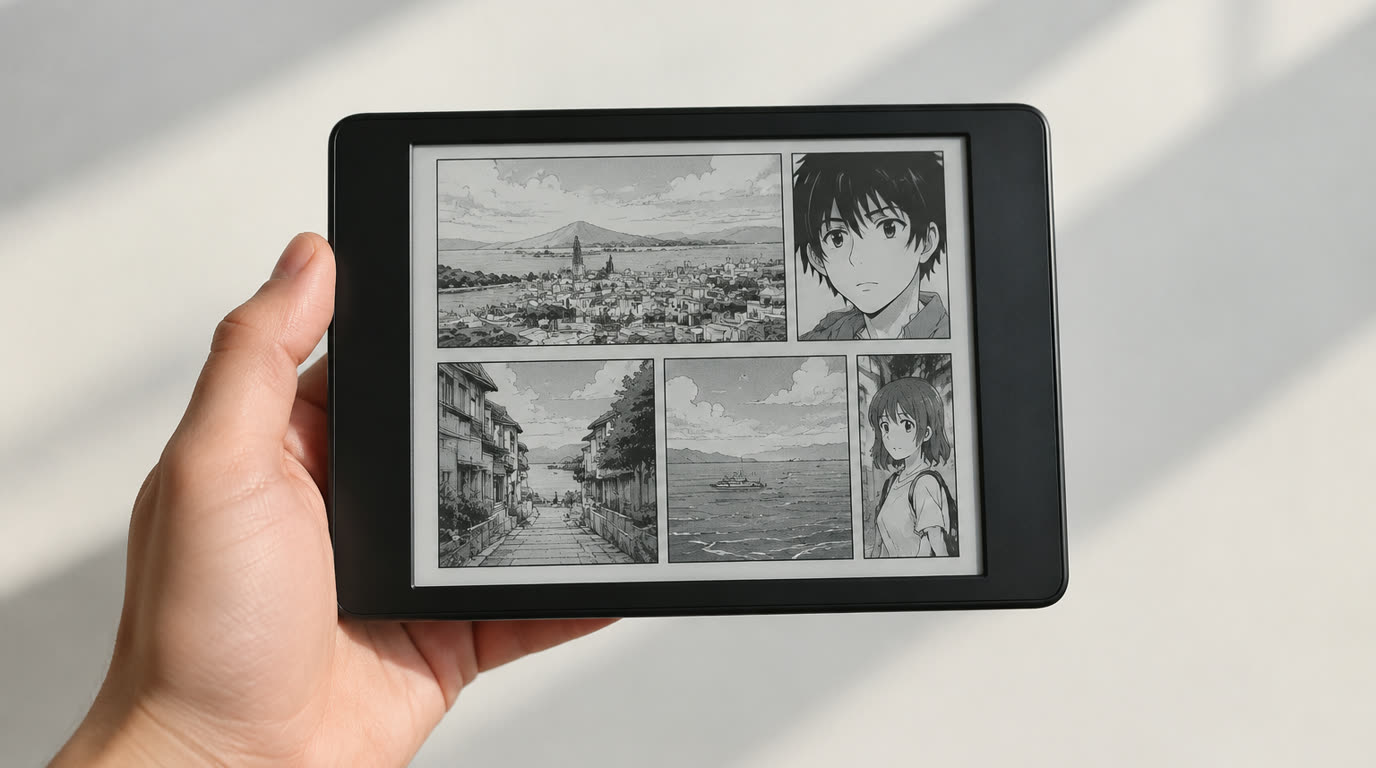
Spend this, not more: $150-350 is the honest window for a comics-first e-reader in 2026. That range covers a 7 inch or larger panel-friendly screen, a warm front light for colour work, and enough storage for a full series offline. Under $150 you are usually looking at a 6 inch screen built for novels, where panels get scaled small and the margins disappear.
Quick answer:
- Best overall: Kindle Paperwhite Signature Edition (~$170) – the 7 inch glare-free screen and warm front light handle both black-and-white panels and colour washes, and the store ecosystem delivers comics with panel-border mode
- Best for colour art: Kobo Libra Colour (~$230) – a full-colour front light makes colour-critical series readable in a way every monochrome e-reader cannot, and it handles EPUB comics natively
- Best value: Kindle Basic (~$120) – the cheapest way to read a long black-and-white series without glare, and the 16 GB model holds a full shelf of volumes
- Best for manga: Kindle Scribe (~$340) – a larger screen with a warm light is what makes dense right-to-left layouts and fine line work legible, and the storage suits a whole library
How much should you spend? The reason to spend over $150 on a comics e-reader is panel size, not processing power. A 6 inch screen built for prose will show a comic page at a size where gutters and small side panels become guesswork, and no software fixes that. Above about $350 you are into colour-technology tiers that only matter for colour-critical series, which is a real but narrow use case, and for general reading any of these does the job well.
First: Answer These 3 Questions
- Is an e-reader better than a tablet for comics? For long sessions and black-and-white series, yes, because the screen is matte and front-lit, which removes glare and is far easier on the eyes than a glossy tablet at full brightness. A tablet wins on colour fidelity, on the size of panel detail you can zoom into, and on apps, and it is the better choice if your library is mostly colour art rather than ink.
- What screen size do I need for comics? Seven inches is the practical minimum, and larger is better for dense layouts. A 6 inch screen is fine for prose and marginal for comics, because the device has to fit a whole page plus your preferred margins, and every extra fraction of an inch is panel size. Manga and dense superhero layouts want the largest screen you can carry.
- Do I need colour for comics? Only for specific series. The large share of comics in terms of volume are black-and-white ink, which every monochrome e-reader here handles well and cheaply. Colour matters for art books, westerns and manga colour editions, and for those a colour-front-light model is the only real option, since colour-filtered panels cost you resolution and brightness.
5 Checks Before You Buy
| Check | Target | Plain English |
|---|---|---|
| Screen size | 7 inches or larger for comics | This is the one spec that cannot be worked around. A 6 inch screen at a typical page-plus-margins zoom is where small panels and speech in gutters start becoming unreadable, and the fix is a bigger device rather than a different setting. |
| Front light warmth | Adjustable warm setting, not fixed white | A warm setting matters more for evening reading than for comic art specifically, but it is also the difference between a device you read for two hours and one that gives you a headache. Fixed-white-only models are a poor match for late sessions. |
| Greyscale contrast on dark panels | Dark blacks without grey wash | Comic art leans heavily on solid black fills and heavy shadow. Displays with a raised black level turn those panels into flat grey, and published display measurements for this class are worth comparing before you buy, because the difference is obvious on a page of heavy shadow work. |
| Panel border mode | Store option to fit page plus margins | Comic files are images with no reflow, so a store that crops to the screen edge is removing art at the gutters. Panel-border or fit-page display is the single most useful reading setting for this format, and not every store offers it. |
| Storage for offline series | 16 GB and up for a full shelf | Comic volumes are large image files, and a typical trade runs well over 100 MB. A 16 GB device holds a substantial shelf once the operating system takes its share, while an 8 GB model starts deleting books after a handful of volumes. |
2026 Top Picks (By Specs, Owner Reports & Price, Not Paid Placement)
Kindle Paperwhite Signature Edition – Best Overall
Price: ~$170
Why: The 7 inch glare-free panel, the warm front light and a page-plus-margins reading mode combine to make both ink-heavy black-and-white series and colour washes comfortable, and the store is the most reliable at delivering comics in a layout that keeps the gutters intact.
Honest take: The Signature Edition costs meaningfully more than the base Paperwhite for features that mostly matter if you write notes, and the warm light on this generation is a modest change rather than a transformation. Downside: It is monochrome, so colour-critical series are not served, and the store is the most locked-in of the options here, which matters if you read across ecosystems.
Kobo Libra Colour – Best for Colour Art
Price: ~$230
Why: A full-colour front light is the only way to read colour comics well on an e-ink screen, and this is the most established device doing it, with native support for EPUB comics and a page-plus-margins mode that keeps the panel grid intact.
Honest take: Colour front-light e-ink is a thinner technology than colour LCD, so saturated art looks flatter than on a tablet, and the device costs more than the monochrome competition for that compromise. Downside: Slower page refresh on heavy full-colour pages, and a closed store plus side-loaded library means comic sourcing is less convenient than on a tablet.
Kindle Basic – Best Value
Price: ~$120
Why: For black-and-white series read in long sessions, the glare-free front-lit screen at this price is the cheapest way to avoid the fatigue of a glossy tablet, and the 16 GB version holds a long shelf of volumes offline. Panel size is the trade, and it is a real one on dense layouts.
Honest take: The 6 inch class screen is the reason this is the value pick rather than the best one, and on a page with many small panels you will be zooming more than you would on a 7 inch device. Downside: Storage and screen size both cap out sooner, so a reader who works through large colour or dense manga collections will outgrow it faster than the price suggests.
Kindle Scribe – Best for Manga
Price: ~$340
Why: The larger panel and adjustable warm light are what make right-to-left layouts and fine line work legible without constant zooming, and the storage suits a whole series downloaded at once for offline reading.
Honest take: At this price you are paying mostly for size, and the same reading comfort can be had for less if your library is conventional black-and-white westerns rather than dense art. Downside: It is the heaviest of the group to hold one-handed, and the notes-oriented hardware is not something every comics reader will use.
One-Line Decision Table
| Your situation | Pick this |
|---|---|
| Mostly black-and-white series, long sessions | Kindle Paperwhite Signature Edition |
| Colour art books and colour manga | Kobo Libra Colour |
| Reading a long shelf on a budget | Kindle Basic |
| Dense layouts where zoom ruins the page | Kindle Scribe |
Running Costs: What You Pay After You Buy
The purchase price is only part of the story. Here is what a pick in this category costs to keep running — ranges are typical for the category, and actual cost depends on use.
| Item | What it is | How often | Typical cost |
|---|---|---|---|
| Comics or graphic novels | Digital purchases or subscriptions | Per title | $5-20 per volume |
| Case or sleeve | To protect the panel and the finish | Once every 2-3 years | $15-30 |
| USB-C cable | Charging and sideloaded transfers | Once every 3-5 years | $10 |
| Screen protector | Optional, matte films exist | Once every 2-3 years | $10-20 |
| Storage expansion | For sideloaded libraries | Rarely needed | $0-40 |
Skip It If… (When Buying Nothing Is the Right Call)
This is the section most buying guides leave out. If any of these describe you, the honest advice is to keep your money.
- You read a few comics a year – a tablet already on your desk does this at no extra cost, and the colour fidelity is simply better.
- You want colour graphics, manga colour editions or art books as the main use – a colour tablet beats every e-ink option on saturation and on detail when zoomed.
- You already own a 6 inch e-reader that reads fine for prose – the comics use case does not retroactively make that device better, and buying a second reader is a real cost.
- You need to sideload a large existing library – store ecosystems differ in how they handle comic formats, and file conversion is a weekend project.
Sources & Data
This guide uses official specifications, published results from named review bodies and long-term owner reports. Featured sources (verified 2026-09-26):
- Open Library – ebook lending catalogue and reading formats
- Project Gutenberg – free ebook distribution and file-format compatibility
- W3C Web Accessibility Initiative – accessibility and legibility guidance for digital text
- RTINGS – independent display measurement methodology
- Comic-Con International – comic-format publishing and retail conventions
Table sizes, wattage and prices change; verify current specs at the manufacturer before you buy.
FAQ
Are e-readers better than tablets for comics For long black-and-white sessions, yes, because the matte front-lit screen has no glare and is easier on the eyes than a glossy tablet at full brightness. A tablet wins on colour, on app flexibility and on the detail you can see when zoomed in.
What is the best e-reader size for comics Seven inches or larger, with bigger being better for dense layouts and manga. A 6 inch screen is comfortable for prose and marginal for comics, because small panels and text in gutters get difficult to read at page-plus-margins zoom.
Do I need a colour e-ink for comics Only for colour-critical series such as art books, westerns and colour manga editions. Most comics by volume are black-and-white ink, which monochrome e-ink handles well and at a lower price. Colour-filtered panels cost resolution and brightness, which is why a colour tablet still looks better for colour.
Can I read comics on an e-reader without buying a tablet Yes, provided the store you buy from serves comics in a fit-page or panel-border layout, and the file format is supported. The practical check before buying is to confirm your specific series is available in that store with margins intact, because comic files are images and do not reflow.
Is 8 GB enough for comics It is tight. Comic volumes are large image files and an 8 GB device holds only a handful of a typical series once system storage is counted. If you read complete series, 16 GB or more is the sensible floor.
Real Pitfalls to Avoid
- Buying on resolution instead of size – a sharper 6 inch screen still shows small panels at a small size, and panel legibility is a size problem rather than a pixel problem.
- Forgetting panel-border mode – comic files are images, so a store that crops to the screen edge removes art at the gutters, and the setting is worth more than any hardware difference.
- Expecting colour LCD quality from colour e-ink – colour-filtered panels are a thinner technology, so a colour tablet still wins on saturation and on zoomed detail for colour art.
- Underestimating file size – a typical trade comic runs well over 100 MB, which is why an 8 GB device starts deleting volumes after a handful of titles.
Going deeper: The process behind every ranking here is set out on our how we rank products page. If you are still choosing a device rather than a size, best e-readers in 2026 covers the general market, and tablets in 2026 covers the side of the comparison where colour and apps win.
Update note: refreshed quarterly. Prices checked Sep 2026 – verify at checkout. Rankings based on published specifications, published review-body scores and long-term owner reports, not paid placement.