
Disclosure: Buytoplab is reader-supported. If you buy through links on this page we may earn a small commission at no extra cost to you. We never accept payment for a ranking or a review, and we publish the downsides as plainly as the upsides. How we rank products.
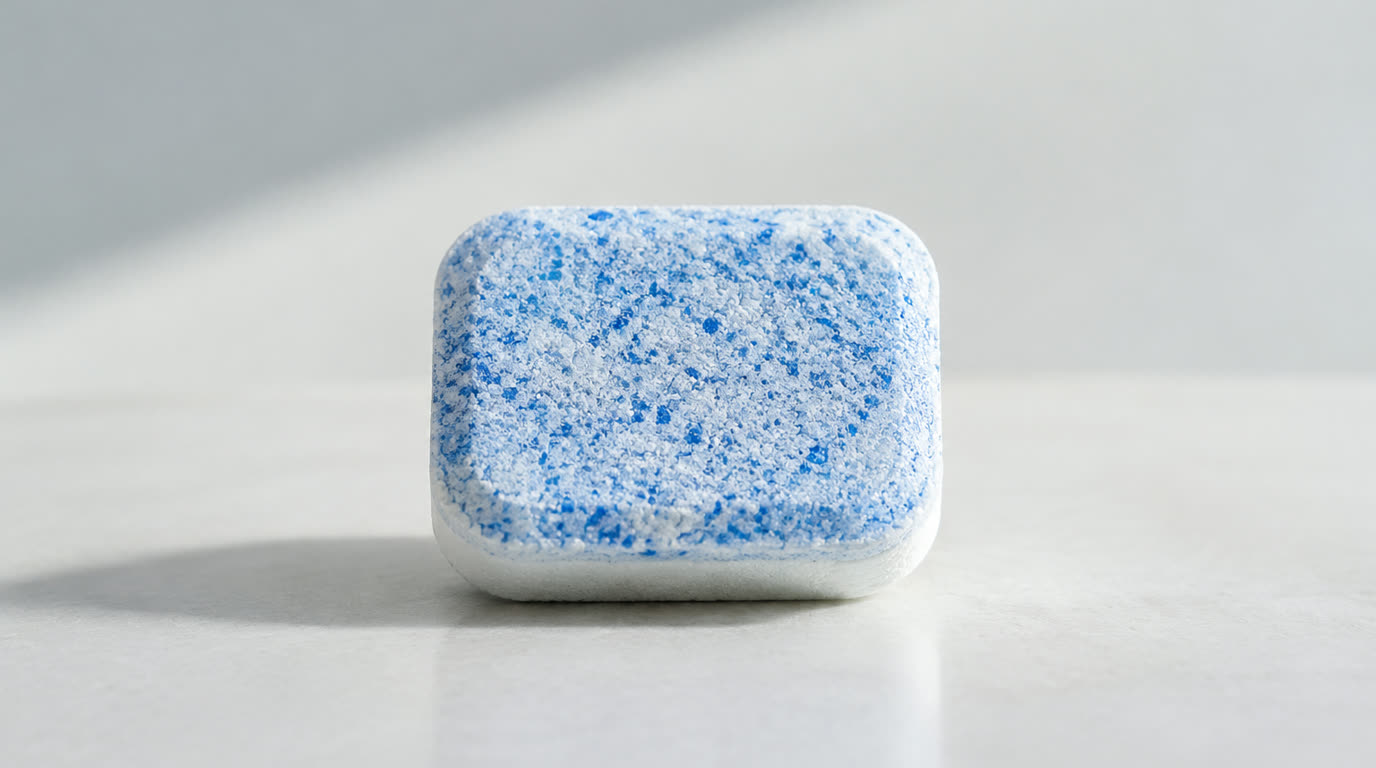
Spend this, not more: Every product here does the same basic job, so past about $20 you are buying brand recognition or a count, not more cleaning. The best-selling certified option is $12.55. The 24-count value tub is $22.45 and that is the ceiling worth paying.
Quick answer:
- Seventh Generation 6-count ($12.55): The best-selling washer cleaner in the category at 4,000-plus bought in a month, and it is one of the four with verified EPA Safer Choice certification.
- affresh 6 tablets ($17.94): The only one here that publishes a full ingredient table with a CAS number. Made by Whirlpool, and EPA-certified.
- Lemi Shine ($10.99): Citric acid, and EPA lists it under the Descalers sector rather than Appliance Cleaners. That one word changes what it is for.
- Glisten Washer Magic ($10.95): A liquid, not a tablet, 12 fluid ounces. The only one here whose maker states septic-system safety and HE compatibility.
- The Clean People 10-count ($14.99): The strongest non-certified listing volume here, 4.7 out of 5 from 695 ratings, and it appears nowhere in the EPA database.
- ACTIVE 24 tablets ($22.45): The best value per use if you have a large-capacity machine. Its own name says descaler, and that is not marketing fluff.
How much should you spend? Washer cleaner is a consumable with a tiny price spread, so cost per use is the only number worth computing. Divide the price by the number of treatments and you get between roughly $0.33 for the 24-count value tub and $2.99 for the single-pouch Lemi Shine. A six-pack of time-release tablets lands around $1.88 to $2.99 per unit. Because the spread is so wide and the product category is so interchangeable, buy the certified option if certification is your criterion and buy the largest count if price is. Do not pay more than about $20 for either, because nothing in this list publishes a performance figure that would justify it.
First: Answer These 3 Questions
- Do I even need a cleaning product if my machine has a self-clean cycle? Sometimes not, and the manufacturers are unusually clear about this. Samsung’s support documentation states that you do not need to add cleaner when running Self Clean, that the cycle takes about an hour on a top load and four hours on a front load, and that the reminder appears after 20 washes on a top loader or 40 on a front loader. LG’s guidance is the same shape: select TUB CLEAN, press start, and if a musty smell already exists, run it once a week for three consecutive weeks. So the honest order of operations is run the self-clean cycle first, and buy a product for the gasket, the detergent drawer, the drain filter and the parts the cycle cannot reach.
- What is EPA Safer Choice and does this brand have it? It is a per-product certification from the US Environmental Protection Agency, and it is the single most useful filter for this category, because the alternatives are unverifiable. We checked every product against EPA’s own certified-product database rather than against the packaging. The result is that EPA’s entire Appliance Cleaners sector contains 33 records covering 11 unique products, and exactly four of them are washing machine cleaners: affresh, Seventh Generation, Glisten and Lemi Shine. The other four in this list appear nowhere in the dataset as washer cleaners. That is a real, checkable dividing line, and it is not the same line as price or popularity.
- Are these the same thing as descaler? Some of them are and some are not, and this is where the labels actually differ. EPA classifies Lemi Shine’s washing machine cleaner under a Descalers sector, which is a designation, not a marketing adjective. One product in this list is sold as a washing machine cleaner and descaler tablets, which tells you the category and the job are not the same thing. If your problem is orange staining, dishwasher residue or a smell that comes from mineral buildup, you want something in the descaler category. If your problem is a mouldy gasket or a drawer full of residue, you want a cleaning product and the self-clean cycle. The EPA database sector tells you which one you are holding.
- Is it safe if I am on a septic system? Three of the eight carry a septic claim, and you should look for it rather than assume it. Glisten states its formula is safe for all washers including stainless steel and high-efficiency models and is also safe for septic systems. Seventh Generation states its packs are septic safe. Tide’s listing states a deep cleaning and septic safe formula, though that is a retailer listing rather than a brand-owned page, so it carries less weight than the other two. For the remaining five, no septic claim was found on any brand-owned page, and septic is a situation where a missing claim is not a neutral fact.
5 Checks Before You Buy
| Check | Target | Plain English |
|---|---|---|
| EPA Safer Choice, per product | Look it up in EPA’s database, not on the box | Four of these eight are certified as washer cleaners. Certification attaches to a specific product, so a certified brand does not mean a certified product. |
| What EPA calls it | Appliance Cleaners or Descalers | The sector in EPA’s own record tells you the intended job. Lemi Shine is filed under Descalers, which is not the same claim as cleaning. |
| Format | Tablet, pouch, pack or liquid | One of these is a 12-ounce liquid. Tablets and pouches are single use; nothing here is a multi-use solution you pour in. |
| Enzymes | Published ingredient list if you care | Only Seventh Generation publishes amylase and protease enzyme blends. A brand that does not publish ingredients cannot be compared on this axis. |
| Where it goes | Straight into the drum | Both Seventh Generation and LG specify the drum, not the detergent dispenser. Putting it in the drawer dissolves it before it reaches the residue you are targeting. |
| Dosing schedule | Three weeks of frequent use, then monthly | That is OxiClean’s published schedule, and LG’s advice for an existing musty smell is the same three-week cadence. |
8 Picks (By EPA Certification, Ingredients & Cost Per Use)
Seventh Generation Washing Machine Cleaner, Fragrance Free – Best Certified Pick
Price: $12.55 for 6 dissolvable packs on Amazon, in stock, with a subscribe-and-save price of $10.67
Why: The best-selling washing machine cleaner in the category, with over 4,000 bought in a month and a 4.6 rating from 474 ratings, and it is one of the four products here verified in EPA’s certified-product database under Appliance Cleaners with its UPC listed. It is also the only one that publishes a full ingredient list: sodium percarbonate with amylase and protease enzyme blends, both described as plant-based cleaning agents. Its own page states septic safety, that the packs work in hard water, and that the pack goes in the drum rather than the dispenser.
Honest take: Publishing the enzyme blends and getting a per-product EPA listing are two different kinds of transparency, and this is the only product in the group that does both. Its rating volume is also the largest of any here. Downside: The price is the lowest of the eight, which means you will run out sooner, and the packs are unscented, so this will not mask an existing odour for you. The brand’s own site still has no online price and only a store locator, so the Amazon listing is the only buying channel.
affresh Washing Machine Cleaner Tablets, 6 Count – Best Ingredient Transparency
Price: $17.94 on Walmart, in stock; a browse listing showed $11.98, so the price varies by seller
Why: The only product here that publishes a full ingredient table with a CAS number on its own page: sodium percarbonate listed as an oxidiser at CAS 15630-89-4, plus sodium carbonate, sodium acetate and glycol as processing aids, and fragrance. EPA’s database lists affresh Washing Machine Cleaner under Whirlpool Corporation in two sectors, Appliance Cleaners and Other Home Products, which is a stronger listing than most competitors have. Six time-release tablets.
Honest take: Named CAS numbers on a cleaning product is close to unheard of. It lets you look up what the compound actually is, which is more than any competitor offers. Downside: At $17.94 for six uses it is the most expensive per unit in the group apart from the single pouch, and the ingredient list does not say what the fragrance is.
Lemi Shine Washing Machine Cleaner – Best for Hard Water Deposits
Price: $10.99 for a single-use pouch on the brand site, in stock
Why: The active ingredient is citric acid, published on the brand’s own page, and the mechanism is stated plainly: the citric acid works to destroy the DNA of cells, killing germs on contact. What makes it worth a separate entry is that EPA’s certified-product database files it under the Descalers sector, not Appliance Cleaners, and lists a second record for the wipes variant in Appliance Cleaners. Two EPA records for one brand, in two different sectors, is the clearest illustration on this page that cleaning and descaling are different jobs.
Honest take: If your washing machine has orange or grey staining, this is the one in the group whose EPA classification matches the symptom, and that is a more reliable basis for choosing than any product description. Downside: A single pouch at $10.99 is the worst price per use here. The brand also sells a four-use pack with wipes, and the single pouch does not include the wipes it is normally bundled with.
Glisten Washer Magic Cleaner and Deodorizer – Best Liquid for Septic and HE
Price: $10.95 for 12 fluid ounces on Walmart, in stock
Why: It is a liquid, not a tablet, and the brand states its formula is safe for all washers including stainless steel and high-efficiency models and is also safe for septic systems. EPA’s database lists Glisten Washing Machine Cleaner under Summit Brands in the Appliance Cleaners sector. For a household on a septic system or running a high-efficiency machine, it is the only entry here with both claims on the brand’s own words.
Honest take: Septic and high-efficiency compatibility are two constraints that quietly rule out most of this category, and only one product in the group addresses both on its own page. Downside: It is a 12-ounce liquid at $10.95, which is poor value per treatment next to a 24-count tablet tub, and the active ingredient is not disclosed on the product page.
The Clean People Washing Machine Cleaner Tablets, 10 Count – Best Uncertified Volume
Price: $14.99 for 10 tablets on Amazon, in stock, with 6 and 20-count tiers at $11.99 and $24.99
Why: The strongest listing signal of any product here without certification: 4.7 out of 5 from 695 ratings, more than 800 bought in the past month, front and top load compatible, and unscented. The brand’s own page carries a live add-to-cart and matching tier pricing, which means the Amazon and brand-site prices agree rather than diverging the way they do for several competitors.
Honest take: Popularity is not certification, and we would not tell you otherwise. But 695 ratings and 800 monthly purchases is a real signal of repeat purchase, which is what a consumable actually lives or dies on. Downside: It appears nowhere in EPA’s certified-product database, and the listing does not claim septic safety, which is a gap that matters in a house with a septic system.
OxiClean Washing Machine Cleaner with Odor Blasters, 4 Count – Best Scheduled Dosing
Price: $7.59 for 4 pouches on Walmart, in stock; a second listing showed $10.97
Why: The only product here that publishes a dosing schedule you can follow without translating anything: use one pouch a week for three weeks, then continue at one pouch a month for maintenance. That is also exactly the cadence LG recommends for a washer that already has a musty smell. Church and Dwight’s better-known stain removers are EPA-certified, but this specific washing machine product is not in the database.
Honest take: Published dosing is more useful than it sounds, because the three-week-then-monthly structure is what turns a cleaning product into maintenance rather than a one-off. Downside: No EPA Safer Choice listing exists for this product, and the brand does not disclose the active ingredient on the product page.
Tide Washing Machine Cleaner with Oxi, 4 Count – Best Recognised Brand
Price: $7.92 for 4 powder packets on Walmart, in stock; 5-count at $11.49 and 3-count tablets at $14.99 also listed
Why: The label claim is the cleaning power of Oxi plus TAED, and the listing states that the TAED granules help to deep clean even in hard water, which is a specific mechanism claim rather than a general one. It is also the only powder format in the group. Tide is the most recognised detergent brand in the US, with 17 entries in EPA’s database, but all of them are laundry detergents and none is a washing machine cleaner.
Honest take: For a household that already buys Tide, this is the least behavioural change available, and the hard-water claim is the most specific on the label. Downside: P&G’s own brand page for this product returns a placeholder with no product content, so the only usable source is the retailer listing. There is no EPA certification for it, and powder packets can leave residue in a dispenser if used there.
ACTIVE Washing Machine Cleaner and Descaler Tablets, 24 Pack – Best Value Per Use
Price: $22.45 for 24 tablets on Walmart, in stock, unscented
Why: Twenty-four tablets makes it the cheapest per use in the group by a wide margin, roughly $0.33 a treatment against $1.88 to $2.99 for the six-packs. It is also, by its own product name, a combined cleaner and descaler for high-efficiency, front load and top load machines, which makes it the single answer if you want one product to cover both a mould problem and a mineral problem. Unscented.
Honest take: If you have a large-capacity machine or several machines, per-use cost is the whole argument and this wins it. The dual cleaner-and-descaler claim also matches how EPA classifies some competitors. Downside: It is absent from EPA’s certified-product database and the active ingredient is not disclosed. Twenty-four is a lot of tablets to commit to if you have not established that you need a monthly routine at all.
One-Line Decision Table
| Your situation | Pick this |
|---|---|
| You want the one you can verify rather than trust | Any of the four EPA-certified products, checked against EPA’s own database rather than the label |
| Your machine has orange or grey staining | Lemi Shine, because EPA files it under Descalers rather than under cleaning products |
| You are on a septic system | Glisten or Seventh Generation, the two that state septic safety on their own pages |
| Your machine already smells musty | OxiClean on its published three-weeks-then-monthly schedule, and run the self-clean cycle weekly for those three weeks |
| You have several machines or a large-capacity washer | ACTIVE 24-count, at roughly $0.33 a treatment |
| You want to publish nothing and buy nothing | Run the self-clean cycle first. Samsung’s own documentation says you do not need to add cleaner when running it. |
Running Costs: What You Pay After You Buy
The purchase price is only part of the story. Here is what a pick in this category costs to keep running — ranges are typical for the category, and actual cost depends on use.
| Item | What it is | How often | Typical cost |
|---|---|---|---|
| The product | Your actual recurring cost | Every 1-3 months | $7.59-24.95 per pack or tub |
| Electricity and water | A self-clean cycle is a long hot cycle | Monthly, if you use one | A few dollars; Samsung puts front-load Self Clean at about four hours |
| Replacement filters | Unrelated, but the usual reason people are in this aisle | Annual | Not a cleaning product, and not a substitute for one |
| A wasted tub | Buying 24 before you have a routine | Not a purchase | Free mistake; six packs cover three months of maintenance |
| Your own time | Gasket, drawer, drain filter, inlet filters | Monthly, per LG guidance | Ten minutes, and the part the cycle cannot do |
| A descaler | If your problem is minerals rather than residue | Occasional | Only worth buying if the staining is the actual symptom |
Skip It If… (When Buying Nothing Is the Right Call)
This is the section most buying guides leave out. If any of these describe you, the honest advice is to keep your money.
- You want a product that can go in the detergent dispenser. Both Seventh Generation and LG specify the drum. The dispenser dissolves the product before it reaches the residue.
- You are buying based on the word non-toxic. It is not a regulated claim and no agency verifies it. EPA Safer Choice is the thing that is actually checked.
- You assume a certified brand means a certified product. It does not. Four brands here have certified products and four do not have this product certified.
- You want to run it in a machine that does an automatic self-clean. Samsung’s documentation states plainly that no cleaner is needed during that cycle.
- You are treating these as interchangeable with dishwasher tablets. Different dissolution chemistry, different job, and the gasket is where the problem usually is.
- You are buying 24 of anything before you know you need a monthly routine. Start with six.
FAQ
Which of these are actually EPA certified? Four of the eight, and we verified this against EPA’s certified-product database rather than the packaging. The four are affresh, Seventh Generation, Glisten and Lemi Shine. The other four, OxiClean, Tide, The Clean People and ACTIVE, do not appear in the database as washing machine cleaners. OxiClean’s parent company does hold EPA certifications, but only for baby stain remover and versatile stain remover, not for this product. Certification attaches to a product, so a certified brand does not mean a certified washer cleaner.
Is a washing machine cleaner a descaler? Sometimes, and the labels genuinely differ. EPA’s own record files Lemi Shine’s washing machine cleaner under a Descalers sector, which is a formal classification rather than a marketing word. One product in this guide is sold as a washing machine cleaner and descaler combined. So the honest position is that some of these are descalers, some are not, and the EPA database sector is the most reliable way to tell. If your symptom is mineral staining, that is the criterion to filter on.
Do these work if I have a self-cleaning cycle? The self-clean cycle is for the drum, and a product is for the parts it cannot reach. Samsung’s documentation states that you do not need to add cleaner when running Self Clean, that it takes about an hour on a top load and four hours on a front load, and that the reminder appears after 20 or 40 washes. LG recommends cleaning the drain pump filter, detergent dispenser, inlet filters and door gaskets when doing a monthly tub clean. That split is the useful part: the cycle for the tub, the product and a cloth for the gasket, the drawer and the filter.
Where does the tablet actually go? Straight into the drum, per both Seventh Generation and LG. Seventh Generation’s own instruction is to add one pack to the washer drum and not to place it in the dispenser, and LG says to place the tub cleaning tablet directly into the drum. The reason is mechanical: a dispenser is designed to be flushed with each load, so a slow-release tablet sitting there dissolves early and never reaches the buildup you are targeting.
Is it safe to use if I have a septic system? Three of the eight make that claim, and you should look for it rather than infer it. Glisten states its formula is safe for all washers including high-efficiency models and is also safe for septic systems. Seventh Generation states its packs are septic safe. Tide’s listing states a septic safe formula, which is a retailer listing rather than a brand-owned page. For the remaining products, no septic claim appears on any brand-owned page, and where septic is involved a missing claim is not a neutral fact.
Which is the cheapest per use? The 24-count unscented tablet tub at $22.45, which works out to roughly $0.33 a treatment. The six-packs work out around $1.88 to $2.99 a unit, and the single Lemi Shine pouch is $10.99 for one use. That gap is large enough that the count is the only lever that matters, and it is worth being clear that the cheapest per use is the least certified option in the group.
Do enzymes matter, and which one has them? Only one product in this group names them. Seventh Generation lists sodium percarbonate with an amylase enzyme blend and a protease enzyme blend, describing both as plant-based cleaning agents. Two products publish something: affresh publishes a full ingredient table with CAS numbers, which is the most detailed disclosure here, and Seventh Generation goes further by naming the specific enzyme blends. The remaining products publish no ingredient list at all, which means you cannot compare them on this axis. Be careful with what enzymes are claimed to do: amylase and protease break down starch and protein, which is a cleaning function. We found no brand page claiming pet-hair removal for any of these products, so it should not be a reason to buy one.
Why is there no Cascade washer cleaner in this list? Because Cascade does not make one for the US market. Its product range is dishwasher pods, gel and powder detergent, dishwasher rinse aid and dishwasher additives, and none of it is for washing machines. That is worth stating because a lot of readers assume the two cleaning categories are the same, and the same reasoning rules out Blueland and Dropps, which are also dishwasher and laundry only.
Sources & Data
This guide uses EPA’s Safer Choice standard, its certified-product database and its ingredient criteria, the FTC’s health-claims guidance, and each manufacturer’s published product info. Every entry below was relied on for a claim in this article (links verified 2026-09-28):
- EPA: Search Products that Meet the Safer Choice Standard — the certified-product database used to check each specific product name, filter product category to Laundry / Automatic Washer Cleaners or similar
- EPA: Safer Choice Standard and Criteria — the standard text behind the label, and the statement that the label applies to products rather than entire brands
- EPA: FAQs on Safer Choice — the policies referenced in this guide about which product types can carry the label
- EPA: Safer Choice Criteria for Enzymes and Enzyme Stabilizers — what the enzyme criteria look for, used to distinguish enzyme from non-enzyme products
- EPA: Safer Choice Criteria for Colorants, Polymers, Preservatives — the criteria used to evaluate dyes and polymers in the certified products discussed here
- EPA: Safer Chemical Ingredients List — the list a petition asked EPA to reconsider PVA against, referenced in the film-chemistry discussion
- FTC: Health Claims advertising guidance — why words like non-toxic and eco-friendly are not regulated claims and cannot be verified
Certification status, ingredient lists, standard numbers and prices change. Re-verify the current EPA database entry, the current ingredient list and the current product page before you buy.
Real Pitfalls to Avoid
- Reading a brand-level EPA certification as a product-level one. Four brands here are certified for other products and not for this one. The check takes a minute in EPA’s database.
- Trusting the word non-toxic or eco-friendly. Neither is a regulated claim and neither is verified by any agency.
- Putting the tablet in the detergent dispenser. Both Seventh Generation and LG specify the drum, and the reason is that the dispenser flushes on every load.
- Buying a cleaner when the self-clean cycle is what you need. Samsung’s own documentation says no cleaner is required for it.
- Buying a descaler for a mould problem, or a cleaner for a staining problem. EPA’s own sector classification is the way to tell these apart.
- Treating enzymes as a pet-hair feature. Amylase and protease are for starch and protein breakdown, and no product here has a verified pet-hair claim.
- Assuming an unscented product will neutralise an existing smell. Unscented means it will not mask anything, which is exactly what you want to know.
- Buying the largest count before you have a routine. Six covers three months of monthly maintenance, and the extra tablets do not improve the cleaning.
Going deeper: The habit that makes this category verifiable is worth carrying into the rest of the laundry room: check the certifying body instead of the badge. It is the same discipline behind dishwasher pods, where EPA Safer Choice approvals attach to individual products rather than to a brand, and where one widely recommended pod is not certified at all. For the washing-machine side of the same job, our carpet cleaner guide breaks down the same cost-per-use calculation for equipment you buy once. The ranking method behind every category is written up in how we rank products.
Update note: refreshed quarterly. Prices checked Sep 2026 – verify at checkout. Rankings based on published manufacturer specifications, the official EPA Safer Choice certified-product database, published manufacturer cleaning guidance and public prices, not paid placement.