
Disclosure: Buytoplab is reader-supported. If you buy through links on this page we may earn a small commission at no extra cost to you. We never accept payment for a ranking or a review, and we publish the downsides as plainly as the upsides. How we rank products.
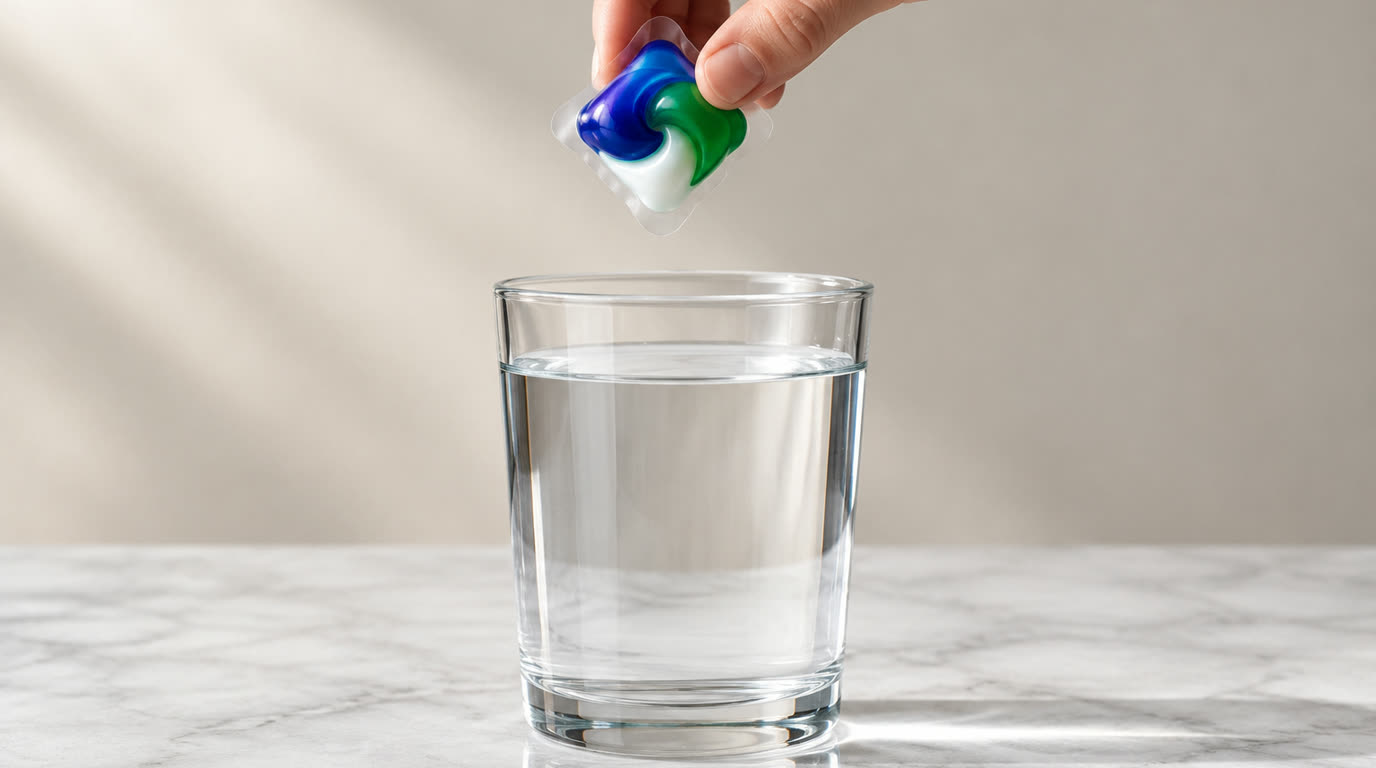
Spend this, not more: The jump from a $10 box of pods to a $30 box is almost always count, not quality. Above $0.50 a load you are paying for a subscription or a tin.
Quick answer:
- Seventh Generation Free & Clear Packs: Enzyme-based, 20/45/72-count, and the only one here that publishes its full ingredient list on its own page along with four separate certifications. Septic safe per the label.
- Dropps UltraWash Plus (64ct, $29.95): $0.46 a pod with a 100% curbside-recyclable paperboard box instead of a plastic tub. That is the whole argument for it.
- Dropps UltraWash (64ct, $25.00): Same brand, $0.39 a pod. The cheaper tier of the same formulation line.
- Cascade Complete (78ct, $19.94): The mainstream value option, 4.7 out of 5 from 9,646 Walmart ratings, and the listing states it is phosphate free.
- Cascade Free & Clear ActionPacs: The one Wirecutter put at the top of its dishwasher detergent list. Note it contains liquid boosters, which is exactly the category EPA’s packet policy names.
- Blueland Dishwasher Tablets: A naked compressed tablet in a reusable metal tin with no PVA film at all. The only real answer if the film is what bothers you.
How much should you spend? Pods are a consumable, so the only number that matters is cost per load, and it varies more from pack size than from brand. Every pod product below lands between roughly $0.39 and $0.46 a load at its listed count. Subscriptions and multi-packs move that number by another 10% or so. Spend above $0.50 a load and you are paying for a tin, a fragrance, or a bundle rather than for cleaning, and none of the three is measurably better on the published specifications.
First: Answer These 3 Questions
- Is it actually safe to have pods in the house? The honest answer is that the format has a documented hazard profile, and the risk is concentrated in one place: ingestion by young children. EPA’s own Safer Choice FAQ states that a number of exposure and poisoning incidents, including fatalities, have been attributed to this sector, and that incidents are disproportionately more frequent than for similar non-packet products. Nearly all of that data comes from laundry pods, which are more brightly coloured and more liquid. Dishwasher pods share the same soluble-film format and were included in a 2016 study that found dishwasher pod exposures rising 14% among children under six.
- What does the EPA label actually mean for a pod? This is the part most buying guides get wrong. EPA does not allow the Safer Choice label on liquid detergent packet products, meaning products in a soluble film, citing poisoning and fatality incidents and pointing to the ASTM D4359-90 definition of liquid versus solid packet contents. That definition is why some solid enzyme packs in film can still carry the label, and why others cannot. The defensible conclusion is that the badge alone does not tell you the format was reviewed, so check the EPA certified-product database directly and filter by Automatic Dishwasher Detergents.
- Do I even need pods? Powder is the cheaper and the safer-of-mind option, and it is what Wirecutter rated the best-performing powder at, at the cost of the highest price per load in its powder group. A naked tablet is the middle ground. Pods buy you pre-measured dosing and no residue on your hands, which is a real convenience and a real reason people keep buying them.
5 Checks Before You Buy
| Check | Target | Plain English |
|---|---|---|
| Cost per load | Under $0.50 | Divide the box price by the count. Multi-packs and subscriptions cut this; single small boxes almost never win. |
| Film chemistry | Know whether it is PVA/PVOH | Most pods are a synthetic water-soluble film. A naked tablet has none. Dropps states its film is PVOH and passes OECD 301 ready-biodegradability testing. |
| Certification, and of what | Formula vs packaging | USDA Certified Biobased and fragrance-free are separate claims from EPA Safer Choice. A brand can hold one and not the others. |
| Phosphates | Phosphate free | The 78-count Cascade listing states it is phosphate free, and Seventh Generation states its dishwashing products contain no phosphates. Both tie the reason to algae blooms and aquatic toxicity. |
| Hard water | Check whether you need a rinse aid | Seventh Generation’s own guidance is that for very hard water it recommends adding a rinse aid. That is a manufacturer telling you the detergent has a limit. |
8 Picks (By Published Certifications, Film Chemistry & Cost Per Load)
Seventh Generation Dishwasher Detergent Packs, Free & Clear – Best for Verifiable Ingredients
Price: 20, 45, and 72-count sizes; price varies by size and retailer
Why: The manufacturer states the formula is powered by plants and minerals with an enzyme-rich base, lists every ingredient on its own page including the synthetic water-soluble film, and displays four separate certifications: Leaping Bunny, EPA Safer Choice, USDA Certified Biobased, and fragrance free. It also states no phosphates, 90% plastic-free packaging, and septic safe.
Honest take: Publishing the full ingredient list next to the certification badges is the single most useful thing a brand can do, and it is rare enough to be the deciding factor here. Downside: The manufacturer’s own guidance is that very hard water needs a rinse aid on top, and the 20-count size is the worst value per load of anything listed.
Dropps UltraWash Plus Dishwasher Detergent Pods – Best Packaging
Price: $29.95 for 64 pods, which is $0.46 a pod, with 128 and 192-count tiers and a further 10% off by subscription
Why: The brand states the pods ship in a 100% curbside-recyclable paperboard box with no plastic pouches, jugs, or tubs, that the outer film is PVOH, a readily biodegradable water-soluble material, and that the formula is designed to work with septic systems. It also states compatibility with all standard dishwashers.
Honest take: Removing the plastic tub is a genuine, measurable reduction in packaging waste, and the brand publishes the date on each FAQ answer. Downside: $0.46 a pod is the top of this group’s range, and the per-pod price only improves if you buy 192 counts or subscribe.
Dropps UltraWash Dishwasher Detergent Pods – Best Value in a Boxed Pod
Price: $25.00 for 64 pods, which is $0.39 a pod
Why: The same brand and the same paperboard-box approach at a lower tier, stated as cutting through grease and stuck-on food. It is the cheapest per-load pod in this group by a clear margin.
Honest take: If your decision is purely cost per load inside the pod format, this is the number to beat, and the brand’s FAQ answers are dated and specific. Downside: It is the lower tier of the same line, so the plus version is the one with the two-scent and spot-free-glassware positioning.
Cascade Complete Dishwasher Pods – Best Mainstream Value
Price: About $19.94 for 78 pods at one retailer, roughly $0.26 a pod; 100-count listed around $38.15
Why: A 4.7 out of 5 rating from 9,646 ratings on the Walmart listing, an explicit phosphate-free statement, and a claim on the listing that skipping the pre-wash can save up to 15 gallons of water per load.
Honest take: On price per load this is the value answer, and a 9,646-rating sample is a real signal even if it is not a controlled one. Downside: That 78-count and 100-count price difference works out to nearly double the per-load cost for 28% more pods, so check the unit price rather than the sticker.
Cascade Free & Clear ActionPacs – Best Cleaning Pick, With a Label Question
Price: About $0.43 a load on a 47-count pack
Why: Wirecutter placed this at the top of its dishwasher detergent rankings, noting the pods are encased in a water-soluble PVA/PVOH film, that the liquid boosters in the top of the pod contain no dyes or chlorine bleach, and that it did the best job of neutralizing odors without being overpowering.
Honest take: The odor performance is the specific, tested claim that separates it, and it comes from a named review organization rather than from us. Downside: It is a multi-chamber pod containing liquid, which is precisely the product type EPA’s packet policy addresses, so do not assume the green claims on the box were reviewed in this format.
Finish Quantum Dishwasher Pods – Best Stain Claim
Price: 100-count box, price varies by retailer
Why: The listing positions it for no pre-rinse and for removing 24-hour dried-on stains and grease. Wirecutter’s testing placed it in the middle of its pod group rather than at the bottom, which is a reasonable outcome for a stain-focused formula.
Honest take: For heavily soiled pans this is the one with the most direct manufacturer claim, and the 100-count box is a reasonable per-load entry point. Downside: It did not lead Wirecutter’s pod rankings, so the stain claim is a positioning statement rather than a measured result.
Blueland Dishwasher Detergent Tablets – Best With No Film At All
Price: Sold in a reusable metal tin; a 110-count listing was seen at $5.66 on one delivery service
Why: A naked compressed tablet, so there is no PVA film to dissolve, in a reusable tin rather than a tub. Listed as free of fragrances and dyes and USDA Certified Biobased.
Honest take: If the soluble film is your actual objection, this is the only product here that removes the objection entirely rather than arguing about it. Downside: Wirecutter’s testing found these tablets are softer than competitors’ and that pieces broke off during handling, which released dust and triggered sneezing and asthma symptoms in the reviewer’s case. That is a handling argument, not a cleaning one.
Amazon Basics Dishwasher Detergent Pacs – Best Plain Budget
Price: 78-count box, price varies by retailer
Why: A mainstream own-brand option that ranked 9.0 out of 10 in Wirecutter’s dishwasher detergent review, which places it above several national brands in that particular testing.
Honest take: For a household that just wants a pod that works and does not cost much, an own-brand entry at this rating is a reasonable default. Downside: No manufacturer ingredient page was available to check certifications or film chemistry against, which is exactly the verification gap this article is about.
One-Line Decision Table
| Your situation | Pick this |
|---|---|
| You have a child under six in the house | Blueland tablets or a powder, not a pod. The ingestion hazard is the one documented, serious one. |
| You want to verify the formula yourself | Seventh Generation Free & Clear, because it publishes the full ingredient list |
| You want less packaging waste | Either Dropps line, in a paperboard box |
| You care most about odor | Cascade Free & Clear ActionPacs |
| You are on a septic system | Any product whose label states septic safe, which includes both Dropps lines and Seventh Generation |
| You have very hard water | Any of them, plus a rinse aid, which is the manufacturer’s own advice |
| Cost per load is the only thing that matters | Dropps UltraWash at $0.39, or Cascade Complete if the unit price holds |
Running Costs: What You Pay After You Buy
The purchase price is only part of the story. Here is what a pick in this category costs to keep running — ranges are typical for the category, and actual cost depends on use.
| Item | What it is | How often | Typical cost |
|---|---|---|---|
| The pod itself | Your actual detergent cost | Every load | $0.39-0.46 per pod across this group |
| Rinse aid | Recommended by some brands for very hard water | Every 2-4 weeks | A few dollars a bottle |
| A subscription | Dropps lists a further 10% off by subscribe and save | Monthly, cancellable | About 10% of the pod cost |
| A metal tin | Blueland’s reusable container | Once | Included; the tablet is the only refill cost |
| Rinse aid overuse | Foam and residue if you add more than the label says | Not a purchase | Free mistake, and a common one |
Skip It If… (When Buying Nothing Is the Right Call)
This is the section most buying guides leave out. If any of these describe you, the honest advice is to keep your money.
- You have a child under six who can reach the counter. That is the one situation where the format itself, not the brand, is the deciding factor.
- You are on a septic system and cannot find a product whose label states septic safe. Do not assume it.
- You already own a powder detergent that performs. Pods are a convenience purchase, not a performance upgrade.
- You are buying a 20-count box. Per load it is the worst value in the category and the pod is the part that expires.
- You are buying on the word non-toxic alone. That is not a regulated claim, and no agency verifies it.
FAQ
Are dishwasher pods safe for children? The soluble-film packet format has a documented ingestion hazard, and EPA’s Safer Choice policy states that poisoning and poisoning incidents including fatalities have been attributed to this sector, with exposures disproportionately more frequent than for similar non-packet products. Most of that data is from laundry pods. If a child under six lives in the house, a powder or a naked tablet removes the exposure route entirely. If anyone does swallow detergent, Poison Help in the United States is 1-800-222-1222.
What is the difference between a pod and a tablet? A pod is detergent enclosed in a single-dose water-soluble film, usually PVA or PVOH. A tablet is a compressed naked puck with no film, so there is nothing to dissolve. That is the whole safety and packaging difference, and it is also why a tablet can crumble during handling.
Do dishwasher pods contain phosphates? The brands here say no. The 78-count Cascade listing states it is phosphate free, and Seventh Generation states its dishwashing products contain no phosphates, tying the reason to algae blooms and toxicity for aquatic life. EPA also states that Safer Choice-certified products are free of inorganic phosphate builders.
Is PVA film an environmental problem? This one is genuinely contested, and we would rather say so than pick a side. A 2021 peer-reviewed study estimated that most PVA from detergent film survives wastewater treatment in the United States, while a panel convened through SciPinion concluded real-world degradation is likely far higher. EPA denied a 2023 petition to change PVA’s status on its Safer Chemicals Ingredient List, stating the petition did not demonstrate PVA fails the criteria. So the honest summary is: the film is designed to dissolve, whether it fully biodegrades is disputed, and the disclosure is what you can actually check.
Are pods better than powder? Wirecutter rated the best-performing dishwasher powder first among powders, and noted that its leading powder was also the most expensive powder it covered. Pods buy pre-measured dosing and less mess. Powder buys a lower per-load cost and no film to argue about.
How do I check whether a pod is really certified? Use the EPA Safer Choice certified-product search and filter the product type to Automatic Dishwasher Detergents. EPA’s own policy is the reason this matters: it does not allow the label on liquid packet products, and the distinction between liquid and solid packet contents is defined by ASTM D4359-90. A badge on a product photo is not the same as an entry in that database.
What is the cheapest way to buy dishwasher pods? Cost per load, not box price. Across the products here that runs $0.39 to $0.46 a pod at listed counts, and Dropps publishes tiered pricing where 128 and 192 counts cost less per pod than 64, with a further 10% off by subscription. Multi-packs and subscriptions are the only reliable lever.
Real Pitfalls to Avoid
- Treating a certification badge as a safety verdict. EPA’s own packet policy means the badge does not tell you the format was reviewed, and the badge may apply to the formula rather than the packet.
- Reading non-toxic as a regulated claim. It is not one, and no agency verifies it. Read the ingredient list instead, which brands in this group do publish.
- Storing pods within reach of a child. CPSC guidance is explicit that packets dissolve on contact with water, wet hands, and saliva, which is why dry hands and a closed cabinet are the entire mitigation.
- Assuming a soluble film fully biodegrades. The scientific record is genuinely contested, and the honest move is to prefer a naked tablet if that is the reason you care.
- Buying the smallest box because the sticker looks cheaper. Per-load cost on a 20-count box is the worst in the category, and pods do not keep indefinitely.
- Skipping a rinse aid on very hard water and blaming the detergent. That is the manufacturer telling you the formula has a limit, and the fix is a few dollars of rinse aid.
Going deeper: Pods are a consumable, so per-load arithmetic matters more than sticker price. Our guide to dish soap covers the hand-wash side of the same sink problem, and the ranking method behind every category is written up in how we rank products.
Update note: refreshed quarterly. Prices checked Sep 2026 – verify at checkout. Rankings based on published manufacturer specifications, published review-body scores and public prices, not paid placement.