
Disclosure: Buytoplab is reader-supported. If you buy through links on this page we may earn a small commission at no extra cost to you. We never accept payment for a ranking or a review, and we publish the downsides as plainly as the upsides. How we rank products.
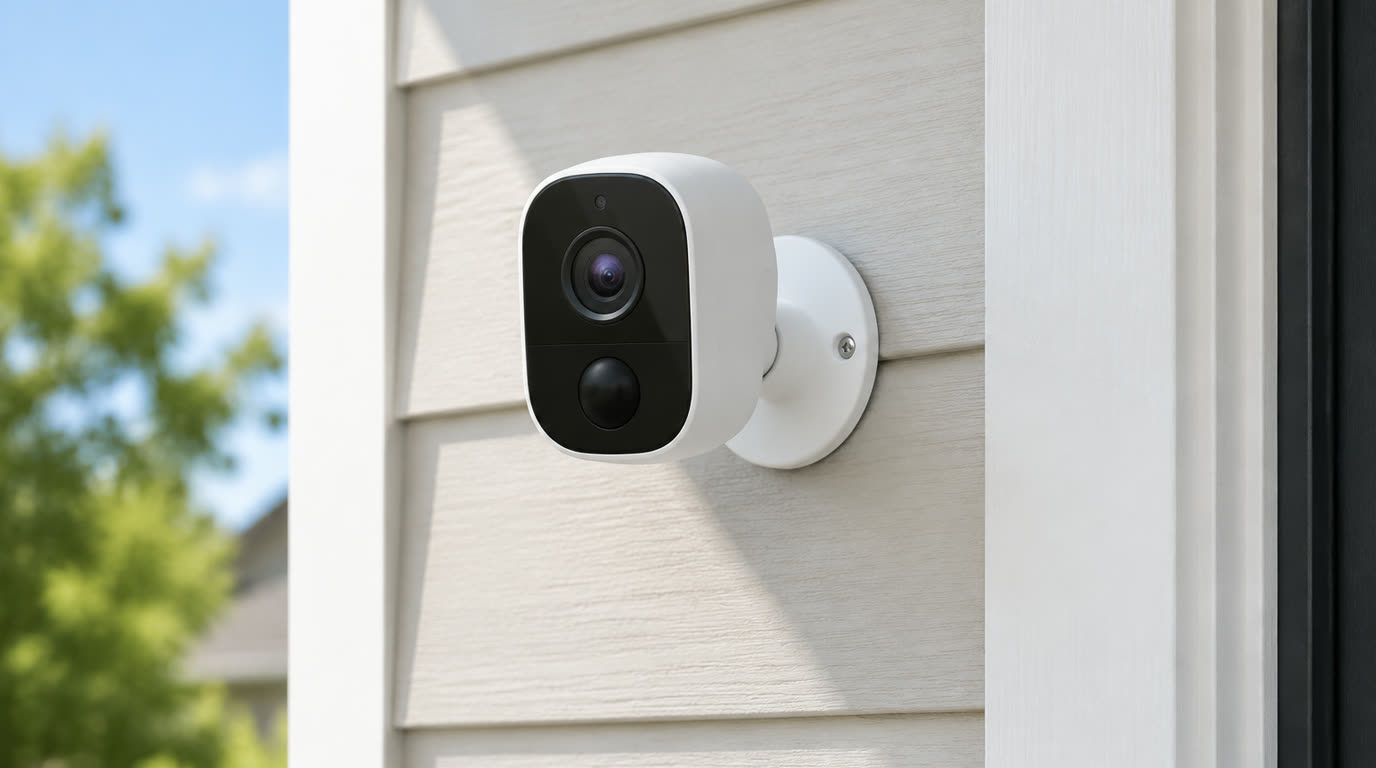
Spend this, not more: The honest spend check in this category is the second year. Every camera here costs $57 to $200 once. A subscription-first brand’s plan runs about $3-$6 a month, so the second year of any cloud plan passes the price of a whole camera. Put differently: the PoE wired Reolink at $99.99 plus a power adapter is the one-time cost of roughly four months of a mid-tier cloud plan, and the Lorex units ship the storage card in the box instead.
Quick answer:
- Reolink RLC-810A PoE 4K ($99.99): The wired workhorse: a 4K PoE camera the maker documents with RTSP, the protocol that lets you record to your own storage instead of a plan.
- Reolink Argus 4 Pro ($194.99): A 4K wireless model with two cameras spanning a 180-degree field, a solar panel in the kit and no cord to run.
- Lorex 2K Pan-Tilt Outdoor with 32GB ($169.99): The outdoor Wi-Fi option that ships the microSD card included, so local recording starts out of the box.
- Reolink Argus 3 Pro ($99.99): A 5MP wire-free camera with person detection on the camera itself, the cheapest solar-ready pick.
- Wyze Cam Floodlight v2 ($99.98): A floodlight replacement camera with motion-activated lighting, wired into the existing floodlight box, records locally.
How much should you spend? There are two honest cost models here and they do not overlap. A wired model, like the PoE Reolink at $99.99, is cheap to run and expensive to install: an Ethernet drop and a PoE injector or switch, then zero cost per month and your own recorder. A wireless solar camera, like the Lorex outdoor pan-tilt at $169.99 with a 32GB card included or the Reolink Argus 4 Pro at $194.99, mounts anywhere with Wi-Fi but runs on battery cycles. The middle tier is brand pricing: the Reolink TrackMix at $199.99 is the pick if what you want is a camera that follows a subject automatically, and no plan on this page asks for one. Whatever zig you choose, the recurring cost of every pick is a card cycle, a solar recharge or a floodlight bulb rather than a subscription.
First: Answer These 3 Questions
- What does RTSP actually buy on a no-subscription camera? It is what turns the camera into part of your system. Reolink documents RTSP on both 4K PoE models, which is the protocol that lets the camera’s video stream travel to software or a recorder you own rather than to a brand’s cloud. That is the deciding difference between a camera whose recordings you own and one that gives you clips inside its app until the plan ends. Any pick without that protocol still works, it just routes you back to the maker’s app, so read the specification before you decide which storage you want.
- Do PoE cameras need a subscription? None of the picks here do, and the PoE tier is the one that makes that claim strongest. Power over Ethernet means one cable carries power and data to the camera, so the camera records 4K video to storage you point it at and there is no subscription in the path. Reolink’s own pages for both PoE models state the RTSP protocol, and Reolink’s line sells on a local-storage posture. The honest tradeoff is wiring: a PoE camera is the one that works only after the wall is drilled and the cable run.
- What does a card slot buy when the internet is down? The recording itself. Every camera here records to a microSD card it can read and write locally, so the footage does not live behind an account plan. The Lorex pick ships a 32GB card included with its pan-tilt outdoor model, the indoor counterpart ships a 16GB card, and the Reolink quotes its card size separately in the spec. The number to remember is cards versus cloud: a 32GB card in the box is a purchase that is done, and the same three months of cloud on a subscription-first brand is a recurring bill you can turn off only by downgrading the camera.
- Why did Ring, Nest, Arlo and Tapo not make this list? Because their recording stories are subscription-shaped rather than card-shaped. Ring doorbell and camera lines record event video behind a Ring Protect plan. Google Nest cameras store event history in Google’s cloud with snapshots rather than a local card, and their no-fee tier is a preview tier, not a recording one. An Arlo camera records only with the plan for many event types. A TP-Link Tapo camera is good hardware but its own product page publishes no price, so the honest comparison is not available from the maker directly. If a subscription is the gate, or the price is unquotable, the camera does not fit the page.
- What resolution is worth paying for outdoors? The honest answer is that detail is where the spec pays, and the difference shows up at the license plate and the face. A 2K pan-tilt like the Lorex outdoor at $169.99 gets a full driveway in frame and reads a face at the door. A 4K PoE bullet like the Reolink RLC-810A at $99.99 has more sensor pixels for the same framing, which is what you want for the edge of a registered plate at close range. A dual-lens 4K model like the Argus 4 Pro stretches 4K over a 180-degree field of view, so the resolution is per-scene rather than per-file. Do not buy a camera on the resolution alone: the wiring and the storage protocol decide whether the footage is usable.
5 Checks Before You Buy
| Check | Target | Plain English |
|---|---|---|
| Resolution | At least 2K outdoors | 2K indoors reads faces; 4K PoE or a dual-lens Argus adds the detail past the porch. The spec number is only the top of the decision. |
| Power | PoE, floodlight wiring or battery | PoE is the cheapest month-to-month, the floodlight camera reuses a hardwired light circuit, and battery models mount anywhere with no drills. |
| Local storage | A card the camera can write | Lorex ships a 32GB or 16GB card in the box. Reolink quotes its cards on spec. The card is not the same thing as the slot. |
| RTSP / ONVIF | Your recorder, not theirs | RTSP is the protocol that feeds footage into software you own. Reolink’s PoE line documents it; check the spec page before you pick. |
| Person detection | Where the detect runs | Some of it is on the camera, some of it rides on a plan. Wyze’s smarter alerts are subscription features; Reolink’s detection is described in the camera itself. |
| A real dollar price on the maker’s page | Quotable, add-to-cart, honest | If the maker’s page has no price, the comparison is unquotable. That is why the newest Tapo camera sits out of this ranking. |
8 Picks (By Power, Local Storage & Price)
Reolink RLC-810A (4K PoE) – Best Wired Workhorse
Price: $99.99 on the maker’s page, in stock.
Why: It is the cheapest 4K camera on the page and its specification documents the RTSP protocol, which is the piece that lets you record footage to your own server rather than a brand’s plan. PoE means one Ethernet cable carries both the power and the data, so a front-door install is a wire run and not an electrician job, and Reolink’s local-storage posture is the reason the brand leads the wired tier.
Honest take: RTSP support is real but it is a feature you have to use rather than one you get by default: it needs a recorder or software that accepts streams. The 4K sensor reads faces, motion events are processed by the camera rather than in a cloud plan, and PoE installation is a drill job rather than a mounting one. Downside: It is wired only, so the weekend where you need one is what the pick assumes you own. The card is sold separately in Reolink’s listed spec, and PoE without a switch means a separate injector.
Reolink RLC-820A (4K PoE PTZ) – Best Wired Pan-Tilt
Price: $99.99 on the maker’s page, in stock.
Why: It is a 4K camera that also moves: Reolink’s page titles it as a Pan-Tilt PoE unit, so one camera pans a corner of the lot instead of aiming at a fixed point, and it keeps the RTSP protocol that routes video onto your own recorder. That combination is the reason it ranks alongside the RLC-810A rather than below it.
Honest take: Pan-tilt is not the same as auto-tracking: the motion you aim is the motion you get, and the camera’s moving parts are the part most likely to fail after years of work. The card is again not in Reolink’s quoted spec. Downside: It is PoE wired only, the pan-tilt mechanism is one more moving part to wear out, and the cheapest PTZ wired unit in the selection at the same $99.99 as the fixed 810A.
Reolink Argus 3 Pro (5MP Wire-Free) – Cheapest Wire-Free
Price: $99.99 on the maker’s page, in stock.
Why: It is a 5MP wire-free camera with a solar-panel option and a card slot, and it is the cheapest wireless pick on this page at $99.99. The maker’s page positions it with person detection on the camera itself, so the wire-free tier keeps its no-subscription claim the same way the PoE picks do.
Honest take: A battery camera records events, not 24/7 video, and the solar panel in Reolink’s listed spec is an optional add rather than included in the base kit. It is 5MP rather than 4K resolution. Downside: No solar panel in the base price, it is a single-camera kit rather than the dual-lens 180-degree Argus 4 Pro at $194.99, and a battery camera is a recharge cycle you own.
Reolink Argus 4 Pro (4K, 180-Degree Dual Lens, Solar) – Best Wire-Free Field of View
Price: $194.99 on the maker’s page, in stock.
Why: It is Reolink’s widest wire-free model: a 4K dual-lens camera spanning a 180-degree field, with the solar panel in the kit so the wire-free tier is genuinely wire-free. It is the only pick here that frames the whole side of a house with one unit, and it records to a card without a plan.
Honest take: 4K over a 180-degree span is per-scene resolution rather than per-pixel across a wide front. Solar means a wire-free install, and the camera is aimed at an entire wall rather than at one door. Downside: At $194.99 it is the most expensive wire-free pick on this page, and the 4K figure is spread across a wider canvas, so the per-area detail is 2K-class.
Reolink TrackMix WiFi (PTZ Auto-Track) – Best Auto-Track PTZ
Price: $199.99 on the maker’s page, in stock.
Why: It is the camera here whose whole product story is tracking: a Reolink PTZ camera over Wi-Fi that follows a subject across the frame by itself rather than waiting for a hand to aim it. Its no-subscription recording tracks with the rest of the Reolink line, on a card, and its page documents RTSP.
Honest take: Auto-tracking is a feature you want only if a driveway or a long lane is the scene. A fixed camera aimed at one lane is a cheaper and more reliable tool in that case; a TrackMix is what buys you the motion itself. Downside: At $199.99 it is the most expensive wireless pick on this page, it is a Wi-Fi camera rather than PoE, and auto-tracking is a Reolink-class feature that only their PTZ models claim.
Lorex 2K Pan-Tilt Outdoor Wi-Fi Security Camera (32GB) – Best Outdoor With a Card Included
Price: $169.99 on the maker’s store, in stock, 32GB microSD in the package.
Why: It is a 2K pan-tilt outdoor Wi-Fi camera that ships its 32GB microSD card in the package, so the local recording story starts the day the box opens. Lorex positions its camera line the same way Reolink does, on local storage rather than a plan, and for a house with no PoE wiring this is the outdoor option with the fewest extras to buy.
Honest take: $169.99 is the middle of the outdoor tier and the card is 32GB rather than the bigger ceilings some competitor quote on spec. Pan-tilt is controller-class, not a true auto-track across the frame. Downside: It is the most expensive Lorex single-camera pick in the selection, and its 2K sensor is a step down in detail from the 4K PoE tier.
Lorex 2K Pan-Tilt Indoor Wi-Fi Security Camera (16GB) – Best Budget Indoor PTZ
Price: $56.99 on the maker’s store, in stock, 16GB microSD included.
Why: It is the most affordable indoor pan-tilt on the page with storage in the box, and it still records locally rather than to a plan. The 16GB card is included so the recording feature is live out of the box, and at $56.99 the whole thing is a one-time buy you can hold the footage with.
Honest take: A 16GB card is a few days of footage before overwriting, not weeks. It is an indoor camera: an outdoor-rated unit is the Lorex pan-tilt above it. Downside: The 16GB spec is the smallest storage figure on this page, and it is an indoor-only pick for a house of one or two rooms of interest.
Wyze Cam Floodlight v2 – Best for an Existing Floodlight Circuit
Price: $99.98 on the maker’s store, in stock.
Why: It repurposes a wiring job that already exists: a motion-activated floodlight camera that replaces the floodlight fixture you already have, so the install is the electrician job most installations here skip. The camera records locally to a Wyze card slot, and the maker’s own store sells it add-to-cart at $99.98.
Honest take: Wyze’s smarter AI features like person detection have moved behind their Cam Plus plans, so the honest framing is a flash circuit that keeps its local recording and pays a plan only for the smarter alerts. Downside: It is wired-only and mounted to the floodlight box, so a house with no floodlight circuit cannot take it, and the 1080-class versus 2K resolution of the rest is a real tradeoff to hold.
One-Line Decision Table
| Your situation | Pick this |
|---|---|
| You want the cheapest no-fee setup that still works through the router being down | The Reolink Argus 3 Pro at $99.99. It records to a card, draws power from a battery, and its solar panel is an optional add-on rather than part of the purchase. |
| Your house already has Ethernet runs | The Reolink PoE tier: RLC-810A at $99.99 fixed-position or RLC-820A at the same price pan-tilt. One cable carries power and video, and RTSP puts the recorder where you decide it lives. |
| You want one camera to watch the whole driveway | The Reolink TrackMix at $199.99, which is the pick whose page is about auto-tracking. If 180-degree framing is the goal rather than tracking motion, the Argus 4 Pro at $194.99 has the wider canvas. |
| You want outdoor local recording with a card that ships in the box | The Lorex 2K Pan-Tilt Outdoor at $169.99 with the 32GB card included. No PoE wiring, a card that does not require a separate shopping trip, and the maker sells it direct. |
| Your front door has an existing floodlight circuit | The Wyze Cam Floodlight v2 at $99.98. It replaces the floodlight rather than mounting next to it, and its smarter AI alerts are the one part behind the Cam Plus plan. |
| Your indoor camera needs to pan and tilt without a cloud plan | The Lorex 2K Pan-Tilt Indoor at $56.99 with the 16GB card included. It is the cheapest indoor pick here and its storage card ships in the box. |
Running Costs: What You Pay After You Buy
The purchase price is only part of the story. Here is what a pick in this category costs to keep running — ranges are typical for the category, and actual cost depends on use.
| Item | What it is | How often | Typical cost |
|---|---|---|---|
| The camera | The one-time price | Once | $56.99 to $199.99 across the eight picks, from the maker’s own store |
| A microSD card | The slot is not the same as a stocked card | Once | Lorex ships 32GB/16GB included, Reolink quotes its card on spec |
| PoE wiring | The PoE tier’s install cost | Once, only if no cable exists | An Ethernet run plus a PoE switch or injector at the router side |
| A solar panel | The wire-free tier’s charger | Once, optional or included | Reolink’s Argus 4 Pro kit includes the panel; Argus 3 Pro quotes it separately on spec |
| A floodlight circuit | The Wyze pick’s install | Once | A replacement of the existing floodlight box rather than an addition beside it |
| The subscription you are not paying | The comparison | The competitor’s $3-$6 monthly plans | Every pick here records video without a plan; the subscription-first brands are the ones this page left out |
Skip It If… (When Buying Nothing Is the Right Call)
This is the section most buying guides leave out. If any of these describe you, the honest advice is to keep your money.
- Your house has no Ethernet drops and you do not want to run them. The PoE tier on this page depends on an existing run; the wire-free picks are the ones built for that wall.
- You want an app whose person detection is free. Wyze’s smarter AI features ride on Cam Plus plans; the card records regardless, but the person-name feature is a plan.
- You are comparing on price alone against a subscription-first brand’s hardware. Their cameras are cheaper on day one because the plan pays it back, and that is exactly why they are out of this ranking.
- You expect one turret to auto-track without reading the spec. TrackMix is the pick here whose page claims auto-tracking; a pan-tilt you aim is a different feature.
- You want a camera with no storage card at all. Every pick here records to a card; if your plan is cloud-only with no card, this page is the wrong selection.
- You expect a maker’s own page to price every model you want. The newest Tapo camera’s page quotes no price, so the ranking cannot quote one either.
FAQ
Do any of these cameras really need no subscription to record? All eight. The Reolink line sells its PoE and wire-free models on a local-storage posture, and its PoE pages document the RTSP protocol for your own recorder. The Lorex picks ship the microSD card in the package, the pan-tilt indoor at $56.99 and the outdoor at $169.99. The Wyze floodlight records to a card. None of them makes event recording depend on a paid plan, and that is the line this page ranks on.
Where is the video stored if there is no cloud plan? On a microSD card the camera itself can read and write. Lorex ships the card in the package: a 32GB card with the outdoor pan-tilt and a 16GB card with its indoor sibling. Reolink quotes its cards in the spec pages for the camera. Your recorder is your own: what the plan-model brands sell as a service, the cards here do as a one-time purchase.
Is RTSP worth having if I am not a technical person? Yes, and the reason is the same reason a file format matters. RTSP is the camera’s standard video stream output. Reolink’s PoE pages document it, which is what makes the camera recording work with recording software you own, so your studio of footage is not a plan. If you never set up a recorder, the camera still records on its card, and RTSP stays a door you can open later rather than a feature you bought out of.
What is the honest tradeoff of a wire-free camera? It trades wiring for power management. A battery model like the Reolink Argus 3 Pro at $99.99 mounts with no drill job and no electrician, and its running cost is a recharge cycle rather than a plan. The Argus 4 Pro at $194.99 includes a solar panel in the kit so the recharge work mostly disappears. The honest tradeoff is 24/7: a battery camera records events, not continuous video, and a PoE camera records continuously without asking.
Why does a pan-tilt camera not track automatically? Pan-tilt means the camera moves when it is told to, and auto-tracking is the feature that moves it when a subject moves. Reolink’s TrackMix is the pick here whose page claims tracking itself, which is a different feature from the fixed PTZ the RLC-820A provides at the same price. Do not buy a pan-tilt and assume the motion is automatic: read whether the maker claims detection-driven tracking or controlled pan-tilt only, and pay for what the page actually states.
What does 4K actually buy outdoors? It buys the ability to read fine things at range, and the honest answer includes how the canvas is split. The Reolink PoE tier is a 4K sensor aimed at a fixed scene, and the Argus 4 Pro is a 4K figure stretched across a 180-degree dual-lens field, so the resolution per area is a fair bit lower than one aimed at one doorway. For evidence up close, a 4K bullet aimed at a plate or a gateway is the honest pick; for one camera covering a whole side of a house, the dual-lens model is the spec where the wide figure makes sense.
Why does the Lorex pick ship a card and the Reolink picks do not? Because the makers quote it differently. Lorex’s pages state the card the camera ships with: 32GB with the outdoor pan-tilt and 16GB with its indoor. Reolink quotes its card in the camera’s specification rather than in the package. A camera that records but ships without a card is not a recording camera on day one, so treat the card as a line item in your cart and compare the setups rather than the prices.
Do these cameras work when the internet is out? Card-based local recording keeps running, and that is the honest selling point. A cloud-plan camera that cannot reach its service is a camera not recording video, and a card camera is recording onto the microSD you shipped or installed. Live view and alerts still travel through your network, so the mobile features are internet features, and the footage itself is not.
Real Pitfalls to Avoid
- Comparing cards instead of storage. Lorex ships 32GB and 16GB cards; Reolink quotes the card in spec. The slot is not the slot’s contents.
- Expecting a battery model to record around the clock. The wired PoE tier is the one that does 24/7, and the wire-free picks are events cameras.
- Assuming pan-tilt equals auto-tracking. Only the TrackMix claims tracking; the rest move when you aim them.
- Buying on the 4K spec alone. Resolution on a dual-lens Argus is per-scene rather than per-pixel at the same detail.
- Counting a floodlight pick without a floodlight circuit. The Wyze pick replaces an existing light, so the wall has to have one.
- Comparing a $99.99 camera with a $3 monthly plan as if they were the same purchase. The second month of the plan is where the honest comparison begins.
Going deeper: A camera is one of two ends of a front-of-house security decision, and the doorway is the other. Our thermostat guide without a C wire applies the same rule to a different device: pick what fits the wiring you actually have. The ranking method behind every category is written up in how we rank products.
Update note: refreshed quarterly. Prices checked Sep 2026 – verify at checkout. Rankings based on published manufacturer specifications (resolution, power, local storage), vendor prices on official pages, not paid placement.