
Disclosure: Buytoplab is reader-supported. If you buy through links on this page we may earn a small commission at no extra cost to you. We never accept payment for a ranking or a review, and we publish the downsides as plainly as the upsides. How we rank products.
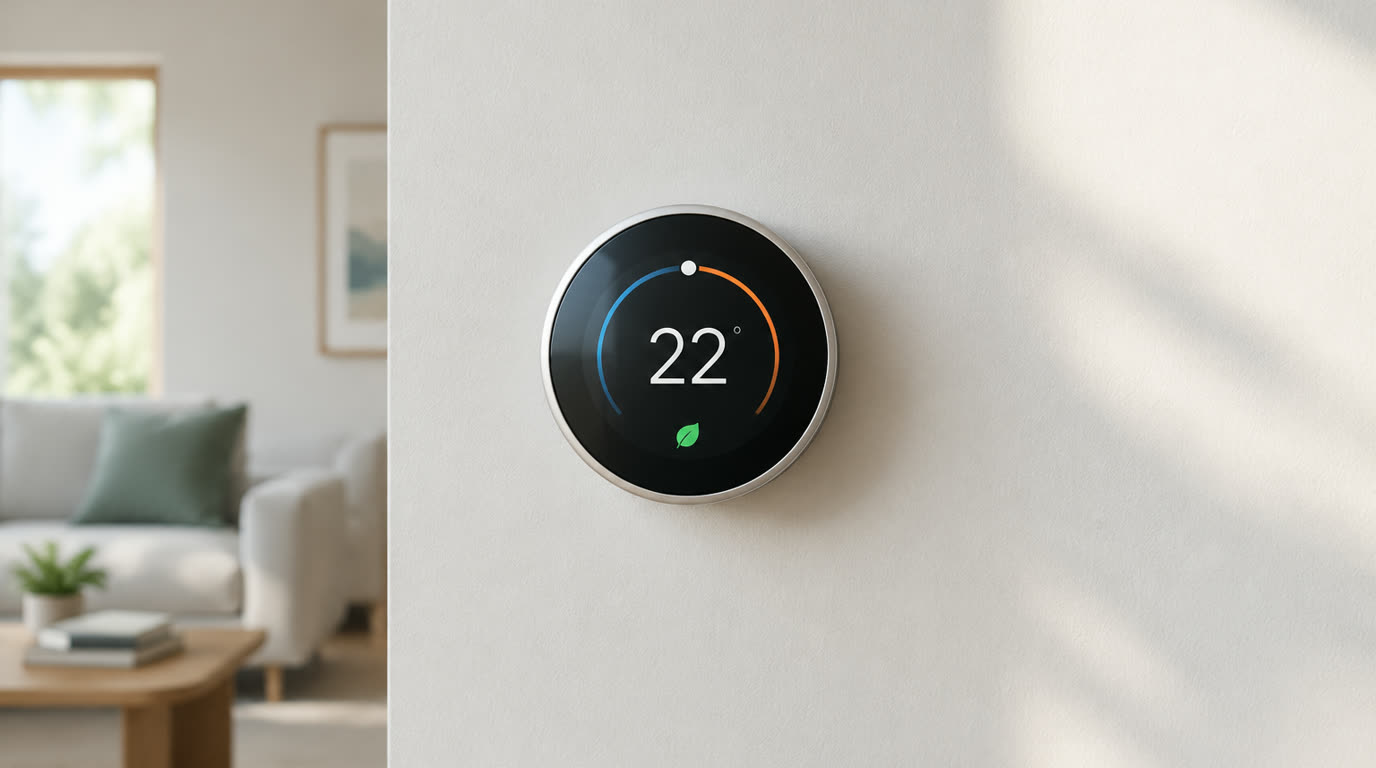
Spend this, not more: About $25 for a C-wire adapter. Anything above $200 buys you a bigger screen or a voice assistant, not better heating.
Quick answer:
- Sensi Lite (~$89.99): No C-wire needed on any standard central system and the best value in the group. This is the default answer for an apartment.
- Amazon Smart Thermostat ($79.99): Lowest price here, works without a C-wire and is ENERGY STAR certified, but the display gives you almost nothing to configure.
- Sensi Touch 2 (~$148-210): The best screen in the group and it does require a C-wire. This is the model people buy first and return second.
- ecobee Essential ($139.99): Does NOT ship with the Power Extender Kit, so budget another $24.99 if you have no C-wire. The Premium, at $259.99, is the one that includes it.
- Mysa ($159 + $25 adapter): Five-year warranty, the longest here, but 2.4GHz-only Wi-Fi will fail on some mesh networks.
- Nest Learning ($280): The only one here that needs nothing added at all. Google states it is designed to work with or without a C wire, and a C wire or Nest Power Connector is needed in fewer than 1% of cases.
How much should you spend? Under $100 covers the apartment and older-home cases, where the only real requirement is a 24VAC system and a 2.4GHz network. $130-170 is the sweet spot for hardware, but read the adapter line carefully there: ecobee deliberately stopped bundling the Power Extender Kit with the Essential and Lite, because it found the kit was used in fewer than 15% of installs, so a no-C-wire buyer at that price still has to add about $25. Above $200 buys a glass front, a radar occupancy sensor, a built-in Alexa speaker, or included room sensors. Those are real features, not marketing, but none of them make the heat work better, and they rarely pay for themselves in a home you plan to keep.
First: Answer These 3 Questions
- Do I actually have a C-wire? Look at the terminal block behind your current thermostat and count the labeled wires. C is the common wire and it is almost always the only bare copper one with a C printed next to it. Four wires or more usually means you have one. Two or three usually means you do not. If the labels are unreadable, photograph the block and match it against your equipment manual before buying anything.
- What happens if I do not have one? Four outcomes, and only one of them costs real money. Either the model borrows power from an existing wire, which is what the Nest Learning Thermostat does, or the model ships a kit that reroutes power, which is what ecobee does, or the model needs a C-wire and you buy an adapter for about $25, or you pay an HVAC technician to run one for you. That last one turns a small parts problem into a service call, and it is the only version of this that is genuinely expensive.
- Will it work with my HVAC system? All eight are 24VAC thermostats, which covers the overwhelming majority of central systems in North American homes. They are wrong for millivolt gas fireplaces and for 120/240V line-voltage mini-splits, which need a dedicated line-voltage thermostat instead. The more common failure is a mismatch on system type: a heat pump needs the thermostat’s heat-only mode, and a multi-stage system needs the thermostat to understand stages, or the outdoor unit will short-cycle.
5 Checks Before You Buy
| Check | Target | Plain English |
|---|---|---|
| System voltage | 24VAC only | A low-voltage central system. Millivolt gas fireplaces and line-voltage mini-splits are out of scope for every model here. |
| Wire count at the wall | 4+ means you likely have a C-wire | R, W or Y, G, and C. Three or fewer and you are buying an adapter or borrowing power from another wire. |
| System type | Heat pump, stage count, dual-fuel | Get this from your equipment nameplate before you order. Guessing here is what causes short-cycling complaints. |
| Wi-Fi band | 2.4GHz must be available | Mysa is 2.4GHz only. ecobee Premium is dual-band. Most mesh systems expose both bands under one network name, which is usually fine. |
| Adapter, if your model needs one | Budget about $25 | ecobee’s Power Extender Kit lists at $24.99 and Mysa’s C-Wire Power Adapter at $25.00. Add it to the order or you will ship a thermostat you cannot install. |
8 Picks (By C-Wire Rules, Published Specs & Price)
Sensi Lite – Best Overall / Cheapest Fix
Price: About $89.99 direct from Sensi
Why: Sensi states that a C-wire is required only on heat pump, heat-only, and cool-only systems, so on a standard central system you are not ordering anything extra. It is ENERGY STAR certified, which is the qualification that makes most state utility rebates apply.
Honest take: For the majority of homes this is the whole problem solved, at the lowest sensible price, with the least to go wrong. Downside: No room sensors, and the app does not learn a pattern the way the more expensive units do. If you have one room that never matches the rest of the house, this cannot fix it.
Amazon Smart Thermostat – Best Bare-Bones Budget
Price: $79.99 at a street-price check in Aug 2026
Why: No C-wire required, ENERGY STAR certified, and the lowest price in the group. For a rental, a guest house, or a second home you check twice a year, spending more than this is waste.
Honest take: It does exactly one job and refuses to do anything else. If that matches how you use it, the $80 tier is correct. Downside: The display is minimal and there is no built-in scheduling UI, so the setup is phone-only. It also ties into Alexa, which is a real dependency if you would rather not.
Sensi Smart – Best for Multi-Stage Systems
Price: About $129.99 direct from Sensi
Why: Same C-wire profile as the Lite, so the no-C-wire answer holds, with more headroom for staged equipment. That makes it the safer buy if you have ever had a two-stage air conditioner or a multi-stage heat pump.
Honest take: This is the version to get if you are unsure what your system is capable of, because it covers more equipment without needing to know in advance. Downside: Costs about $40 more than the Lite for capacity you may never use. If you confirmed a single-stage system, that is money for nothing.
ecobee Smart Thermostat Essential – Best Mid-Price, If You Already Have a C-Wire
Price: $139.99 on ecobee.com, plus $24.99 for the Power Extender Kit if you do not have one
Why: The mid-price ecobee, and the important detail is a negative one: ecobee’s own support documentation states that the Smart Thermostat Essential and the Smart Thermostat Lite do not include the Power Extender Kit and that it must be bought separately. ecobee says it removed the kit because it was used in fewer than 15% of installs. If you already have a C wire this is simply the sensible mid-price ecobee, on a three-year warranty.
Honest take: The 15% figure is the manufacturer’s own explanation for a decision that looks like a downgrade, and it is the single most useful thing on this entry: if you have no C wire, this is a $165 purchase, not a $140 one. Downside: The adapter is a second order, and the Power Extender Kit is not compatible with dual-transformer, fan-coil or communicating systems, or with heat-only systems, so it is not a universal escape hatch.
Mysa Smart Thermostat – Best Warranty
Price: About $159 direct, plus $25.00 for the C-Wire Power Adapter if you need one
Why: Five-year limited warranty, the longest in this group, and Mysa states it is more than double the two-year industry standard. Matter support, so it is not locked to one ecosystem, and 2.4GHz-only Wi-Fi. The adapter is a separate $25.00 purchase, and Mysa publishes the number that matters here: over 55% of submissions to its own compatibility checker need the adapter. The adapter is also engineered for two-wire heat-only and cool-only systems where you have just R and W at the thermostat, which is the case Sensi explicitly cannot cover without a C-wire.
Honest take: A 55% adapter rate sounds bad until you read it as a warning: this is the manufacturer telling you the majority of people who check end up buying the extra part. Plan for it and the total is a $184 install; plan for it badly and you have a box that will not power up. Downside: 2.4GHz-only Wi-Fi. On a mesh network that has split 2.4GHz and 5GHz onto separate names, setup will fail and you will not know why until you read the manual.
Sensi Touch 2 – Best Screen, With a Catch
Price: Roughly $148-210 depending on retailer; a Feb 2026 check found $148 and an Aug 2026 check found $209.99
Why: The best interface in the group, with a 4.3-inch color touchscreen and compatibility with Apple HomeKit, Google Home, Amazon Alexa, and SmartThings. It is also ENERGY STAR certified.
Honest take: It is the one to buy if you want a thermostat that looks like part of a renovated kitchen, and you already have a C-wire. Downside: It does require a C-wire. Room sensors are sold separately. And the price swung about $60 between two street checks eight months apart, so buy on a sale, not on a deadline.
ecobee Smart Thermostat Premium – Best Feature Set
Price: $259.99 on ecobee.com
Why: Power Extender Kit included in the box, which is what separates it from the Essential and Lite and makes it the only ecobee here that is a single-order no-C-wire purchase. Also dual-band Wi-Fi, Bluetooth 5.0, a 915MHz radio for the included SmartSensor, radar occupancy sensing, a built-in air quality monitor, and one room sensor in the box. Three-year warranty, and it works with HomeKit, Alexa, Google, SmartThings, and IFTTT.
Honest take: Everything on the compatibility list is a manufacturer-published specification. The included sensor is the part that actually changes how the house feels, because it stops the hallway from running the whole house. Downside: It is the most expensive here, the SmartSensor battery is a consumable you will eventually replace, and the optional ecobee Smart Security plan is a separate subscription if you connect one.
Google Nest Learning Thermostat – Best When You Have No C-Wire to Spare
Price: $279.99 at Google Store; $239.99 discounted, both seen Sep 2026
Why: This is the only model here that needs nothing added, and it is not a marketing claim. Google’s own specification sheet says the Nest Learning Thermostat (4th gen) is designed to work whether or not your home has a common (C) wire, using patented Power Sharing, and that in limited cases of less than 1% a C wire or Nest Power Connector may be needed. CNET’s 2024 review lists ‘Requires C-wire? No’. Balance-point control is the feature that makes it a good heat-pump match, since it holds the compressor at a steady output instead of cycling it.
Honest take: This is a different and better answer than buying an adapter: you install it and it works. Google also publishes a compatibility checker, and running it is the honest way to find out whether you are in the 1%. Downside: Highest price on the list at $280, so the premium is real, and the learning features are worth less if your schedule is already predictable. Note that Google ended support for the 1st and 2nd generation Learning Thermostats on 25 October 2025; the 4th gen is the current product and is still sold by Google and major retailers.
One-Line Decision Table
| Your situation | Pick this |
|---|---|
| You rent, or you have never seen a C-wire | Sensi Lite, or Nest Learning if you will spend the difference |
| You want the adapter problem solved in a single order | ecobee Smart Thermostat Premium, the only model here that bundles the kit |
| You already have a C-wire and want the best screen | Sensi Touch 2, ideally on sale |
| You are not sure what your HVAC system is | Sensi Smart, for stage headroom |
| Your mesh network splits 2.4 and 5GHz | ecobee Premium, which is dual-band |
| You run a heat pump | Nest Learning for balance-point control |
| You want the longest warranty | Mysa at five years, plus $25.00 for the adapter |
Running Costs: What You Pay After You Buy
The purchase price is only part of the story. Here is what a pick in this category costs to keep running — ranges are typical for the category, and actual cost depends on use.
| Item | What it is | How often | Typical cost |
|---|---|---|---|
| C-wire Power Extender Kit | ecobee’s kit that reroutes power so no fifth wire is needed; bundled only with the Premium, sold separately with the Essential and Lite | Once, at install | $24.99 on ecobee.com |
| C-Wire Power Adapter | Mysa’s equivalent adapter, sold separately | Once, at install | $25.00 from Mysa |
| ecobee SmartSensor battery | Replacement cell for the included room sensor | Roughly every 1-2 years | A few dollars, sold as a single |
| ecobee Smart Security plan | Optional subscription, only if you connect ecobee security hardware | Monthly, and entirely optional | A recurring monthly fee; the thermostat works without it |
| Utility rebate | Many providers rebate ENERGY STAR certified thermostats | Once, after installation | Varies by state and utility; check before buying |
| HVAC service call | Only if the wiring is done wrong or your system is not 24VAC | Rare, and avoidable | The one real cost. Check the nameplate first |
Skip It If… (When Buying Nothing Is the Right Call)
This is the section most buying guides leave out. If any of these describe you, the honest advice is to keep your money.
- Your system is line-voltage or millivolt. A dedicated high-voltage thermostat is a different product, and none of these will work.
- You are in a rental and are not allowed to touch the wiring. Some units need a jumper moved even with an adapter.
- Your home has no reliable 2.4GHz network. A thermostat that cannot join the network is an expensive wall decoration.
- You want the cheapest possible thermostat. A $25 non-programmable mechanical model will do the same job for heating and cooling control.
- You already have a thermostat you are happy with and the only reason you are shopping is that you want a new color.
FAQ
Can I install a smart thermostat without a C-wire? Often, yes, and it depends on the model. Some thermostats charge an internal battery from an existing heating wire, some ship a kit that reroutes power, and some require a C-wire with no alternative. The specific unit’s product page states which case it is, and that page is the only thing worth trusting here.
What is a C-wire adapter and how much does one cost? It is a small module that reroutes existing wiring so the thermostat gets continuous 24VAC power. ecobee’s Power Extender Kit lists at $24.99 and Mysa’s C-Wire Power Adapter at $25.00, so budget about $25. A few generic versions cost less, and the branded ones cost less than an HVAC service call. Check the box before you order, though: ecobee bundles the kit only with the Premium, not with the Essential or Lite.
Why do smart thermostats need continuous power? A normal heating-only thermostat can run off the furnace and simply switch off, because nothing needs to stay awake. A smart one has a screen, a Wi-Fi radio, and a clock that must keep time through a power outage, so it needs power that does not depend on the heating being on.
Do I need a C-wire for a heat pump? Often yes, and this is where the general advice breaks down. Sensi states that a C-wire is required on heat pump, heat-only, and cool-only systems, so if you have a heat pump you should assume you need one unless your model says otherwise. Heat pumps also benefit from balance-point control, which is a separate feature from C-wire handling.
Will a smart thermostat work with my existing wiring? In a standard 24VAC central system, almost always. You need at least an R wire, a W or Y call wire, and a G fan wire. The case that fails is a system with unusual stage wiring, or a line-voltage or millivolt system, which is why reading the equipment nameplate is step one.
Is a $25 adapter worth it instead of a service call? That comparison is the entire reason this page exists. Every model here either avoids the C-wire, includes the kit, or lists an adapter at about $25. A technician visit to add a common wire is the expensive path, and it is entirely avoidable on any conventional 24VAC system.
Do these need a subscription? The thermostats do not. ecobee offers a Smart Security plan for its security hardware, which is optional and not required for heating and cooling control or for the thermostat’s own features. Check any subscription before pairing optional accessories, not before buying the thermostat.
Should I wait for a sale on a thermostat? Thermostat pricing moves a lot, and one model in this group was checked at $148 in Feb 2026 and $209.99 in Aug 2026. If you are not in a hurry, waiting for a sale is reasonable, especially on the two premium models.
Real Pitfalls to Avoid
- Buying on the assumption that ‘smart thermostat’ means ‘no C-wire needed’. Of the eight here, one needs a C-wire on every system type, two more need one if you run a heat pump, a heat-only system or a cool-only system, and one needs one for HomeKit. Read the specific model’s compatibility page, not the category page.
- Adding the adapter to a cart after the thermostat has shipped. On a single model that is $25 and a week of waiting; on the premium models the gap between two street checks was about $60.
- Assuming your mesh network is fine. A 2.4GHz-only thermostat will not connect to a 5GHz-only SSID, and the symptom is a setup wizard that never finishes.
- Skipping the equipment nameplate. Heat pumps and multi-stage systems need matching thermostat support, and short-cycling a compressor is an expensive repair rather than an inconvenience.
- Treating a bundled adapter as universal. It solves the power question for a conventional 24VAC system. It does nothing for a line-voltage mini-split or a millivolt fireplace.
- Buying the premium model for the display. Radar occupancy sensing and an included room sensor change comfort in a real way. A larger screen does not.
Going deeper: The same logic applies to other networked hardware: confirm the protocol before you buy, not after. Our guide to smart plugs covers the same 2.4GHz-versus-5GHz trap, and the ranking method behind every category is written up in how we rank products.
Update note: refreshed quarterly. Prices checked Sep 2026 – verify at checkout. Rankings based on published manufacturer specifications and public prices, not paid placement.