
Disclosure: Buytoplab is reader-supported. If you buy through links on this page we may earn a small commission at no extra cost to you. We never accept payment for a ranking or a review, and we publish the downsides as plainly as the upsides. How we rank products.
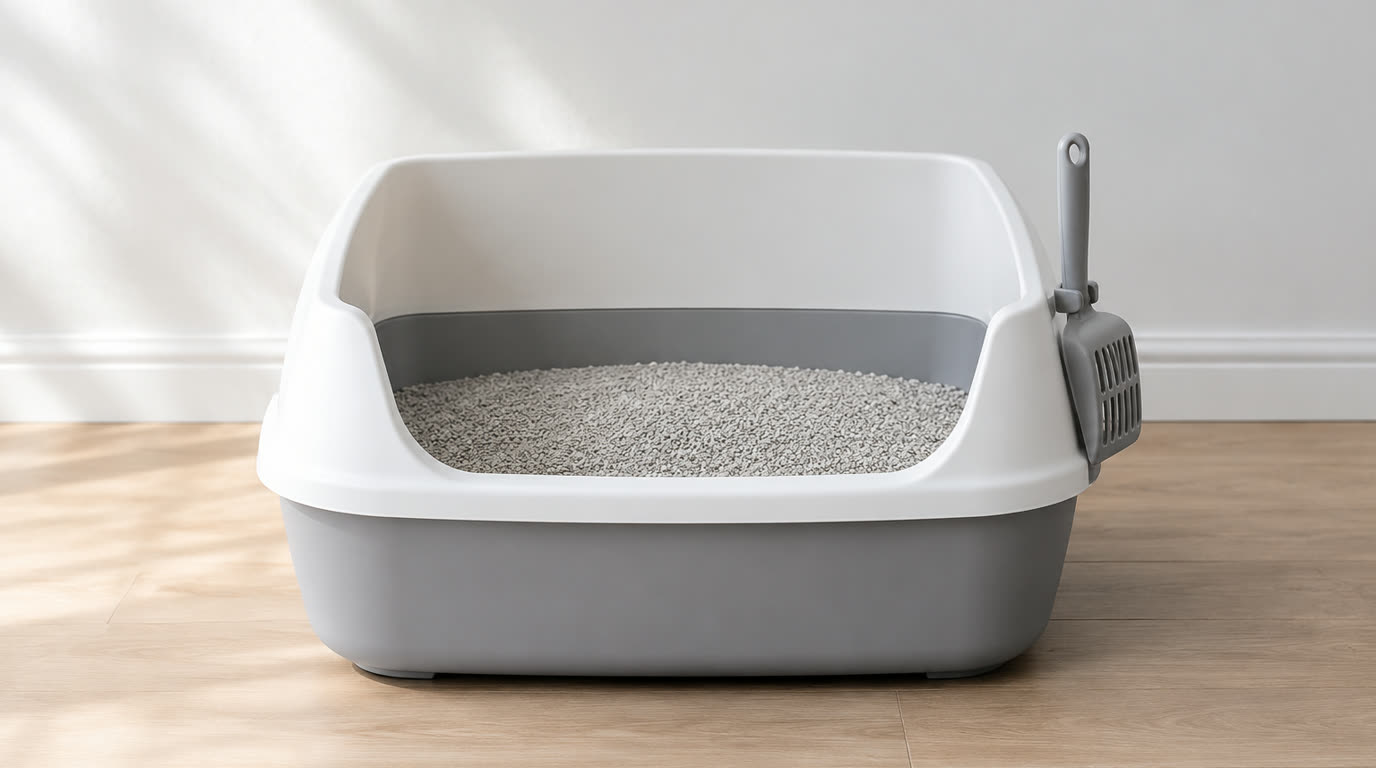
Spend this, not more: Most cat homes are best served by a simple box (~$30–$40), or the Breeze system (~$40) for odor control. Pay $200 for the ScoopFree only if you want self-cleaning, and $650 for the Litter-Robot only in multi-cat homes.
Quick answer:
- Best automatic: Litter-Robot 4 (~$650) – self-cleaning, app-connected, and it handles multi-cat homes.
- Best self-cleaning value: PetSafe ScoopFree (~$200) – a tray-based automatic that is simpler and cheaper.
- Best odor control system: Tidy Cats Breeze (~$40) – pellets and a pad separate solids from liquid.
- Best enclosed budget: IRIS Top Entry (~$30) – a top-entry design that traps litter.
- Best for big cats or seniors: Catit Jumbo Hooded (~$40) – a large, low-entry hooded box.
Are automatic boxes worth it? If scooping is why you put it off, yes – a self-cleaning box runs after each use and keeps waste out of the litter. The costs are a high upfront price, reliance on power and sensors, and its own cleaning and liner upkeep.
How many boxes? One per cat plus one extra, in separate locations. Cats dislike sharing and will guard a box, which is a common cause of accidents.
Covered or open? Covered contains scatter and some odor, but some cats feel trapped and avoid it. When in doubt, start open.
First: Answer These 3 Questions
- Do you want to scoop? If scooping leads to a dirty box, an automatic pays off. If you scoop daily without complaint, a manual box is simpler and cheaper.
- How many cats? Multiple cats mean more boxes and often an open or top-entry design, since covered boxes intensify guarding.
- Any senior or arthritic cats? Then a low-entry, open or large box matters more than features – high sides are a barrier to a cat in pain.
5 Checks Before You Buy
| Check | Target | Plain English |
|---|---|---|
| Size | 1.5x cat length | Cats need room to turn around, especially large breeds |
| Entry height | Low for seniors | High sides block cats with mobility issues |
| Type | Match your scooping habits | Automatic pays off only if you would otherwise neglect it |
| Litter compatibility | Per the manufacturer | Wrong litter clogs automatic rakes and voids warranties |
| Upkeep cost | Liners, pads, filters | Automatic boxes have ongoing consumable costs |
2026 Top Picks (By Sales & Long-Term Owner Reports, Not Paid Placement)
Litter-Robot 4 – Best Automatic
Price: ~$650
Why: It self-cleans after each use by rotating to sift waste into a sealed drawer, sends app alerts, and handles multi-cat homes with weight tracking. It is the most polished automatic box available.
Honest take: The best if you want automation and budget allows. Downside: very expensive, needs power, and uses its own liners and carbon filters.
PetSafe ScoopFree – Best Self-Cleaning Value
Price: ~$200
Why: A simpler automatic design that rakes waste into a covered compartment in a disposable tray using crystal litter, which absorbs liquid and reduces odor with less mess.
Honest take: The easiest entry into automatic boxes. Downside: locked into crystal litter trays, which are a recurring cost, and not ideal for large cats.
Tidy Cats Breeze – Best Odor Control System
Price: ~$40
Why: A pellet-based system where solid waste stays on top and liquid drains through to an absorbent pad, so odor is separated and the pellets last far longer than clumping litter.
Honest take: Excellent odor control for the price. Downside: some cats dislike the texture of pellets, and pads are a recurring cost.
IRIS Top Entry – Best Enclosed Budget
Price: ~$30
Why: A top-entry design that keeps litter from scattering and gives cats privacy, with a lid that contains odor and a simple, cheap build. Great for apartments.
Honest take: The value enclosed box. Downside: jumping in is awkward for kittens and senior cats, and the size is modest.
Catit Jumbo Hooded – Best for Big Cats or Seniors
Price: ~$40
Why: A large hooded box with a swing door and a lower entry, sizing well for big cats and offering privacy with less scatter.
Honest take: A solid large option. Downside: hooded boxes can trap odor and deter cats that feel trapped in multi-cat homes.
One-Line Decision Table
| Your situation | Pick this |
|---|---|
| Want full automation | Litter-Robot 4 |
| Automatic on a budget | PetSafe ScoopFree |
| Odor control for the money | Tidy Cats Breeze |
| Apartment, fewer scatter | IRIS Top Entry |
| Big cat or senior | Catit Jumbo Hooded |
Running Costs: What You Pay After You Buy
The purchase price is only part of the story. Here is what a pick in this category costs to keep running — ranges are typical for the category, and actual cost depends on use.
| Item | What it is | How often | Typical cost |
|---|---|---|---|
| Litter | Any box | Ongoing | $100–$250/yr |
| ScoopFree disposable trays | Tray-based automatic | Every 2–4 weeks | $200–$400/yr |
| Breeze pads | Odor-control system | Weekly | $250–$400/yr |
| Carbon filters | Hooded / automatic boxes | Monthly | $20–$40/yr |
Skip It If… (When Buying Nothing Is the Right Call)
This is the section most buying guides leave out. If any of these describe you, the honest advice is to keep your money.
- You have one cat and scoop daily — a plain box is cheaper and just as hygienic; automation is convenience, not health.
- Your cat is a senior or has mobility issues — high-sided and automatic boxes are barriers.
- You cannot commit to consumables — automatic boxes need trays, pads and filters, and skipping them undoes the benefit.
Sources & Data
This guide uses official specifications, published results from named review bodies and long-term owner reports. Featured sources (verified 2026-09-23):
- AKC Dog Breeds – breed traits and temperament standards
- AVMA Pet Care – veterinary guidance on pet care and safety
- ASPCA Poison Control – toxic and safe substances for pets
- AAFCO – pet-food nutrition standards and ingredient definitions
Table sizes, wattage and prices change; verify current specs at the manufacturer before you buy.
FAQ
Are automatic boxes worth it? Yes if scooping is why you procrastinate. Costs: high price, power reliance, and ongoing liners and filters.
Covered or open? Covered contains scatter but can deter cats. When in doubt, start open.
How many boxes? One per cat plus one extra, in separate locations.
How to control odor? Scoop daily, change litter weekly or biweekly, wash with mild soap, and choose hard-clumping litter.
Best litter for automatic boxes? The clumping litter the maker recommends – wrong litter clogs rakes and voids warranties.
Real Pitfalls to Avoid
- A covered box can deter cats, especially in multi-cat homes where guarding happens
- Too few boxes cause accidents – the rule is one per cat plus one
- The wrong litter clogs automatic rakes and voids warranties
- High-sided boxes are a barrier for arthritic or senior cats
- Automatic boxes still need cleaning and consumables – they are not maintenance-free
See how we rank products.
Also see: best cat water fountains.
Update note: refreshed quarterly. Prices checked Sep 2026, verify at checkout. Rankings based on platform sales and long-term owner reports, not paid placement.