
Quick answer: get one if you have hard floors; skip it if you have wall-to-wall carpet
On hard floors, a wet-dry vacuum is the single biggest cleaning upgrade you can make — it replaces your vacuum AND your mop with one pass, and it genuinely works on spilled food, pet accidents, and daily grime. On carpet, it’s useless — you’re buying a wet paperweight.
Disclosure: We may earn a commission if you buy through links here — at no cost to you. We never take payment for rankings.
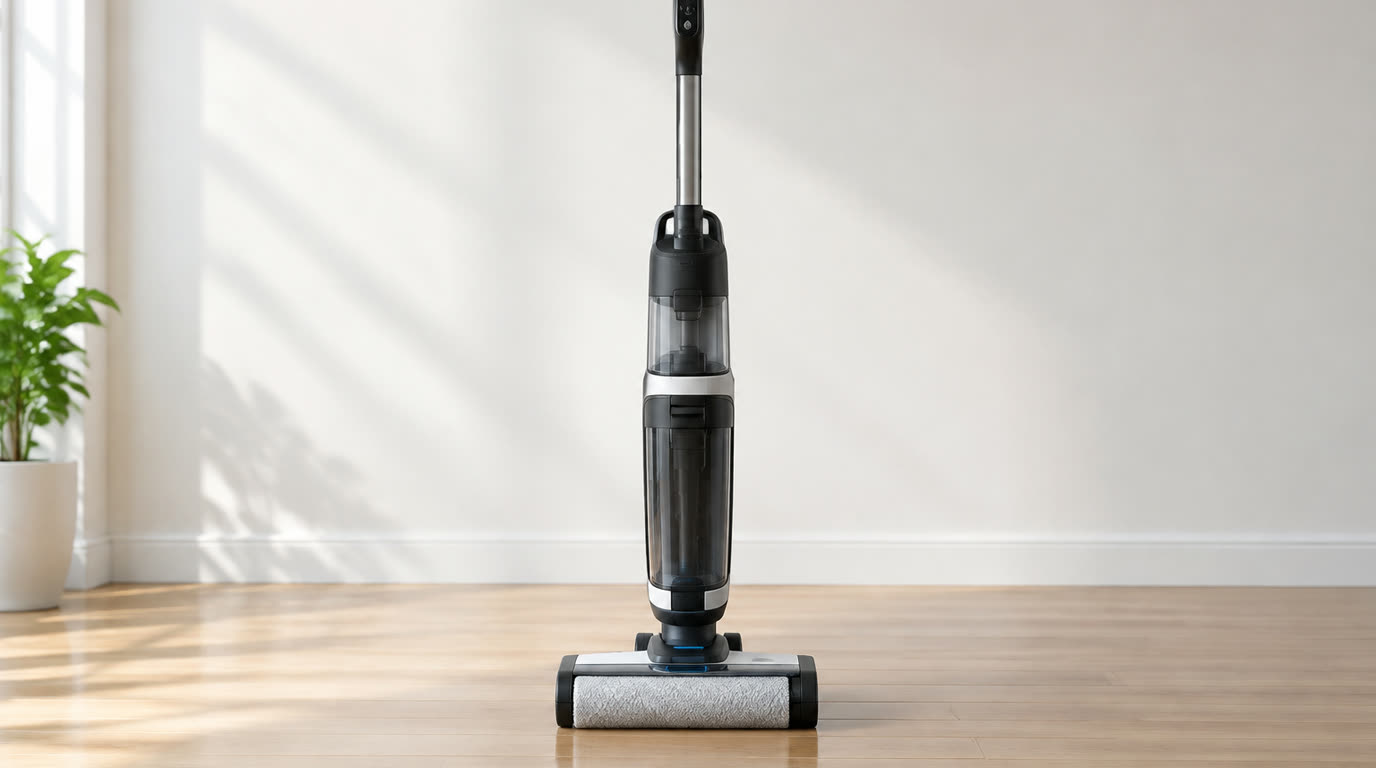
Three honest picks below, ordered by how they fit real homes — not by who pays the most for placement.
Before you buy: 3 questions
- How much of your floor is hard vs. carpet? If it’s mostly hard tile/wood/vinyl, this is your tool. If you have rugs everywhere, keep a dry vac.
- Will you actually mop weekly? Wet-drys only help if you’d otherwise mop. If you never mop, this is an expensive toy.
- Do you have pets / kids / daily spills? That’s the use case that justifies the price — daily spot-cleaning where a broom fails.
The honest pros & cons
Pros (real)
- One pass: sucks dirt + mops at once — genuinely faster than vacuum-then-mop
- Handles wet messes (spills, pet pee, mud) that a dry vacuum smears
- Self-propelled models are genuinely easy — glides, no bending
Cons (also real)
- Useless on carpet/rugs — a hard no for carpet homes
- Running cost: replacement rollers + filters, ~$30–60/year
- You must clean it after every use (dirty tank + roller rinse, ~60 sec) — skip this and it smells
- Heavy-ish; the dirty tank is small on budget models
Our picks
Best Overall — Tineco Floor One S7 Pro (~$450, often $350 on sale)
Why: Self-propelled, senses dirt and boosts suction automatically, edge cleaning actually works, and the self-cleaning roller + charging dock keep maintenance low. The benchmark every rival is measured against.
Honest take: Expensive; needs the routine tank/filter care; app is forgettable. But the suction-to-portability ratio on hard floors is the best in the category.
Best for: Hard-floor homes with pets/kids and a real cleaning routine.
Best Value — HIZERO F803 (~$320, often under $300)
Why: Uses a roller + separate trash tray (no torn-we tumbling), genuinely picks up pet hair without tangling, and the “no messy dirty tank” design is easier to live with. Solid build, real suction, and it’s quieter.
Honest take: Slightly heavier and less self-propelled than Tineco; the tray setup takes a bit of learning; and it’s not great in tight corners. But as a value pick that works daily, it holds its own.
Best for: Pet households on hard floors who want reliable, lower-maintenance cleaning.
Best Budget — Generic wet-dry (~$150–200)
Why: At this price you’re still getting the mop-vac concept — real suction, wet roller, and it picks up spills. Fine for a small apartment with light daily use.
Honest take: Build is plasticky, suction noticeably weaker on grime, battery + tank are small (recharge mid-clean on bigger homes), and edge cleaning is mediocre. It’s a “concept demo” — you’ll likely upgrade in 18 months.
Best for: Budget first-timers who want to try the category before investing.
One-line decision table
| Model | Price | Best for | Trade-off |
|---|---|---|---|
| Tineco S7 Pro | ~$350–450 | Hard-floor families, daily | Price, maintenance |
| HIZERO F803 | ~$300–320 | Pet hair, reliability | Heavier, corners |
| Budget wet-dry | ~$150–200 | Small flats, first-try | Weak suction, small tanks |
Running costs
| Item | Typical |
|---|---|
| Roller brush | $20–35 / 6–12 months |
| Filter | $10–15 / few months |
| Cleaning solution | $10–20 / month of daily use |
| Total running | ~$30–60 / year — modest, but plan for it |
Skip it if…
- You have wall-to-wall carpet — a wet-dry is a hard-floor tool; on rugs it leaves them soggy and dirty
- You never mop — if a broom + spray is your whole routine, this is a $400 toy
- You won’t commit to the 60-second daily clean — a neglected wet-dry smells worse than a dirty mop
- You have a huge home + tiny budget — small tanks mean constant refills; budget models disappoint here
Still not sure? That is exactly why we publish how we rank and about us — the trade-offs are the whole point.
Also check our best robot vacuums 2026 picks for more ideas.
Sources & Data
This guide uses official specifications, published results from named review bodies and long-term owner reports. Featured sources (verified 2026-09-23):
- ENERGY STAR Air Cleaners – official CADR and energy data
- EPA Indoor Air Quality – EPA guidance on air cleaners, filters and allergens
- EPA Air Cleaners & Filters – how filtration and coverage relate to room size
- ENERGY STAR Refrigerators – official energy-efficiency ratings for home appliances
- AHAM – appliance standards and certification
Table sizes, wattage and prices change; verify current specs at the manufacturer before you buy.
FAQ
Can wet-dry vacuums replace my normal vacuum?
Only on hard floors. For carpets and rugs you still need a dry vacuum. Think of it as replacing your mop, not your vacuum, for most homes.
Are they safe on hardwood?
Yes — today’s models spray minimal water and use soft rollers. Just don’t park it wet on one spot; keep it moving.
How often must I clean it?
Dirty tank + roller rinse after every use (60 sec). Descale the clean-water line monthly. It’s the price of “no more mopping.8221;
Still torn between two? Tell me your budget + floor type
Comment below, or check , — it explains exactly why one model ranks above another in our table.