
Disclosure: Buytoplab is reader-supported. If you buy through links on this page we may earn a small commission at no extra cost to you. We never accept payment for a ranking or a review, and we publish the downsides as plainly as the upsides. How we rank products.
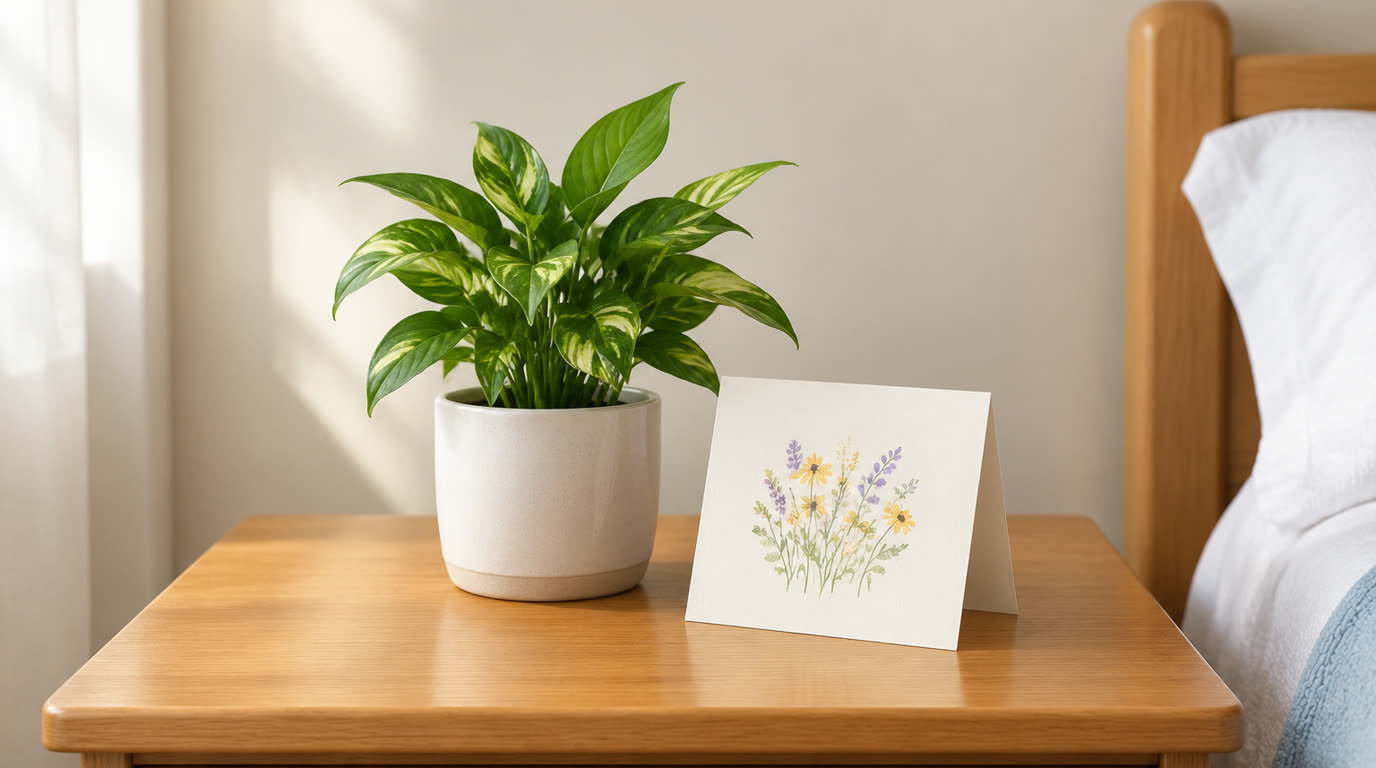
Spend this, not more: $20-70 is the honest range for gifts that land well in this situation. That covers something warm to hold, something that passes the time, and something for the room that does not need a plug or a battery. Under $20 the choices are thin, and above $70 you are buying fragile electronics for someone who cannot safely operate them, which is a real hazard rather than a generous upgrade.
Quick answer:
- Best overall: Soft cashmere-blend shawl (~$55) – warmth across the shoulders, no sleeves to struggle with, and it is the item most likely to still be in use a year later
- Best under $30: Large-print novel set (~$25) – three paperbacks chosen for large type, which is a genuine reading aid rather than a novelty, and it needs no battery
- Best for the room: Self-watering planter with a low-light plant (~$30) – something alive on the windowsill that staff can water and that is unmistakably a gift
- Best for passing time: Audio player with preloaded audiobooks (~$60) – a single-button unit with a speaker and a charging base, chosen because the volume control and the book list are set before it is given
How much should you spend? The reason to stay under $70 for this kind of gift is that everything above that price in the category either needs a device she cannot safely use, takes up storage space she does not have, or is a food item with dietary restrictions you cannot confirm. $20-70 covers a warm item, a past-time item, and a room item, and the money is better spread across those three than concentrated in one expensive object that ends up in a cupboard.
First: Answer These 3 Questions
- What is a good gift for a grandparent in a nursing home? Something warm and soft that she can use immediately, something that passes time without a learning curve, and something for the room rather than for the person to carry. A shawl, a large-print book, a plant, and a preloaded audio player cover those four needs, and all four work in a small room with limited storage.
- What should not be given to someone in residential care? Anything that needs daily setup, batteries she has to charge, sharp or breakable components, small parts, and food without confirming dietary restrictions with the facility. Also anything that assumes mobility she does not have, and electronics with complicated controls, because a device that frustrates her ends up ignored rather than used.
- Is it better to give one big gift or several small ones? Several small ones. A gift that occupies space in a room with roughly ninety square feet of storage has a cost beyond its price, and a bundle of three small warm items is easier to carry, easier to distribute, and gives her something for each of three different times in the day.
5 Checks Before You Buy
| Check | Target | Plain English |
|---|---|---|
| No setup or charging required | Works from the moment it arrives | This is the single most important filter, because the recipient is unlikely to set up anything herself. A gift that needs an app, a pairing process, or a weekly charge is a gift she will not use, regardless of how thoughtful it is. |
| Large print and high contrast | 16 point type or larger | Presbyopia and reduced contrast sensitivity are near universal at this age, and a gift that is hard to read is a gift that ends up on the shelf. Large-print paperbacks, large-key buttons and high-contrast packaging are all reasonable proxies for this check. |
| Weight and grip | Light, with handles sized for reduced dexterity | Reduced grip strength and tremor make weight the deciding factor more often than people expect. A cup with a single large handle and a non-slip base is usable in a way a two-handled mug or a heavy tumbler is not. |
| No small or detachable parts | Nothing that can be swallowed or lost | A missing button is a lost item, and a loose small part is a hazard, and both are common on gifts chosen without thinking about the environment. Bulky and soft is safer than small and clever. |
| No dietary assumptions | Nothing edible unless the facility confirms | Facilities maintain dietary restrictions for medical reasons, including restrictions visitors are not told about. Chocolates, sweets and homemade food are the most common gifts that cannot actually be eaten, and they are often wasted in a bin. |
2026 Top Picks (By Specs, Owner Reports & Price, Not Paid Placement)
Cashmere-blend shawl – Best Overall
Price: ~$55
Why: Warmth across the shoulders with no sleeves to work through, in a size that folds into a drawer rather than a closet, and shawls are the item most likely to still be in regular use a year later because they work in bed, in a wheelchair, and in an armchair without adjustment.
Honest take: It is a personal item, so it needs to suit her taste, and cashmere blends pill with daily wear, so this is a quality-versus-lifespan trade rather than a bargain. Downside: Too bulky to send through a small mailroom, so it usually has to be hand-delivered, and darker colours show a care-facility wash cycle faster than light ones.
Large-print novel set – Best Under $30
Price: ~$25
Why: Three large-type paperbacks chosen for a genre she actually reads is a genuine reading aid rather than a novelty gift, it needs no battery, no setup and no help to use, and books are the one category that is easy to buy well without knowing her current taste.
Honest take: It is the least exciting gift in the list, and it only works if you know the genre, because three large-print books in the wrong genre sit unread on the same shelf as the ones that would have been read. Downside: Assumes she can still read comfortably for long stretches, and large-print editions of recent titles are not always in print, so the selection is more limited than the price suggests.
Self-watering planter with low-light plant – Best for the Room
Price: ~$30
Why: Something alive on the windowsill that is unmistakably a gift, with a self-watering reservoir so it survives the weeks between visits, and caring for a plant is a small daily task that is well within reach and easy to talk about.
Honest take: It needs a window with reasonable light, and some rooms have none, in which case this becomes a shelf ornament that slowly dies, which is a worse outcome than not giving it. Downside: Care facilities are often cautious about plants near beds for allergy and infection-control reasons, so this is worth checking with the facility before you buy it.
Single-button audio player – Best for Passing Time
Price: ~$60
Why: A one-button unit with a built-in speaker and a charging dock, with the audiobooks and volume set before it is given, gives her independent entertainment without needing to navigate a screen, which is the failure mode for most digital gifts at this age.
Honest take: It has to be charged, and if nobody living or working nearby takes that on it becomes a dead device within a fortnight, which makes this a gift for her and an assignment for you. Downside: A technical gift that says something slightly different from a personal one, and it requires setup by the giver, so it is not a last-minute choice.
Weighted lap blanket – Best for Restlessness
Price: ~$45
Why: A weighted blanket gives the settled feeling of being held, which is a genuine comfort in a chair or wheelchair and costs nothing to operate, and unlike a hot water bottle it needs no filling, no checking and no risk of a burn.
Honest take: Weight is not universally calming, and some people find it oppressive rather than settling, so this is a personal preference more than a safe default. Downside: The weight has to be right, and too heavy is genuinely uncomfortable rather than merely unhelpful, so this is a gift to discuss rather than to surprise.
Photo book of family – Best Personal
Price: ~$40
Why: A printed book with large photos and short captions, organised by decade rather than by date, is the thing residents show to visitors, and having your own pictures in her own room is the one thing a facility cannot provide.
Honest take: It only works if the people in the photos are recognisable and the stories are ones she would tell, and a large number of photos is harder to enjoy on a small table than a small number is. Downside: Requires family members to supply pictures and names before it can be made, so the lead time is days or weeks rather than an afternoon.
One-Line Decision Table
| Your situation | Pick this |
|---|---|
| You do not know her current preferences | Large-print novel set |
| She is often cold in the room | Cashmere-blend shawl |
| She is restless in a chair or wheelchair | Weighted lap blanket |
| Family photos can be gathered | Photo book of family |
Running Costs: What You Pay After You Buy
The purchase price is only part of the story. Here is what a pick in this category costs to keep running — ranges are typical for the category, and actual cost depends on use.
| Item | What it is | How often | Typical cost |
|---|---|---|---|
| Cashmere-blend shawl | Warmth without sleeves | Once every 3-5 years | $50-70 |
| Large-print book set | Three titles in a known genre | Once a year or so | $20-30 |
| Self-watering planter | With a low-light plant | Once every 1-2 years | $25-35 |
| Audio player with dock | Preloaded, one-button operation | Once every 3-5 years | $50-70 |
| Photo book printing | Large photos, short captions | Once a year | $30-50 |
Skip It If… (When Buying Nothing Is the Right Call)
This is the section most buying guides leave out. If any of these describe you, the honest advice is to keep your money.
- Anything that needs charging or an app – the most common gift in this category is the one that sits unopened because setup was never possible, and the failure is not about the gift but about who was available to set it up.
- Edible gifts without checking with the facility – dietary restrictions in care are medical and often undisclosed to visitors, so a box of chocolates frequently ends up uneaten and wasted.
- Anything with small parts, blades or breakable glass – loose components get lost, and a dropped item in a mobility-limited room is a safety issue rather than an inconvenience.
- Large furniture or full-size home items – rooms in residential care have limited storage, and a gift she has to keep means a gift she will feel guilty about.
Sources & Data
This guide uses official specifications, published results from named review bodies and long-term owner reports. Featured sources (verified 2026-09-26):
- AARP – research and guidance on older adults and caregiving decisions
- AARP Health – older-adult health and wellness guidance
- FTC Advertising Guidance – substantiation rules for product claims
Table sizes, wattage and prices change; verify current specs at the manufacturer before you buy.
FAQ
What is a good gift for a grandmother in a nursing home Something warm and soft she can use immediately, something that passes time without a learning curve, and something for the room rather than for her to carry. A shawl, a large-print book set, a plant, and a preloaded audio player cover those needs, and all four work in a small room with limited storage.
Should I check with the nursing home before buying a gift Yes, for anything edible, anything electrical, and anything that could be a hazard. Facilities maintain dietary restrictions for medical reasons and often have rules about plants near beds for allergy and infection control, and a five-minute call prevents a gift she cannot use or eat.
Is a weighted blanket a good gift for an elderly person It can be, because it is warm, needs no power, no filling and no maintenance, and the settled feeling of being held is a genuine comfort in a chair or wheelchair. Weight is a personal preference though, and too heavy is uncomfortable rather than calming, so it is worth asking rather than surprising her with it.
What gifts should not be given to someone in residential care Anything needing daily setup or charging, small or detachable parts, sharp or breakable items, and food unless the facility confirms dietary restrictions. Also anything that assumes mobility she does not have, and electronics with complicated controls, because a device that frustrates her gets ignored rather than used.
Real Pitfalls to Avoid
- Choosing something that needs setup – the gift that looks most thoughtful is the one she will never use, because the person who could have configured it was not in the room.
- Bringing food without asking – dietary restrictions in care settings are medical and often undisclosed, so the most generous-looking gift is the one that gets binned.
- Underestimating room space – rooms in residential care have limited storage, and a gift she has to keep becomes a gift she feels guilty about every time someone visits.
- Buying a plant without checking – some facilities restrict plants near beds for allergy and infection control, and the gift becomes a dead windowsill ornament within a month.
Going deeper: How each of these was narrowed down is described on our how we rank products page. For the same recipient outside a care setting, gifts for grandma in 2026 covers the wider range, and gifts for mom under $50 covers the same gift logic at a tighter budget. If she is mobile and cooking at home, gifts for dad in 2026 leans toward kitchen and workshop items rather than room comforts.
Update note: refreshed quarterly. Prices checked Sep 2026 – verify at checkout. Rankings based on published specifications, published review-body scores and long-term owner reports, not paid placement.