
Disclosure: Buytoplab is reader-supported. If you buy through links on this page we may earn a small commission at no extra cost to you. We never accept payment for a ranking or a review, and we publish the downsides as plainly as the upsides. How we rank products.
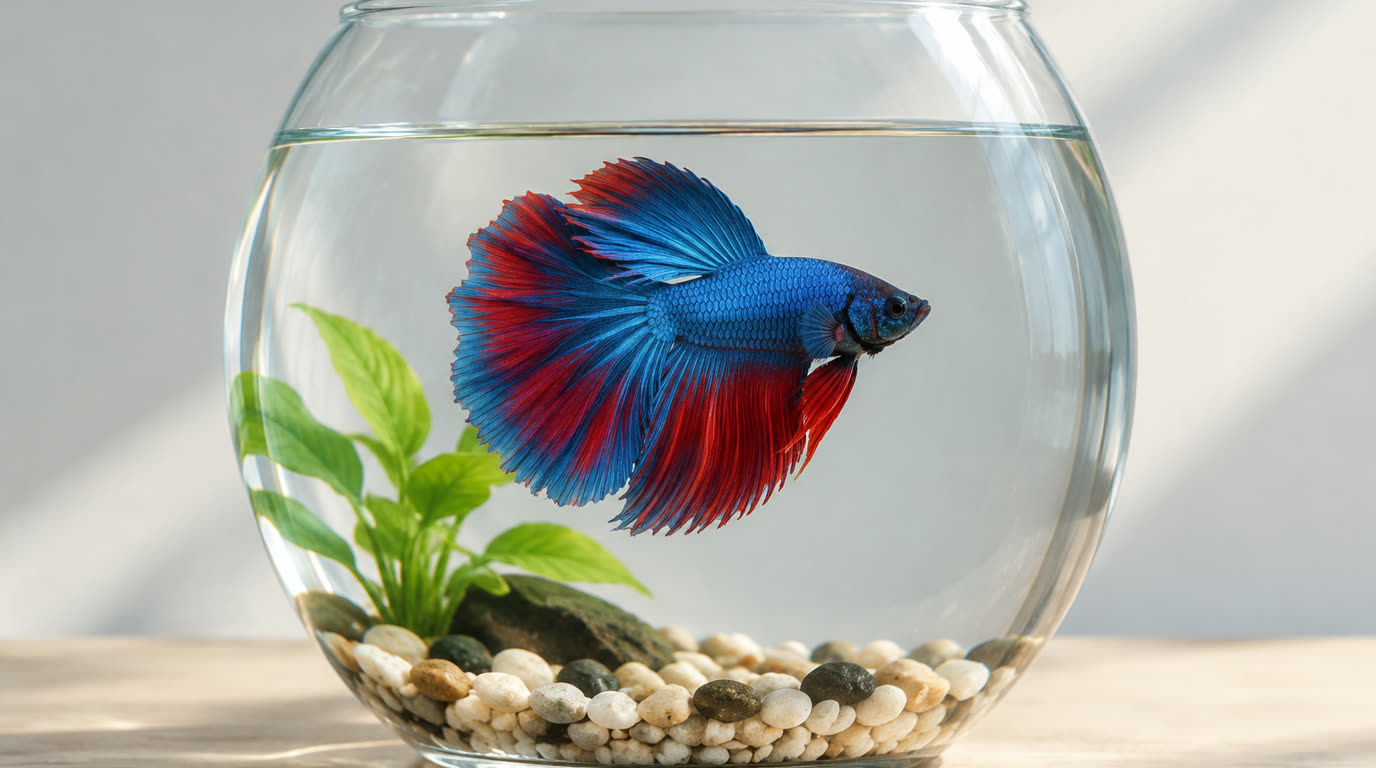
Spend this, not more: $40-90 is the honest window for a filtered betta tank in 2026. That covers a real 5-10 gallon aquarium, a sponge filter or a genuinely low-flow rated unit, and a heater with a thermostat. Above $90 you are buying a full canister system designed for much larger tanks, and the extra flow is a liability for this species rather than an upgrade.
Quick answer:
- Best overall: Fluval 307 Nano (~$80) – quiet enough for a betta, sits below the waterline where it will not suck the fish in, and the flow valve lets you dial it down once the tank is established
- Best value: GankPike Nano Sponge Filter (~$15) – single piece of sponge, an air pump and a check valve, which is genuinely all a betta needs in a tank under 10 gallons
- Best for beginners: Aqueon Betta Splendid LED Tank (~$60) – bundles tank, hood, filter and heater so there is no way to leave out the one piece that matters most
- Best low-flow canister: Fluval 206 (~$85) – if you want a canister for a planted tank, this is the smallest one rated gently enough to be appropriate for a betta
How much should you spend? Bettas come from shallow, slow, often plant-heavy water, so the filter question is really a flow question. A $15 sponge filter with a modest air pump and a check valve is the correct answer for almost every betta tank, and the $200 canister you can add to a 10 gallon aquarium will produce a current that pins the fish against the lid. What actually keeps a betta alive is tank size, a stable temperature around 76-80°F, and a cycled filter bed, none of which depend on spending more on the filter itself.
First: Answer These 3 Questions
- Do betta fish need a filter? In a tank above about 2 gallons, yes, because that is the only way to process the ammonia a betta produces in a closed system. A filter is not for oxygen here, since bettas breathe air, it is for nitrogen cycling. A small bowl with no filter can work with near-daily partial water changes, which is a maintenance commitment rather than an equipment decision.
- Is a sponge filter better for a betta than a canister? For most betta tanks, yes. A sponge filter has no impeller that can trap a fin, produces a gentle flow, and is nearly impossible to break. Canisters are better for heavily planted larger tanks, where the extra surface area handles more waste, but the flow has to be turned down and the intake has to be covered.
- Why is my betta always at the surface? Surface sitting is the most common sign of either a current the fish is fighting or low dissolved oxygen deeper in the tank. Check the flow rate first and dial it down, make sure the filter intake is not creating a dead spot that is pulling too hard, and confirm the temperature is stable. Surface-gulping in a betta is normal behaviour, but constant surface-only swimming is not.
5 Checks Before You Buy
| Check | Target | Plain English |
|---|---|---|
| Actual tank volume | 5 gallons minimum, 10 is better | Volume is the single strongest predictor of how often you need to change water, and published care guidance converges on 5 gallons as the floor for a betta. A 2-gallon bowl with a filter still needs water changes every few days, which is what turns a pet into a chore. |
| Flow rate at the tank | Gentle, roughly 4-8x tank volume per hour | The reason to stay in the low range is that bettas are weak swimmers from still water. A high turnover figure is a spec-sheet win and a fish-stress problem at the same time, and a flow valve on a canister is what lets you compensate. |
| Filter intake safety | Covered or sponge-covered intake | Betta fins are long and delicate, and an uncovered intake is the most common accident in this hobby. A sponge pre-filter over the intake solves it for almost any canister, and it also slows the flow slightly as a side effect. |
| Heater with a thermostat | Adjustable, 75-80°F range, with a thermometer | Bettas are tropical and tolerate a narrow range. A fixed-output heater without a thermostat is a coin flip on temperature, and a cheap thermometer is the cheapest piece of insurance in the setup. A tank of this size also loses heat quickly, so thermostat control matters more than a stronger heater. |
| Filter media surface area | Roughly 10x the water volume in media | This is the standard filtration rule of thumb and it explains why a tiny sponge works in a 5 gallon and stops working in a 20. When a tank is new or heavily stocked, extra media is cheaper than a bigger filter and easier to maintain. |
2026 Top Picks (By Specs, Owner Reports & Price, Not Paid Placement)
Fluval 307 Nano – Best Overall
Price: ~$80
Why: It sits low in the tank with the intake masked by its own housing, has a dial-down valve that lets you bring the flow to a genuinely gentle level, and a sponge fitted to the intake removes the fin risk entirely. That combination is what makes it the pick for a planted betta tank.
Honest take: It is a canister designed for up to 30 gallons, so in a 5 gallon it is over-specified and the flow setting needs adjusting, not just switching on. Media bags add a running cost. Downside: The intake is still exposed to a long-finned fish if you skip the pre-filter sponge, and the small size means the impeller can be audible in a quiet room at low settings.
GankPike Nano Sponge Filter – Best Value
Price: ~$15
Why: One sponge, one air pump and a check valve is genuinely the whole filtration requirement for a betta under 10 gallons, and the gentle bubble-driven flow cannot stress a fish or trap a fin. It is also the easiest thing to clean or replace in the entire setup.
Honest take: It depends on an air pump, which is a second piece of equipment and a second noise source, and the sponge needs rinsing in tank water every few weeks as it clogs. Downside: Not suitable for anything but a small tank, and it provides no mechanical polish, so the water can stay a little cloudy in a densely stocked setup.
Aqueon Betta Splendid LED Tank – Best for Beginners
Price: ~$60
Why: Tank, hood, filter and heater arrive as one package, which removes the most common beginner failure of assembling a kit that is missing a component or pairing a heater with a filter rated for a different volume. Published tank volume is stated on the box rather than inferred.
Honest take: The bundled filter is adequate and unremarkable, so you will likely replace it within a year if your betta is in a planted setup. The hood is also plastic and the tank is acrylic, both of which scratch more easily than glass. Downside: Acrylic scratches and yellows over years, the plastic hood is a heat source near the lamp, and the small footprint limits how much you can plant inside it.
Fluval 206 – Best Low-Flow Canister
Price: ~$85
Why: When a planted tank genuinely needs a canister, this is the smallest one rated gently enough to be appropriate for a betta, with a larger media capacity than nano canisters and an intake that sits well away from the surface where the fish is.
Honest take: It still needs a pre-filter on the intake and a deliberate flow setting for a betta, so it is not plug-and-play. A canister in a 5 gallon is a lot of equipment for the water volume. Downside: Overkill for small tanks, and the extra plumbing is more places where a leak or a failed suction cup can start.
One-Line Decision Table
| Your situation | Pick this |
|---|---|
| First betta, tank 5-10 gallons | Aqueon Betta Splendid LED Tank |
| Cheapest correct filtration for a small tank | GankPike Nano Sponge Filter |
| Planted tank that needs real biological capacity | Fluval 307 Nano |
| Wants a canister and understands it must be dialled down | Fluval 206 |
Running Costs: What You Pay After You Buy
The purchase price is only part of the story. Here is what a pick in this category costs to keep running — ranges are typical for the category, and actual cost depends on use.
| Item | What it is | How often | Typical cost |
|---|---|---|---|
| Test strips | pH, ammonia, nitrite, nitrate | Weekly testing | $8-15 per bottle |
| Water conditioner | Removes chlorine and chloramine | Every water change | $8-12 per bottle |
| Heater replacement | When it fails or drifts temperature | Every 2-4 years | $15-30 |
| Filter media | Sponge or ceramic rings | Every 6-12 months | $6-15 |
| Gravel and plants | Initial setup | Once, then replacements | $20-50 |
Skip It If… (When Buying Nothing Is the Right Call)
This is the section most buying guides leave out. If any of these describe you, the honest advice is to keep your money.
- You want a betta in an unheated bowl – a betta is tropical and needs 76-80°F, so a heater and thermometer are not optional extras regardless of filter choice.
- You already have a cycled tank and established filter media – reuse that media in the new tank and the bacteria come with it, which is a better use of money than a new filter.
- You are setting up a tank above 20 gallons – the flow and media requirements of a large planted tank are different problems, and a betta tank calculator will be more useful than this guide.
- You only want to handle a fish every few months – a betta still needs water changes and feeding on a schedule, and a filter does not reduce that commitment.
Sources & Data
This guide uses official specifications, published results from named review bodies and long-term owner reports. Featured sources (verified 2026-09-26):
- NOAA Fisheries – US fisheries management and species information
- USGS Nonindigenous Aquatic Species – aquatic species identification and introduction risk data
- UL Solutions – electrical safety certification for aquarium equipment used near water
Table sizes, wattage and prices change; verify current specs at the manufacturer before you buy.
FAQ
Do betta fish need a filter Yes, in any tank above roughly 2 gallons. A betta is not using the filter for oxygen since it breathes air, the filter is what processes the ammonia into less harmful compounds. Without one you need near-daily partial water changes to stay ahead of the buildup.
Is a sponge filter good for bettas It is arguably the best type for a betta. Sponge filters produce a very gentle flow, have no impeller that can trap a long fin, and are almost impossible to break. They are only limiting when the tank is large enough to need more biological surface area than a sponge provides.
How big should a betta tank be Five gallons is the practical floor and ten gallons is better, with the caveat that a larger tank is a larger water-change commitment rather than a set-it-and-forget-it upgrade. Tank size determines how quickly ammonia accumulates and therefore how often you change water.
Why is my betta sticking to the filter intake The flow is too strong for it. Betta species live in still, shallow water, so dial the flow valve down, fit a sponge pre-filter over the intake, and make sure the outlet is directed along the glass rather than across the tank.
Do I need a heater for a betta Yes, and it needs a thermostat. Bettas are tropical fish and should be kept around 76-80°F, so a room-temperature betta is a chronically stressed betta. A cheap aquarium thermometer is worth more here than an expensive filter.
Real Pitfalls to Avoid
- Buying the filter before cycling it – a filter that has not been running on established media is a bacteria starter, not a working filter, and cycling takes four to six weeks before a betta goes in.
- Trusting the box flow rating – a canister rated for 400 gallons per hour in a 5 gallon tank will pin your betta against the lid, and the flow valve is what turns that spec into a usable setting.
- Under-filtrating because the tank is small – a tiny tank produces ammonia faster, and the smaller the tank the more media area per gallon you actually need, not less.
- Skipping the pre-filter on the canister intake – a long betta fin meeting an uncovered impeller is the most common injury in this hobby and a $3 sponge prevents it.
Going deeper: Our how we rank products page explains how published care standards and long-term owner reports are weighed. Before you commit to a species, hamster cages in 2026 covers the same housing-first questions for small pets, and pet cameras covers watching a tank or a pet while you are away.
Update note: refreshed quarterly. Prices checked Sep 2026 – verify at checkout. Rankings based on published specifications, published review-body scores and long-term owner reports, not paid placement.
>