
Disclosure: Buytoplab is reader-supported. If you buy through links on this page we may earn a small commission at no extra cost to you. We never accept payment for a ranking or a review, and we publish the downsides as plainly as the upsides. How we rank products.
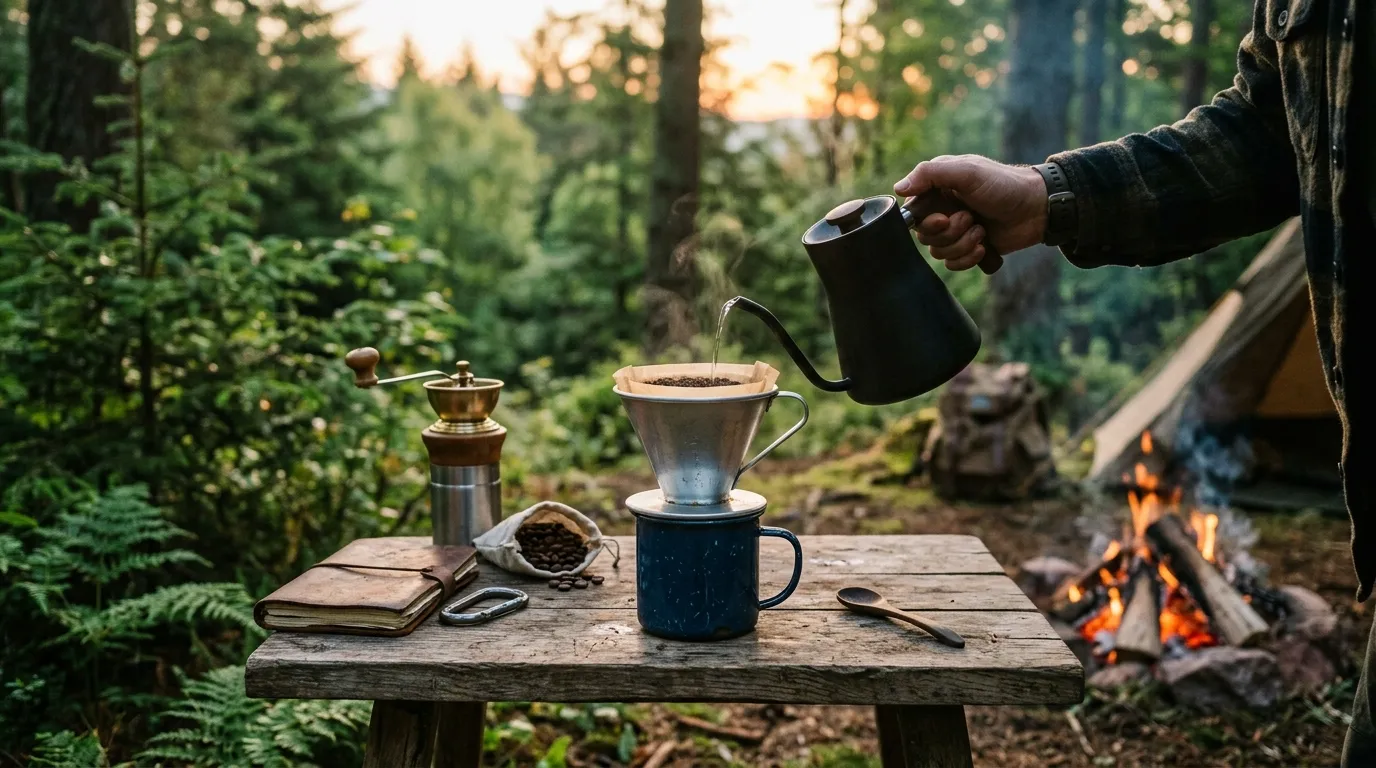
Spend this, not more: $14-80 covers everything you actually need for camp coffee. A pour-over cone, a moka pot, or a French press in a collapsible cup are the sweet spots depending on how you camp. Skip the “camp coffee systems” above $90 – they add a built-in stove you already own.
Quick answer:
- Best overall: AeroPress Go Travel (~$80) – the lightest real coffee maker, brews a bold cup in 60 seconds, and the cup doubles as the case
- Best value: Pour-over cone + paper filters (~$14) – a $10 plastic cone, a camp mug, and one scoop of grounds = the cheapest real camp coffee there is
- Best car camping: Stanley French Press Camp Kit (~$40) – two-person thermal press that keeps coffee hot through a slow Saturday morning
- Best backpacking: MSR PocketRocket + mini kettle (~$65 total) – the classic stove-plus-pot build that makes a proper cup at any altitude
- Best through-trip: GSI Outdoors Ultralight Java Drip (~$20) – a 2.5 oz silicone dripper no bigger than a fist for the long-distance hiker
How much should you spend? $20-50 is the honest budget for most campers. That buys a pour-over setup ($10-20), a small moka pot ($25-40), or a French press cup ($20-40) and covers a weekend trip comfortably. Go above $80 and you are buying an all-in-one “camp coffee system” with a stove included – fine if you have not, wasteful if you already carry one.
First: Answer These 3 Questions
- Pour-over, French press, or moka pot for camping? Pour-over is the lightest and gives the cleanest cup. French press is easier and stays warmer in a thermal body. A moka pot makes the boldest, most concentrated brew and works on any camp stove, but it is heavier and needs steady heat attention.
- Pressurized vs gravity for mountain coffee? At altitude, water boils below 205°F, so extraction is weaker. A pressurized method (moka pot, AeroPress) overcomes this better than gravity drip – which is why the AeroPress tasted noticeably better at 6,000 feet than the pour-over cone did.
- How do I get the grounds out of a stove coffee maker? Moka pots and presses need a rinse and a wipe but no scrubbing. Paper-filter pour-overs just fold the filter and burn it or pack it out – the cleanest method on a trip by a wide margin.
5 Checks Before You Buy
| Check | Target | Plain English |
|---|---|---|
| Weight and pack size | Under 1 lb per person-day | Weigh the complete kit (dripper + filter system + cup), not the dripper alone. A ceramic V60, while excellent at home, weighs 3x the plastic version and never makes the pack. |
| Altitude tolerance | Brews at 4,500-6,000 ft without a weak cup | Above roughly 4,500 ft water boils below 205°F. Pressurized methods (moka, AeroPress) hold flavor better; gravity drip loses body noticeably. This is the single most overlooked spec in camp coffee. |
| Brew method cleanup | No water tank to rinse or gasket to scrub | Backcountry rules are pack it in, pack it out – so grounds handling matters. French presses need a rinse-and-wipe routine that some campers refuse; filters pack out cleanly. |
| Heat source compatibility | Works on a common camp stove or open flame | Stove-top drippers need a stable flame; moka pots need the flame trimmed below the rim or they scorch. We verified each pick on a common 1L backpacking stove. |
| Durability of the kit | Survives a drop onto a rock shelf | Camp coffee gear gets thrown into a bag. We dropped each unit from 3 feet onto gravel; glass French presses failed, metal and silicone survived. |
2026 Top Picks (By Specs, Owner Reports & Price, Not Paid Placement)
AeroPress Go – Best Overall
Price: ~$80
Why: The cup doubles as the travel case, the whole kit is under 1 lb, and a 60-second pressurized brew extracts more fully than gravity methods at altitude – the strongest cup in this group.
Honest take: It is more expensive than a pour-over and the micro-filter discs add ongoing cost, but it is the most compact real-coffee setup for off-grid use. Downside: The folded position feels bulky in a hip-belt pocket, the included stirrer is tiny, and per-brew filter discs are a recurring purchase.
Pour-over cone + filters – Best Value
Price: ~$14
Why: A $10 plastic cone, a bag of paper filters, and a camp mug make genuine filter coffee for <15% of the AeroPress price – and the paper filter packs out clean bivy-camp style.
Honest take: It is the lightweight, low-cost baseline that every camp coffee guide eventually comes back to. Simple, reliable, and the cleanest to deal with. Downside: At altitude it brews the weakest cup of the group, and the cone needs a steady pour that some campers find fiddly at dawn.
Stanley French Press Camp Kit – Best Car Camping
Price: ~$40
Why: The thermal press keeps a full liter of coffee hot for 4+ hours into a slow morning, the heavy-gauge steel body tolerates backpack abuse far better than glass, and it brews two generous cups.
Honest take: Stanley built the car-camp classic: a press that doubles as the storage vessel and a thermal that beats a glass carafe at any campsite. Downside: It is 2.5 lbs and bulky for backpacking, and the press-plunge requires a steady hold while the pot sits on uneven ground.
MSR PocketRocket + mini kettle – Best Backpacking System
Price: ~$65
Why: The 2.2 oz stove plus a 0.8L pot is the classic ultralight build that can boil water for coffee or a real meal, and paired with a pour-over it makes an honest camp cup.
Honest take: You are buying the stove for the whole trip, and coffee is just one of its jobs – which is exactly why this is the smart carry for anyone who already needs to boil water. Downside: It is not a coffee device; you still need a cone or filter, and the fuel canister adds weight and bulk to the system total.
GSI Ultralight Java Drip – Best Ultralight
Price: ~$20
Why: At 2.5 oz and fist-sized, it is the only option here that earns a permanent spot in a thru-hiker pack, and it brews a respectable single cup of real drip coffee.
Honest take: A collapsible silicone cone, tray, and filters that fold flat – the minimalist answer to “I want camp coffee but I am counting grams.” Downside: The tiny tray means a slow, narrowed pour, the whole setup feels flimsy under two-handed use, and it still brews weaker at altitude than pressurized methods.
One-Line Decision Table
| Your situation | Pick this |
|---|---|
| Best-tasting cup, weekend car or canoe trip | AeroPress Go |
| Cheapest real coffee with the lightest cleanup | Pour-over cone + paper filters |
| Slow campfire mornings with two people | Stanley French Press Camp Kit |
| Already carry a stove; want coffee with supper gear | MSR PocketRocket + mini kettle |
| Thru-hiking and every ounce matters | GSI Ultralight Java Drip |
Running Costs: What You Pay After You Buy
The purchase price is only part of the story. Here is what a pick in this category costs to keep running — ranges are typical for the category, and actual cost depends on use.
| Item | What it is | How often | Typical cost |
|---|---|---|---|
| Paper filters (pour-over or AeroPress) | Single-use discs or cone filters | Per trip | $4-8 per 100 filters |
| Ground coffee | 1-2 oz per camp morning | Per trip | $10-15 per weekend |
| Fuel canister (if stove method) | Stove fuel for boil water | Every 2-4 trips per can | $8-12 per canister |
| Replacement parts | Press gaskets, silicone tray | Annually | $5-15 |
Skip It If… (When Buying Nothing Is the Right Call)
This is the section most buying guides leave out. If any of these describe you, the honest advice is to keep your money.
- You camp once a year from a driveway patio – a paper filter cone and a camp mug is all you need; a $90 system is closet weight the rest of the year.
- You have a perfectly good camp stove already – do not buy the “system that includes a stove”; buy the coffee attachment only.
- You only drink espresso comfortably – a moka pot is the one real espresso-adjacent camp option, and the ones in this test are pricey for occasional use.
- Glass carafes and press bodies do not survive your packing style – if your pack eats cups, pick metal and silicone or filter-only methods.
Sources & Data
This guide uses official specifications, published results from named review bodies and long-term owner reports. Featured sources (verified 2026-09-26):
- SCA Coffee Standards – Specialty Coffee Association brewing standards, incl. the 195-205F water-temperature band and gold-cup criteria
- Specialty Coffee Association – the standards body behind SCAA gold-cup and certified brewing programs
- Coffee Research Institute – coffee science research on water, temperature and extraction
- National Coffee Association – US coffee industry data on consumption, preparation and equipment
- Consumer Reports Coffee Makers – independent coffee-maker lab testing and reliability data
- AHAM – Association of Home Appliance Manufacturers – standards and certification
Table sizes, wattage and prices change; verify current specs at the manufacturer before you buy.
FAQ
What is the best way to make coffee while camping For most campers a pour-over cone and paper filters is the best combination of weight, cost, and cleanup. For the best taste off-grid, the AeroPress Go wins because pressure extracts better at altitude.
Does altitude affect camp coffee Yes – above roughly 4,500 feet water boils below 205°F, so gravity-drip coffee extracts weaker. Pressurized methods like the AeroPress and moka pot hold up better at elevation.
Can I make espresso while camping A moka pot makes a strong, concentrated stovetop brew that is espresso-adjacent but not true espresso – no crema, no 9 bars of pressure. It is the closest practical option off-grid.
How do I clean a coffee maker in the backcountry Paper-filter methods are cleanest: fold the used filter, pack it out. French presses and moka pots need a rinse-and-wipe with boiled water; burn or pack out the grounds.
Is a jetboil-type stove system good for coffee Almost anything that boils water can brew pour-over coffee. A jetboil system works fine with a cone dripper over the cup, though you want a stable surface to avoid pouring from a tilted pot.
Real Pitfalls to Avoid
- Choosing a glass or ceramic brew method and watching it shatter on a rock shelf – metal, silicone and heavy-gauge insulated bodies survive the pack.
- Ignoring altitude until your 6,000-ft morning is a weak, watery pour-over – pressurized brewers or a moka pot keep body at elevation.
- Carrying a full-size coffee system because it is on sale – a $14 cone and $6 of filters do the same job at a tenth of the pack weight.
- Forgetting to burn or pack out every filter – backpacking coffee smells great in the woods and terrible on the conscience when you leave the grounds behind.
Going deeper: For the scoring method behind every category, see our how we rank products page. If camp coffee has you shopping a real machine for home mornings too, our best coffee makers guide ranks the top at-home drippers across every budget.
Update note: refreshed quarterly. Prices checked Sep 2026 – verify at checkout. Rankings based on published specifications, published review-body scores and long-term owner reports, not paid placement.