
Disclosure: Buytoplab is reader-supported. If you buy through links on this page we may earn a small commission at no extra cost to you. We never accept payment for a ranking or a review, and we publish the downsides as plainly as the upsides. How we rank products.
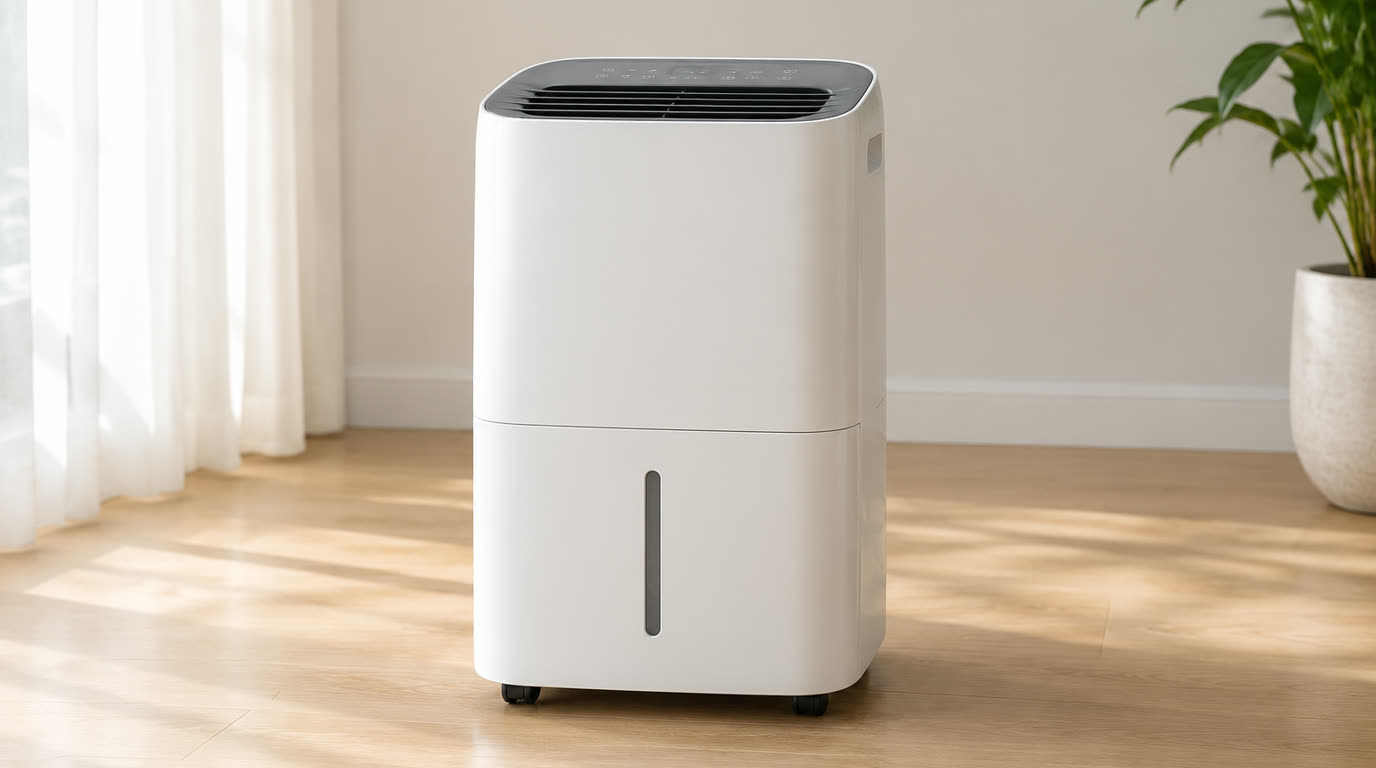
Spend this, not more: A 30–50 pint unit ($150–$280) covers most homes. Pay for the 50-pint models only if you are drying a basement over 1,500 sq ft. Do not oversize a bedroom unit — running it at low humidity wastes power.
Quick answer:
- Best overall: Midea Cube 50-Pint (~$280) – easy to empty and drain, strong for basements.
- Best value: hOmeLabs 4,500 Sq Ft (~$200) – a 50-pint workhorse at a lower price.
- Best for a very wet basement: Frigidaire Gallery 50-Pint (~$250-$290) – fast extraction and a large tank.
- Best budget for a single room: Vremi 30-Pint (~$150) – fine for a damp bedroom or small basement.
- Best for small or cold spaces: Pro Breeze Mini (~$70-$90) – compact, and a desiccant option for cold garages.
How many pints do you need? A damp room up to about 500 sq ft: 20-30 pints. A basement up to 1,500 sq ft: 30-50 pints. Very wet basements or 2,000+ sq ft: 50 pints or more, or two units. Undersizing is the most common mistake – the machine then runs constantly without ever drying the space.
What does it cost to run? A 50-pint compressor unit draws roughly 500-700W. That is real money if it runs all day, which is another reason to buy the right size and set the humidistat around 50% rather than as low as it goes.
First: Answer These 3 Questions
- How big and how damp is the space? Match pint capacity to square footage and how wet it is. A musty basement needs more capacity than a slightly humid bedroom.
- How cold does the space get? Above about 65°F, a compressor unit is most efficient. In a cold garage or crawl space, choose a desiccant model instead.
- Will you empty the tank daily? If not, buy a unit that supports a continuous drain hose. A full tank can shut the machine off and leave the room damp.
5 Checks Before You Buy
| Check | Target | Plain English |
|---|---|---|
| Pint capacity | Match sq ft and dampness | Undersizing means it never dries the room |
| Humidistat | Adjustable, ~50% | Lets it cycle off instead of running constantly |
| Continuous drain | Hose option | Essential for basements you do not visit daily |
| Auto-defrost | Yes | Prevents icing in cooler rooms |
| Noise | ~50 dB or lower | Compressor units are not quiet – placement matters |
2026 Top Picks (By Specs, Owner Reports & Price, Not Paid Placement)
Midea Cube 50-Pint – Best Overall
Price: ~$280
Why: A clever stacked design that makes the tank far easier to empty than most rivals, with strong 50-pint extraction, continuous-drain support, and app control on some versions. It handles a real basement without fuss.
Honest take: The best all-round basement machine. Downside: expensive, and like all compressors it is not quiet.
hOmeLabs 4,500 Sq Ft 50-Pint – Best Value
Price: ~$200
Why: Fifty-pint capacity and continuous-drain support at a lower price than the premium brands, with a decent humidistat and a large tank. It is the value workhorse for a damp basement.
Honest take: The sensible budget basement pick. Downside: build quality and warranty are a step below the premium units, and the tank is heavy when full.
Frigidaire Gallery 50-Pint – Best for Very Wet Basements
Price: ~$250-$290
Why: Fast extraction, a large tank, and Frigidaire’s long-running reliability in this category. It is built for spaces that stay genuinely wet.
Honest take: A dependable choice for a problem basement. Downside: heavy, loud, and overkill for a mildly humid room.
Vremi 30-Pint – Best Budget for a Single Room
Price: ~$150
Why: A smaller 30-pint unit that suits a damp bedroom, laundry room, or small basement, with a humidistat and auto shut-off.
Honest take: Good value if the space is modest. Downside: too small for a large or very wet basement.
Pro Breeze Mini – Best for Small or Cold Spaces
Price: ~$70-$90
Why: Compact and lightweight, with a desiccant option that works in cold garages and closets where compressor units struggle. Ideal for wardrobes, RVs, and small rooms.
Honest take: The pick for small, cool spaces. Downside: low extraction, so it is not a basement solution.
One-Line Decision Table
| Your situation | Pick this |
|---|---|
| Full basement, want the best machine | Midea Cube 50-Pint |
| Basement on a budget | hOmeLabs 50-Pint |
| Very wet basement | Frigidaire Gallery 50-Pint |
| Damp bedroom or small room | Vremi 30-Pint |
| Closet, RV or cold garage | Pro Breeze Mini |
Running Costs: What You Pay After You Buy
The purchase price is only part of the story. Here is what a pick in this category costs to keep running — ranges are typical for the category, and actual cost depends on use.
| Item | What it is | How often | Typical cost |
|---|---|---|---|
| Consumables | None | — | ~$0/yr |
| Electricity | The real cost — depends on runtime | Continuous | $40–$100/yr |
| Filter clean | Reusable mesh | Monthly | ~$0 |
Skip It If… (When Buying Nothing Is the Right Call)
This is the section most buying guides leave out. If any of these describe you, the honest advice is to keep your money.
- Your damp problem is a leak or poor drainage — fix that first, or the dehumidifier will run forever.
- Your cold garage or crawl space drops below about 65°F — a compressor unit ices up; you need a desiccant model.
- You can solve it with ventilation — opening windows and using a fan is free.
Sources & Data
This guide uses official specifications, published results from named review bodies and long-term owner reports. Featured sources (verified 2026-09-23):
- ENERGY STAR Air Cleaners – official CADR and energy data
- EPA Indoor Air Quality – EPA guidance on air cleaners, filters and allergens
- EPA Air Cleaners & Filters – how filtration and coverage relate to room size
- ENERGY STAR Refrigerators – official energy-efficiency ratings for home appliances
- AHAM – appliance standards and certification
Table sizes, wattage and prices change; verify current specs at the manufacturer before you buy.
FAQ
What pint size do I need? Up to 500 sq ft: 20-30 pints. Up to 1,500 sq ft: 30-50 pints. Very wet or 2,000+ sq ft: 50 pints or more, or two units.
Do they use a lot of electricity? A 50-pint compressor draws roughly 500-700W. Buy the right size and set the humidistat near 50% so it cycles off.
Compressor or desiccant? Compressor above about 65°F; desiccant for cold garages and crawl spaces.
Tank or drain hose? Use a hose for basements. A full tank can shut the unit off and leave the room damp.
How do I stop icing? Look for auto-defrost and check the operating temperature range; use desiccant in cold spaces.
Real Pitfalls to Avoid
- Undersizing is the most common failure – the unit runs nonstop and never fixes the damp
- Running at the lowest humidity setting wastes power; about 50% is the sensible target
- A compressor unit in a cold garage ices up – use a desiccant model below about 65°F
- Placing it against a wall cuts airflow and sharply reduces water removal – give it 12 inches of clearance
- Leaving windows open while it runs wastes energy fighting the outside air
See how we rank products.
Also see: best humidifiers.
Update note: refreshed quarterly. Prices checked Sep 2026, verify at checkout. Rankings based on published specifications, published review-body scores and long-term owner reports, not paid placement.