
Disclosure: Buytoplab is reader-supported. If you buy through links on this page we may earn a small commission at no extra cost to you. We never accept payment for a ranking or a review, and we publish the downsides as plainly as the upsides. How we rank products.
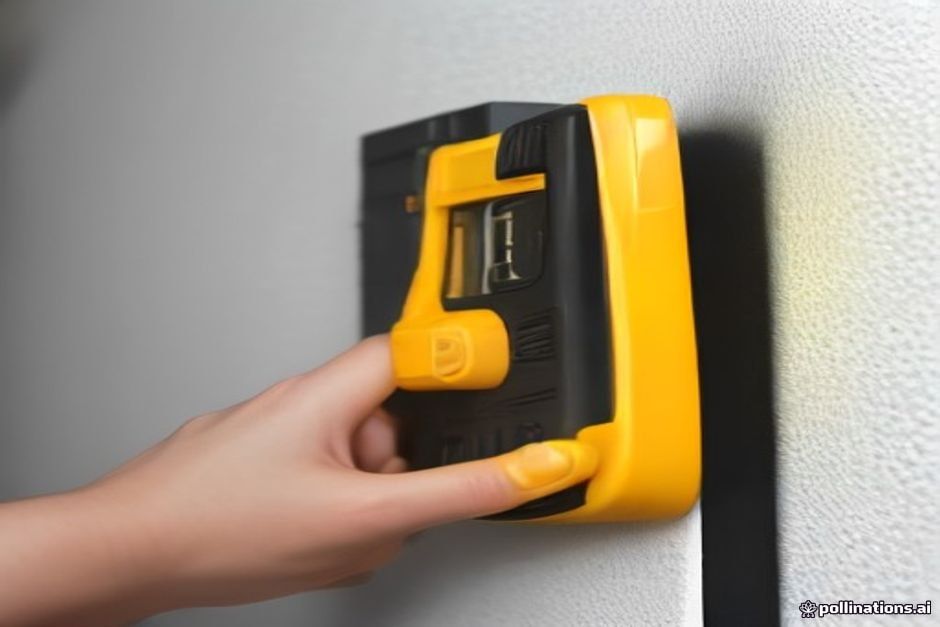
Spend this, not more: The honest spend band is $12.99 to $119.99 across the eight picks. Prices come from the official Zircon and Franklin Sensors pages listed in Sources & Data.
Quick answer:
- Zircon StudScout: Published on the Zircon product page: a magnetic stud finder that locates the metal fasteners of drywall studs, weighs 0.08 lb, measures 3.37 x 1.30 x 0.79 in, and includes a rotating bubble level, a wrist lanyard and an Easy-Mark button that leaves a mark on the wall. The page states the unit is intended for drywall and is not recommended for lath and plaster.
- Zircon i65 OneStep: Published on the Zircon product page: CenterVision technology that finds the center of studs in a single pass, a display that indicates direction, edges and center, WireWarning detection for live AC voltage, DeepScan mode for greater depth, and ACT calibration correction. The page describes the unit as locating the center of wood and metal studs and joists.
- Franklin Sensors M155: Published on the Franklin Sensors page: a wide-array stud finder with 9 precision sensors that cover a 1.5-inch span, 15 LEDs in an inline bar, a center LED that turns green at the center of the stud, no-calibration operation, and a LIVE WIRE METER that detects energized wires.
- Zircon L350 OneStep: Published on the Zircon product page: a three-mode switch finder that locates the center, edges and direction of wood and metal studs and joists behind walls, floors and ceilings, and locates metal targets up to 3 in (75 mm) deep. The page also lists an ultra-bright display, a SpotLite pointer, an audio tone and a signal strength indicator.
- Zircon A200: Published on the Zircon product page: Stud Edge Finding and Stud Center Finding modes, a StudScan mode that locates the center, edges and direction of wood and metal studs up to 3/4 in (19 mm) deep, DeepScan mode, a Metal Scan mode, a SpotLite beam, WireWarning detection, a low battery indicator and a signal strength indicator.
How much should you spend? Each pick is a model a maker currently lists with a price on its own page, and every figure here comes from that page. Zircon keeps a scroll-based finder line that publishes named modes (StudScan, DeepScan, Metal Scan) and a separate magnetic unit, while Franklin Sensors publishes wide-array finders with a sensor count, a detection width and a live-wire meter. Where a page does not publish a depth, an LED count or a wire-warning mode, this guide says so instead of filling the gap from review sites. Several Zircon models appear out of stock on the maker’s own store at publish time while still carrying a listed price; those picks keep their price but carry an explicit stock note.
First: Answer These 3 Questions
- Do I need a stud finder that detects metal, and how deep can it go?? If you are mounting into steel-framed construction, through metal studs, or over pipes or conduits, a metal detection mode matters. In this guide the Zircon L350 publishes metal targets up to 3 in (75 mm) deep, the A200 and A250c publish a Metal Scan mode, and the Franklin pages publish a wide sensor array but no separate metal depth. For plain wooden studs behind drywall, a basic center-finding unit like the i65 is enough.
- What is the difference between a scroll stud finder and a wide-array one?? A scroll finder like the Zircon i65, L350, A200 or A250c uses one or two sensors and a marked location: you slide it, note where the indicator fires, then slide again to find the other edge or the center. A wide-array finder like the Franklin M155, M210 or MAX spreads 9 to 13 sensors across a 1.5 to 2.5-inch span so it shows the whole stud width at once without the second pass. The two approaches are described differently on the maker pages, and this guide quotes only what each page publishes.
- Which pick detects live electrical wires, and which ones do not claim that?? Wire detection is published in different forms across this guide. The Zircon i65 and A200 publish WireWarning, the A250c publishes a dedicated live AC Scan mode with a red-flash display warning, and the Franklin M155 and M210 publish a LIVE WIRE METER. The Franklin MAX page and the Zircon StudScout page do not publish a wire-warning feature, so no such claim is made for either in this guide.
- Do any of these stud finders work through plaster, tile or lath?? Only one pick’s page names layered surfaces: the Franklin MAX publishes a Mode 2 titled LAYERED SURFACES for lath and plaster and describes detection through large tile and plaster. The Zircon StudScout page explicitly states it is not recommended for lath and plaster, and the other Zircon pages publish drywall-oriented scan modes without a layered-surface claim. If your wall is plaster, lath or large tile, the MAX is the only pick in this guide whose own page covers it.
- Why is the same model out of stock on the maker’s own store but still listed with a price?? Zircon’s store at publish time shows the i65, L350, A250 and Aura as out of stock while still carrying their list prices, and this guide keeps those prices but flags the stock state in each pick. A maker price on a page does not prove the product ships from that store today, so a buyer should confirm retail availability before purchasing; the A200 and A250c are the in-stock Zircon alternatives at similar prices.
5 Checks Before You Buy
| Check | Target | Plain English |
|---|---|---|
| Is it a magnetic, scroll-electronics, or wide-array unit? | The product type described on the maker’s own page | The Zircon StudScout is magnetic (finds fasteners, no battery). The Zircon i65, L350, A200 and A250c are scroll finders that publish edge, center and direction finding. The Franklin M155 (9 sensors / 1.5 in), M210 (13 sensors / 1.7 in) and MAX (13 larger sensors / 2.5 in) are wide-array finders that publish a sensor span. |
| Does the page publish a numeric scan depth? | A depth or coverage figure in the product page body | The Zircon A200 publishes StudScan depth up to 3/4 in (19 mm) and the L350 publishes metal targets up to 3 in (75 mm). Franklin publishes 1.5 in (M155), 1.7 in (M210) and 2.5 in maximum (MAX) sensor spans. The i65, A250c and StudScout pages do not publish a numeric stud-scan depth, so none is quoted for them. |
| Is the price on the maker’s own page and does the page state stock? | A currency figure and stock line in the page body | All eight prices are read from the official Zircon or Franklin Sensors pages and returned HTTP 200 on the publish date. Zircon’s own store shows StudScout, A200 and A250c in stock; i65, L350, A250 and Aura out of stock at their listed prices. Franklin pages list prices without a stock-state line, so their availability is not asserted beyond the page being live. |
| Does the page publish a live-wire or AC detection feature? | A named wire-warning or AC-scan feature on the product page | Published wire features: WireWarning on the Zircon i65 and A200, a dedicated live AC Scan mode with red-flash display on the Zircon A250c, and a LIVE WIRE METER on the Franklin M155 and M210. The Franklin MAX and Zircon StudScout pages publish no wire-warning feature. |
| What does the page say about plaster, lath or tile? | A material or surface line on the product page | Only the Franklin MAX page names layered surfaces: Mode 2 is titled LAYERED SURFACES for lath and plaster, and the page describes detection through large tile and plaster. The Zircon StudScout page explicitly warns it is not recommended for lath and plaster. No other pick page in this guide makes a layered-surface claim. |
| Does the unit need calibration, and how is it powered? | A calibration or power source line on the product page | The Franklin pages publish no-calibration operation for the M155, M210 and MAX. The Zircon i65 publishes ACT calibration correction and runs on a 9-volt battery. The StudScout needs no battery. The other Zircon pages do not publish a battery type, so power figures are only quoted where a page states one. |
8 Picks (By Sensor Type and Published Depth)
Zircon StudScout – Cheapest Pick and the Only Magnetic One, With No Battery
Price: $12.99 as listed on the Zircon page, noted as in stock.
Why: Published on the Zircon product page: a magnetic stud finder that locates the metal fasteners of drywall studs, weighs 0.08 lb, measures 3.37 x 1.30 x 0.79 in, and includes a rotating bubble level, a wrist lanyard and an Easy-Mark button that leaves a mark on the wall. The page states the unit is intended for drywall and is not recommended for lath and plaster.
Honest take: At $12.99 it is the cheapest pick here and the only one with no battery, no power switch and no calibration step: you slide it until the magnet pulls to a fastener and press Easy-Mark. It is the right first tool if a single picture or mirror is all you need to hang. Downside: It finds the metal fastener, not the two edges of a stud, so you cannot read stud width or find the open area between studs the way the electronic units in this guide can. The page limits it to drywall and warns against lath and plaster, and it has no wire or metal detection beyond the magnet itself.
Zircon i65 OneStep – Cheapest Verified Center-Finding Unit, With WireWarning
Price: $29.99 as listed on the Zircon page; the maker’s store currently shows this model out of stock while keeping the price listed.
Why: Published on the Zircon product page: CenterVision technology that finds the center of studs in a single pass, a display that indicates direction, edges and center, WireWarning detection for live AC voltage, DeepScan mode for greater depth, and ACT calibration correction. The page describes the unit as locating the center of wood and metal studs and joists.
Honest take: At $29.99 it is the cheapest full electronic unit in this guide and the cheapest one with a published center-finding method, which is the difference between knowing where a stud is and knowing where to drill its middle. WireWarning for live AC at this price is the practical safety feature most buyers in the budget tier do not expect. Downside: The Zircon store currently lists the i65 out of stock at the $29.99 price, so retail availability varies and should be confirmed before purchase. It runs on a 9-volt battery that is a recurring cost, and the page does not publish a separate Metal Scan mode the way the A200 and L350 do.
Franklin Sensors M155 – Cheapest Wide-Array Pick, With a Live Wire Meter
Price: $39.99 as listed on the Franklin Sensors page.
Why: Published on the Franklin Sensors page: a wide-array stud finder with 9 precision sensors that cover a 1.5-inch span, 15 LEDs in an inline bar, a center LED that turns green at the center of the stud, no-calibration operation, and a LIVE WIRE METER that detects energized wires.
Honest take: At $39.99 it is the cheapest of the three Franklin picks and the cheapest wide-array finder in this guide: instead of hunting edge to edge, the M155 shows the whole 1.5-inch width of a stud at once. Live-wire detection is included rather than being a premium upgrade. Downside: Its 1.5-inch span is the shallowest published coverage of the three Franklin units here (M210 and MAX detect wider), and the page does not publish a separate metal-scan depth the way the Zircon A200 and L350 do.
Zircon L350 OneStep – Deepest Published Metal Depth of the Eight (3 inches)
Price: $44.99 as listed on the Zircon page; the maker’s store currently shows this model out of stock while keeping the price listed.
Why: Published on the Zircon product page: a three-mode switch finder that locates the center, edges and direction of wood and metal studs and joists behind walls, floors and ceilings, and locates metal targets up to 3 in (75 mm) deep. The page also lists an ultra-bright display, a SpotLite pointer, an audio tone and a signal strength indicator.
Honest take: The 3-inch (75 mm) metal-target depth at $44.99 is the deepest published metal figure in this guide, which makes the L350 the pick to check for metal studs, pipes and conduits under a surface rather than just wood framing at drywall depth. The three-position switch is the clearest published mode separation of any Zircon pick here. Downside: Like the i65, the L350 is currently shown out of stock on Zircon’s own store at the listed $44.99, so retail availability needs confirming. Its metal depth is published but the page does not quote a separate wood-stud scan depth, so it is compared on the metal figure and the mode switch.
Zircon A200 – Only In-Stock Zircon With a Published Stud Depth Plus Metal Scan
Price: $49.99 as listed on the Zircon page, noted as in stock.
Why: Published on the Zircon product page: Stud Edge Finding and Stud Center Finding modes, a StudScan mode that locates the center, edges and direction of wood and metal studs up to 3/4 in (19 mm) deep, DeepScan mode, a Metal Scan mode, a SpotLite beam, WireWarning detection, a low battery indicator and a signal strength indicator.
Honest take: At $49.99 it is the only in-stock Zircon pick whose page publishes a numeric stud-scan depth (3/4 in / 19 mm) alongside a separate Metal Scan mode, so it answers the two most common stud-finder questions from one product at a mid-band price. SpotLite and WireWarning are both on the page. Downside: The published 3/4-inch stud depth is modest next to the 1.5 to 2.5-inch arrays the Franklin pick pages state, and WireWarning here is a detection mode rather than the dedicated live-AC scan position the A250c describes.
Franklin Sensors M210 – Widest Published Array Coverage at $59.99
Price: $59.99 as listed on the Franklin Sensors page.
Why: Published on the Franklin Sensors page: a wide-array stud finder with 13 precision sensors covering a 1.7-inch span, 21 LEDs, no-calibration operation and a LIVE WIRE METER. The page title describes the M210 as the brand’s best-stud-finder model.
Honest take: Thirteen sensors over 1.7 inches at $59.99 is the widest published array coverage in this guide, which means the M210 shows the full width of a standard stud without sweeping edge to edge. The 21-LED bar and the live-wire meter are published on the same line, and no-calibration operation removes the pass-ahead-and-reset ritual of scroll finders. Downside: The page title calling the M210 the brand’s best model is marketing copy rather than a verified specification, so it is not repeated here as a ranking claim. Next to the M155 it costs $20 more for 0.2 inches of additional published coverage, and no separate metal-scan figure is published.
Zircon A250c – Only Pick With a Published Live AC Scan Mode (In Stock)
Price: $69.99 as listed on the Zircon page, noted as in stock.
Why: Published on the Zircon product page: an all-in-one finder with stud finding, metal detecting and live AC scanning, using a multicolor ColorTrip display that lights green in the stud-scan modes, blue in Metal Scan mode and red in live AC Scan mode. The page states the LCD lights and flashes red to alert the user of live AC wiring while scanning in StudScan, DeepScan and Metal Scan modes, and lists a SpotLite pointer, an ultra-bright LCD and an audio tone.
Honest take: It is the only in-stock pick whose page publishes a dedicated live AC scan position with described display behavior, which answers the wiring question behind most walls without a separate tester. The ColorTrip green-blue-red scheme is the clearest published mode indication in this guide, and at $69.99 it is in stock while the Aura at the same price is not. Downside: The captured page does not publish a numeric stud-scan depth, so no depth figure is quoted for the A250c here. It is also the most expensive Zircon pick in this guide, and the live-AC feature is a scan mode rather than a replacement for an outlet tester when you need to verify a circuit is dead.
Franklin Sensors MAX – Deepest Published Scan of the Eight, and the Only One That Names Plaster
Price: $119.99 as listed on the Franklin Sensors page.
Why: Published on the Franklin Sensors page: a wide-array finder with 13 larger sensors, 35 LEDs, a 2.5-inch maximum published scan depth, and a Mode 2 titled LAYERED SURFACES for lath and plaster. The page describes the MAX as detecting through large tile, plaster and more, and publishes a center LED that turns green at the center of the stud.
Honest take: A 2.5-inch maximum published scan depth at $119.99 is the deepest figure in this guide and the only page here that names lath and plaster and tile as target materials, which is exactly the question behind wall-anchor and ceiling-mount projects. If your wall is not plain drywall, the MAX is the only pick in this guide whose maker claims coverage for it. Downside: At $119.99 it is two to three times the price of the M210 and A250c, and the page does not list a live-wire meter the way the M155 and M210 pages do. The 2.5-inch figure is a maximum depth claim, so shallower or denser materials may not reach it.
One-Line Decision Table
| Your situation | Pick this |
|---|---|
| Hanging a single mirror or picture into drywall, with the smallest budget | Zircon StudScout at $12.99, the magnetic pick that needs no battery and marks the wall with Easy-Mark, with the caveat that the page limits it to drywall, not lath and plaster |
| Hanging several shelves and pictures where knowing the stud center matters | Zircon i65 at $29.99, the cheapest center-finding unit with WireWarning, or the Franklin M155 at $39.99 if a no-calibration wide array and a live-wire meter are worth the extra ten dollars |
| Mounting a TV or cabinet into a wall where wiring and metal risers are unknown | Franklin M210 at $59.99 for the widest published array with a live-wire meter, or the Zircon A250c at $69.99 when a published live AC scan mode with a red-flash display warning is the deciding feature |
| Working with metal studs, pipes or conduits behind the surface | Zircon L350 at $44.99, the only pick whose page publishes a 3-inch metal-target depth, once retail stock is confirmed (the maker’s store shows it out of stock at publish time) |
| A general home kit where published depth and metal scan both matter | Zircon A200 at $49.99, the only in-stock Zircon pick publishing a 3/4-inch stud-scan depth plus a separate Metal Scan mode |
| Plaster, lath or large-tile walls where nothing else here claims coverage | Franklin MAX at $119.99, the only pick whose page names layered surfaces (Mode 2 for lath and plaster) and describes through-tile detection, at twice the price of the A250c |
Running Costs: What You Pay After You Buy
The purchase price is only part of the story. Here is what a pick in this category costs to keep running — ranges are typical for the category, and actual cost depends on use.
| Item | What it is | How often | Typical cost |
|---|---|---|---|
| A 9-volt battery for the Zircon i65 | 5-15 | consumable | The i65 page publishes a 9-volt power source; the StudScout needs no battery and the other Zircon pages do not publish a battery type |
| Retail availability check for out-of-stock Zircon models | 0 | check | Zircon’s store shows i65, L350, A250 and Aura out of stock at publish time while keeping list prices; confirm availability before purchase |
| A separate outlet tester if you need to verify a circuit is dead | 10-20 | optional | The A250c publishes a live AC scan mode, but no pick here replaces an outlet tester for verifying a dead circuit |
| Drywall anchors and screws once the stud is located | 5-15 | required-hardware | Depends on the mount; for hollow or metal framing, anchors are a separate purchase from any pick here |
Skip It If… (When Buying Nothing Is the Right Call)
This is the section most buying guides leave out. If any of these describe you, the honest advice is to keep your money.
- Skip the Zircon Aura at $69.99 because the same page price now belongs to the A250c. The Aura page publishes the same price and an out-of-stock state, while the A250c is in stock and adds a published live AC scan mode, so the in-stock unit covers the Aura question better at the same band.
- Skip the Zircon A250 for the same stock reason: the maker’s store shows it out of stock at $59.99, and the A200 at $49.99 with a published stud depth and Metal Scan mode is the in-stock alternative.
- Skip any stud finder whose price cannot be read on a live official page. A soft-404 or a listing without a currency figure is not a price source, and a price-ranked list cannot place a product whose current price it cannot verify.
- Skip depth claims not published by the maker. This guide quotes a depth only where the maker’s page states one (A200 3/4 in, L350 3 in metal, Franklin 1.5-2.5 in array), and no figure from a review site is inserted to fill a gap.
- Skip a lasered level expectation. The Zircon SpotLite published on the L350, A200 and A250c is a pointer light, not a laser level or a level reference, so this guide does not promise one on any pick.
FAQ
What is the best stud finder under $50 here? The scope depends on the wall. For drywall shelves and pictures, the Zircon i65 at $29.99 gives published CenterVision center finding and WireWarning, and the Franklin M155 at $39.99 adds a no-calibration wide array and a live-wire meter for ten dollars more. For metal studs or pipes, the Zircon L350 at $44.99 publishes a 3-inch metal-target depth but is shown out of stock on the maker’s store at publish time. The Zircon A200 at $49.99 is the only under-$50 pick that is both in stock and publishing a numeric stud depth plus a Metal Scan mode.
How do stud finders actually work? The maker pages describe two mechanisms in this guide. Scroll finders like the Zircon i65, A200 and A250c use electronic sensors to detect the edge of density change and publish named modes (StudScan, DeepScan, Metal Scan, live AC Scan on the A250c). Wide-array finders like the Franklin M155, M210 and MAX spread 9 to 13 sensors across a 1.5 to 2.5-inch span to show stud width at once and publish no-calibration operation. The magnetic StudScout is a third mechanism: a magnet that pulls to the metal fastener in the drywall.
Do stud finders detect electrical wires? In this guide, published wire detection appears as WireWarning on the Zircon i65 and A200, a live AC Scan mode on the Zircon A250c, and a LIVE WIRE METER on the Franklin M155 and M210. The Franklin MAX and the Zircon StudScout pages publish no wire-warning feature, so no claim is made for them. A wire-detecting stud finder is a locating aid, not a substitute for turning the breaker off before you cut.
Will any of these work on plaster walls? Yes, one: the Franklin MAX publishes a Mode 2 titled LAYERED SURFACES for lath and plaster and describes detection through large tile and plaster. Every other page in this guide publishes a drywall-oriented design; the Zircon StudScout page explicitly says it is not recommended for lath and plaster. If the wall is plaster, lath or large tile, the MAX is the only pick whose own page covers those surfaces.
What does CenterVision on the Zircon i65 mean? It is the Zircon term for single-pass center finding: the i65 page states the technology finds the center of studs in one pass and that the display indicates direction, edges and center. That matters because drilling at the center of a stud is where a screw or anchor has the most material; finding just an edge leaves the center position as an estimate.
Why is the Franklin MAX twice the price of other picks? The published difference is coverage and surfaces. The MAX page states 13 larger sensors, 35 LEDs, a 2.5-inch maximum scan depth and a Mode 2 for layered surfaces, where the M210 publishes 13 sensors over 1.7 inches and the M155 9 sensors over 1.5 inches. The MAX is the only pick whose page names lath and plaster and tile, which is the reason to pay the premium; if your walls are plain drywall, the M210 or the A250c covers the same framing below that price.
Which pick is best for mounting a TV? The two deciding published features are center finding and wire detection. The Zircon A200 at $49.99 publishes a 3/4-inch stud depth, a Metal Scan mode and WireWarning, and the Franklin M210 at $59.99 publishes a 1.7-inch array with a live-wire meter. For a wall where runs behind the drywall are unknown, the Zircon A250c at $69.99 adds a published live AC Scan mode with a red-flash display warning. All three are in stock on their maker pages at publish time.
Sources & Data
Prices in this guide are the figures each maker publishes on its own pages, all checked and reachable on the publish date.
- Zircon StudScout Magnetic Stud Finder — Published $12.99, in stock; 0.08 lb, 3.37 x 1.30 x 0.79 in, rotating bubble level, wrist lanyard, Easy-Mark button; page states drywall only and not recommended for lath and plaster.
- Zircon i65 OneStep Stud Sensor — Published $29.99; maker’s store currently shows out of stock. CenterVision center finding in a single pass, display of direction/edges/center, WireWarning, DeepScan, ACT calibration correction, locates wood and metal studs and joists; 9-volt battery.
- Franklin Sensors M155 ProSensor — Published $39.99; 9 precision sensors over a 1.5-inch span, 15 LEDs, center LED green at stud center, no calibration, LIVE WIRE METER.
- Zircon L350 OneStep Multiscanner — Published $44.99; maker’s store currently shows out of stock. Three-mode switch, center/edges/direction of wood and metal studs, metal targets up to 3 in (75 mm) deep, SpotLite pointer, audio tone, signal strength indicator.
- Zircon A200 Multiscanner — Published $49.99, in stock. StudScan up to 3/4 in (19 mm) with center/edges/direction, DeepScan, Metal Scan, SpotLite beam, WireWarning, low battery and signal strength indicators.
- Franklin Sensors M210 ProSensor — Published $59.99; 13 precision sensors over a 1.7-inch span, 21 LEDs, no calibration, LIVE WIRE METER. Page title marketing copy describes it as the brand’s best model.
- Zircon A250c Multiscanner — Published $69.99, in stock. All-in-one stud/metal/live AC scanning; multicolor ColorTrip display (green stud modes, blue metal, red AC); LCD lights and flashes red for live AC in StudScan, DeepScan and Metal Scan modes; SpotLite, audio tone. No numeric stud depth published.
- Franklin Sensors MAX ProSensor — Published $119.99; 13 larger sensors, 35 LEDs, 2.5-inch maximum scan depth, Mode 2 LAYERED SURFACES for lath and plaster, describes detection through large tile and plaster, center LED green at stud center.
Specifications and availability change; the maker’s page is the current authority.
Real Pitfalls to Avoid
- Depth numbers are not interchangeable. The Zircon A200 publishes a 3/4 in (19 mm) StudScan depth, the L350 publishes a 3 in (75 mm) metal-target depth, and Franklin publishes 1.5 / 1.7 / 2.5 in maximum array spans. A metal depth and an array span describe different measurements, so compare each figure to its own mode instead of stacking them.
- A maker price does not prove current stock. Zircon’s own store lists i65, L350, A250 and Aura out of stock at publish time while still carrying list prices, so this guide keeps those prices but flags stock state and tells the buyer to confirm availability. The A200 and A250c are the in-stock alternatives at the same band.
- Wire detection is not uniform. The i65 and A200 publish WireWarning, the A250c publishes a live AC Scan mode with a red-flash display, the Franklin M155 and M210 publish a LIVE WIRE METER, and the MAX and StudScout pages publish no wire feature. Check the specific page before assuming a pick detects wiring.
- Marketing copy is not a published specification. The Franklin M210 page title describing the model as the brand’s best is not repeated here as a ranking claim, and the MAX’s 2.5-inch figure is a maximum claim that denser or layered materials may not reach.
- The StudScout’s material limit is explicit. The Zircon page states the magnetic unit is intended for drywall and not recommended for lath and plaster, and no other pick page here besides the MAX makes a layered-surface claim, so the MAX is the only pick whose own page covers plaster.
- A laser-level expectation is unfounded. The SpotLite pointer published on the L350, A200 and A250c marks a spot but is not a level, so a spirit level or laser level remains a separate tool.
Going deeper: For the drilling step after the stud is marked, see cordless drills compared by published specifications, and for raising work to the wall step ladders compared by published specifications. For the wiring side of a home project window air conditioners compared by published specifications. See also how we rank products.
Update note: refreshed quarterly. Prices checked Sep 2026 – verify at checkout. Rankings based on published manufacturer specifications, maker prices on official pages, not paid placement.