
Disclosure: Buytoplab is reader-supported. If you buy through links on this page we may earn a small commission at no extra cost to you. We never accept payment for a ranking or a review, and we publish the downsides as plainly as the upsides. How we rank products.
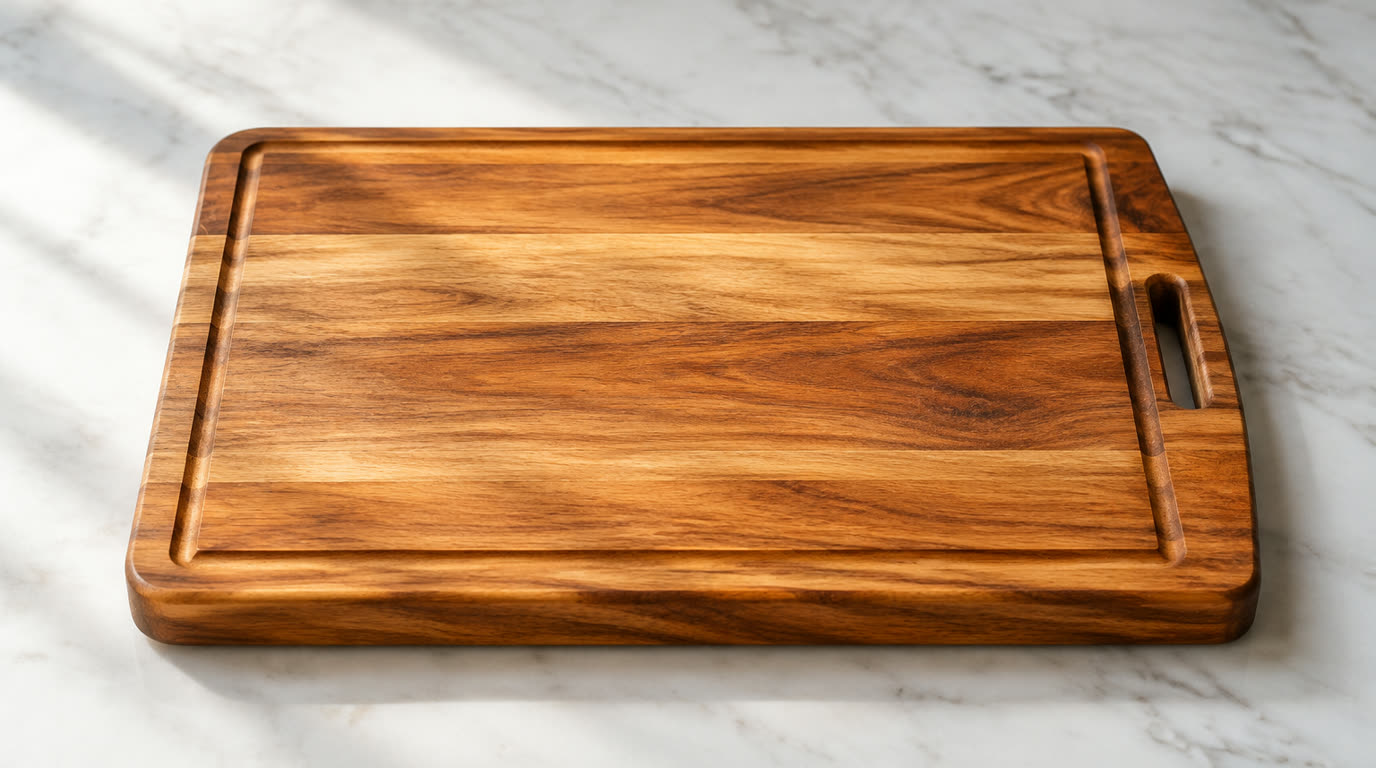
Spend this, not more: Buy one wood board for your main station (~$40-80) and, if you handle raw meat, one plastic board for it (~$15-30). That two-board system is the professional standard.
Quick answer:
- Best wood: Boos Block Maple (~$80) – the counter centerpiece that lasts a decade
- Best value: Mercer Cutting Board (~$30) – composite-tough, wood feel, dishwasher-safe
- Best plastic: OXO Good Grips Classic (~$18) – sturdy, grip-ringed for meat
- Best budget: Nylon composite (~$15) – resilient and dishwasher-friendly
How much should you spend? $40-80 buys a wood board worth owning. Under $30 gets serviceable plastic or composite. Above $100 is almost always aesthetics, not function.
First: Answer These 3 Questions
- Do I cut raw meat? Then you need a separate non-porous (plastic/composite) board for it. Cross-contamination is the #1 food-safety slip.
- Wood or plastic at the main station? Wood/end-grain for vegetables and bread by feel, plastic for anything raw.
- Dishwasher or hand wash? Plastic and composite can be dishwasher-safe; wood is hand-wash always.
5 Checks Before You Buy
| Check | Target | Plain English |
|---|---|---|
| Material | Wood, bamboo or composite | Each balances knife-friendliness vs cleanability. |
| Size | 15×20 inches | Too small is the most common misbuy. |
| Knife-friendliness | Soft enough not to dull | Glass and stone boards are edge killers. |
| Non-slip base | Grippy | A sliding board is a finger risk. |
| Maintenance | Matches your habits | Wood needs oil; plastic does not. |
2026 Top Picks (By Specs, Owner Reports & Price, Not Paid Placement)
Boos Block Maple – Best Wood
Price: ~$80
Why: End-grain maple in a board thick enough to feel like furniture. Knives land softly, cuts self-close, and with monthly oiling it looks new for years.
Honest take: The wood board everyone wants. Downside: Heavy, needs oiling, hand-wash only.
Mercer Cutting Board – Best Value
Price: ~$30
Why: A composite that mimics wood’s feel but survives the dishwasher. Great balance of knife-friendliness and zero maintenance for busy kitchens.
Honest take: The no-maintenance winner. Downside: Tool marks show over time.
OXO Good Grips Classic – Best Plastic
Price: ~$18
Why: A rigid, big plastic board with a ring that catches juice and a non-slip edge. This is the right home for raw chicken.
Honest take: The meat board. Downside: Scratching collects bacteria if you ignore cleaning.
Nylon Composite – Best Budget
Price: ~$15
Why: A forgiving, dishwasher-safe, nearly indestructible board at a price that makes owning two painless.
Honest take: As cheap as it gets without being bad. Downside: Soft marks and lighter weight.
One-Line Decision Table
| Your situation | Pick this |
|---|---|
| Showpiece wood for the counter | Boos Block Maple |
| Wood feel, no maintenance | Mercer Cutting Board |
| A dedicated raw-meat board | OXO Good Grips Classic |
| Two boards for $30 | Nylon Composite x2 |
Running Costs: What You Pay After You Buy
The purchase price is only part of the story. Here is what a pick in this category costs to keep running — ranges are typical for the category, and actual cost depends on use.
| Item | What it is | How often | Typical cost |
|---|---|---|---|
| Mineral oil | Monthly conditioning for wood | Every 2-3 months | $8–$10 |
| Bleach solution / sanitizing | For plastic boards | Weekly | Pennies |
| Replacement | When deeply grooved | Every 3-10 years | $15–$80 |
Skip It If… (When Buying Nothing Is the Right Call)
This is the section most buying guides leave out. If any of these describe you, the honest advice is to keep your money.
- You cut on a plate or glass – buy a board before you buy knives.
- You have no raw meat in the kitchen – one main board suffices.
- You will not oil wood – then buy composite instead of wooden.
FAQ
Wood or plastic cutting board? Wood feels better on knives and looks great but needs oil. Plastic/composite is dishwasher-safe and best for raw meat. Most kitchens want one of each.
How do I sanitize a cutting board? Plastic: hot soapy water plus a dilute bleach rinse. Wood: hot soapy water, dry upright, occasional vinegar or bleach wipe.
How often should I replace a cutting board? When deep grooves cannot be cleaned or it is visibly warped. Plastic, roughly yearly for heavy use; wood can last a decade.
Are bamboo cutting boards good? Yes – hard, eco-friendly and knife-safe, though slightly harder on edges than maple.
What size cutting board do I need? A 15×20-inch main board. Anything smaller is a chopping chore, not a board.
Real Pitfalls to Avoid
- Using the same board for raw meat and veg is the classic food-safety mistake
- Glass and stone boards are stealth edge-dullers
- Leaving wood to soak in a sink splits the grain
- Cutting in the sink or on a cluttered counter invites slips
- Ignoring deep grooves hides bacteria – replace once they appear
Going deeper: best kitchen knives for the blades that live on your board. See how we rank products.
Update note: refreshed quarterly. Prices checked Sep 2026 – verify at checkout. Rankings based on published manufacturer specifications and public prices, not paid placement.