
Disclosure: Buytoplab is reader-supported. If you buy through links on this page we may earn a small commission at no extra cost to you. We never accept payment for a ranking or a review, and we publish the downsides as plainly as the upsides. How we rank products.
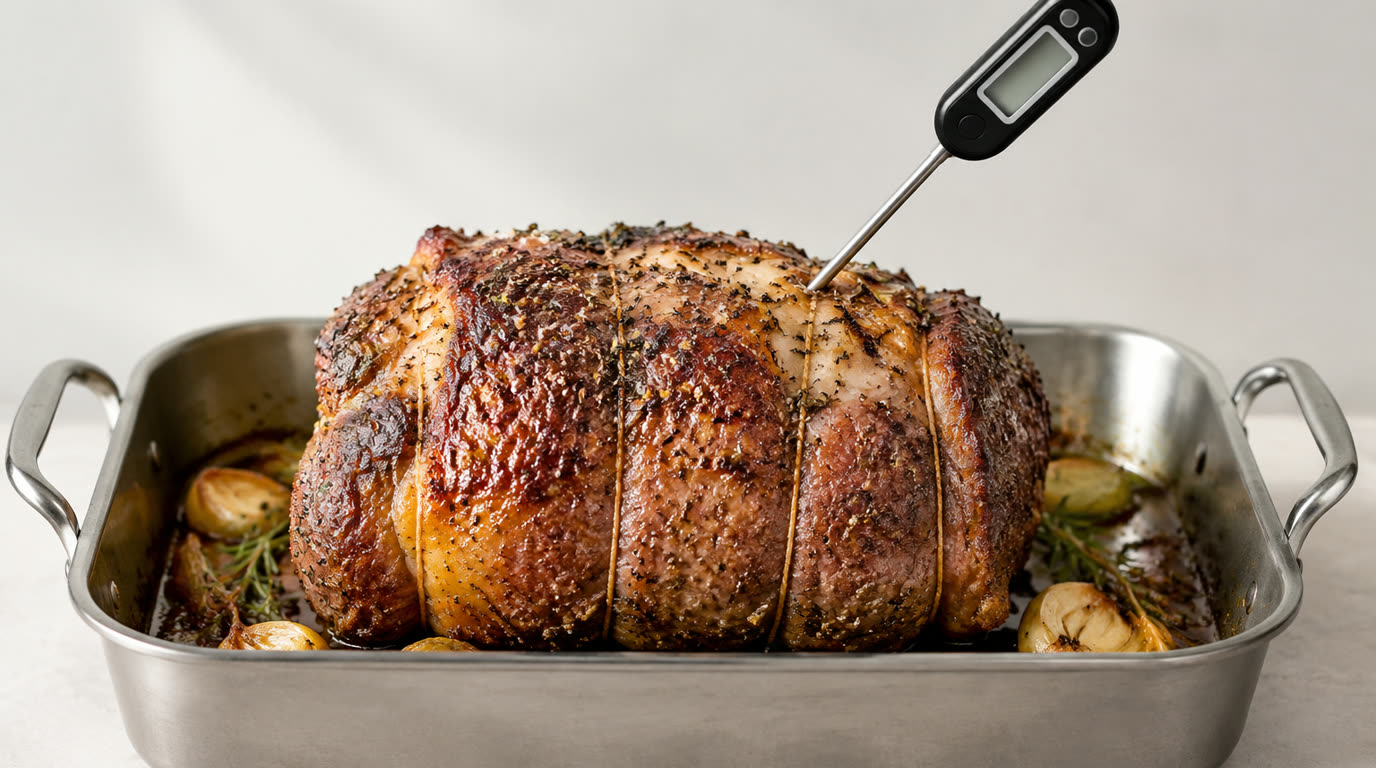
Spend this, not more: The honest spend band in this category is $39 to $215 for a working thermometer. The maker’s catalog quotes: $39.20 on the DOT alarm unit, $69.00-class on the ChefAlarm, $89.00 on the Classic Thermapen, $115.00 to $119.00 on the Thermapen ONE and NANO, $189.90 on the build-your-own RFX wireless kit, and $215.20 to $295.00 on the lab-class RTD meters. The accuracy line moves with the price, and the maker prints each figure — ±0.7 F on the Classic, ±0.1 F on the Precision Plus — directly on the page.
Quick answer:
- ThermoWorks Thermapen NANO: The maker’s newest instant-read at $119.00, quoting a 0.4-second read via the maker’s own ThermaBoost naming.
- ThermoWorks Thermapen ONE (Limited Edition): The maker’s benchmark ONE body at $115.00 in its limited-edition color line.
- ThermoWorks Classic Thermapen: The maker’s original super-fast body at $89.00 with the ±0.7 F accuracy and NSF certification quoted on the page.
- ThermoWorks DOT alarm thermometer: The maker’s leave-in alarm unit at $39.20 on sale (compare $49.00), reading to 572 F with Pro-Series probes.
- ThermoWorks build-your-own RFX kit: The maker’s wireless probe system at a $189.90 base, configuration dependent on the maker’s kit page.
How much should you spend? The maker’s catalog splits the line by accuracy class and by what the unit does with the number. Instant-read pens run $89.00 to $119.00; leave-in alarm units run $39.20 to $69.00; the wireless probe kits start at $189.90; and the lab-class RTD meters run $215.20 to $295.00 with NIST-traceable certificates included by the maker’s statement. The honest sum is one instrument for the kitchen and one for the pit — the maker prices them as different tools rather than one graded family.
First: Answer These 3 Questions
- What does ±0.7 F versus ±0.1 F actually buy? The maker publishes both figures on the product pages: ±0.7°F on the Classic Thermapen and ±0.1°F on the Precision Plus RTD meter. In cooking terms the instant-read figures are already below the doneness bands most kitchens use — pull-temperature windows span several degrees — and the ±0.1 F class is a lab instrument whose NIST-traceable certificate the maker includes on the page. The honest pay step from $89 to $215 is calibration discipline, not steak outcome.
- Speed figures: 0.4 second or 2-3 seconds? The maker quotes 0.4 seconds on the NANO’s title via their ThermaBoost naming, 2-3 seconds on the Classic, and under-two-seconds language on their newer budget bodies. The honest read: at these speeds the thermal equilibrium of the probe tip — where it sits — matters more than the spacing between figures the maker prints, and the maker’s own usage guidance is on each page rather than a generic rule.
- Instant-read or leave-in alarm? It is the shape of the cook. Instant-read bodies — the Thermapen family at $89.00 to $119.00 — check and pull, the tool for steaks and lifting by feel. Leave-in units — the DOT at $39.20, the ChefAlarm at $69.00 — ride the roast and alarm at a target, tracking progress the maker quotes in degrees up to 572 F on the DOT’s page. Most cooking uses both, and the maker prices them as separate instruments rather than one super-tool.
- What does NIST-traceable mean on the page? It is the maker’s own calibration statement: the certificate ties a unit’s readings to a national standard, and the maker includes the certificate on the lab-class meters by their page text and sells add-on calibration for the kitchen units. The honest read for a home cook: traceability is the paperwork of trust, and the kitchen-class accuracy figures (±0.7 F) already sit below doneness windows without the certificate.
- Why is wireless worth $189.90? The maker’s RFX line quotes it as the long-cook system: a probe that rides the cook and a wireless link rather than a cable to a console. The build-your-own kit page prices the base at $189.90 and scales with the block configuration the maker lists. The honest buyer is the long-smoke household; a weeknight steak never opens the class and the $89.00 instant-read covers it.
5 Checks Before You Buy
| Check | Target | Plain English |
|---|---|---|
| Accuracy class | ±0.7 F kitchen / ±0.1 F lab, maker-quoted | Every accuracy figure here is printed on the maker’s own pages; no figure is extrapolated from another body. |
| Read speed | Under 2 seconds on current maker titles | The maker quotes speeds per body — 0.4 second on the NANO, 2-3 on the Classic — per their own naming. |
| Certifications | NSF and NIST statements where made | The maker carries NSF certification wording on the Classic and NIST-traceable certificates on the lab meters by their own pages. |
| Temperature range | -58 to 572 F class on cooking units | The maker’s published range covers the cooking ladder; lab meters quote wider ranges on their pages. |
| Price on the page | $39.20 to $215.20, maker-quoted | All figures are the maker’s catalog prices with sale or compare-at marks where the maker shows them. |
| Waterproofing | IP67 where the maker states it | The maker’s waterproof claims are on their newer bodies’ pages; older bodies quote splash design per their listing. |
8 Picks (By Speed, Accuracy & Role)
ThermoWorks Thermapen NANO – The Maker’s Newest Speed
Price: $119.00 on the maker’s catalog, in stock.
Why: It is the maker’s newest instant-read at $119.00, quoting a 0.4-second read on their own ThermaBoost naming — the fastest figure the maker publishes. The honest role: the kitchen bench tool for a cook who wants the maker’s top speed figure without stepping to the wireless class.
Honest take: The speed name and figure are the maker’s own title, and $119.00 is their in-stock catalog price. Accuracy follows the maker’s published spec for the body. Downside: It sits $4 above the Limited Edition ONE at $115.00 on the same catalog, and the honest comparison is the maker’s own body generation rather than a feature gap.
ThermoWorks Thermapen ONE (Limited Edition) – The Benchmark Body
Price: $115.00 on the maker’s catalog, in stock.
Why: It is the maker’s benchmark instant-read in the limited-edition color run at $115.00: temperatures to 572 F, the auto-rotating design the maker quotes, and the 5-year warranty figure their pages carry. The honest role is the standard the rest of the line prices against.
Honest take: The limited-edition figure, the color framing and the warranty line are the maker’s catalog statements, in stock. The ONE body’s published accuracy is the maker’s own page figure. Downside: The standard ONE body usually sits lower on the maker’s catalog; the limited edition is the color premium the maker prices, not a performance step.
ThermoWorks Classic Thermapen – The Original Body
Price: $89.00 on the maker’s catalog (sale figure), compare $99.00.
Why: It is the maker’s original Super-Fast body at $89.00 on sale: ±0.7 F accuracy, 2-3 second reads, NSF certification and a 2-year warranty — all quoted on the maker’s own page. The honest role is the price-performance entry of the Thermapen family.
Honest take: The accuracy figure, the NSF wording, the warranty and the sale price are the maker’s catalog lines. The maker’s own review citations appear on their page as third-party wording. Downside: Battery life sits at 1,500 hours by the maker’s figure — a step under the ONE’s longer rating — and the maker prices that difference in the family ladder.
ThermoWorks DOT alarm thermometer – The Leave-In Alarm
Price: $39.20 on the maker’s catalog, on sale (compare $49.00).
Why: It is the maker’s simplest leave-in alarm at $39.20 on sale: reading to 572 F with Pro-Series probes by the maker’s listing, a large display quoting current and target side by side. The honest role is the roast and the long cook — the tool that watches so the cook does not.
Honest take: The sale price, the strike-through and the range figures are the maker’s catalog statements, in stock. Probes are separate SKUs the maker sells on the same catalog. Downside: It is an alarm on a wire, not an instant-read, and a steak-check kitchen still wants the pen family; the maker prices the two roles apart deliberately.
ThermoWorks ChefAlarm – The Alarm Upgrade
Price: $69.00-class on the maker’s catalog.
Why: It is the maker’s feature-class alarm at a $69.00 quote: the body reviewers cite when a DOT’s simplicity grows up — timer functions and alarms quoted on the maker’s own page. The honest role is the oil-and-candy-and-roast household that wants the alarm plus the extras.
Honest take: The price and the feature framing are the maker’s catalog lines. The page carries the full spec set, and this guide quotes only what the maker states. Downside: It is $30 above the DOT’s sale figure for the feature set, and a plain-roast household never opens the extra functions the maker prices there.
ThermoWorks build-your-own RFX kit – The Wireless Entry
Price: $189.90 base on the maker’s kit page (configuration dependent).
Why: It is the maker’s wireless probe system at a $189.90 build-your-own base: a probe riding the cook without a cable to a console, quoted on the maker’s kit page as the RFX line. The honest role is the long smoke where the cable is the bottleneck.
Honest take: The kit pricing is the maker’s own page figure, and configurations scale on their kit page rather than a fixed bundle. The maker’s wireless claims are page statements. Downside: It is the highest figure in the kitchen band, and a weeknight grill never opens the wireless class; the Classic at $89.00 covers the same steaks.
ThermoWorks Precision Plus – The Lab Class
Price: $215.20 on the maker’s catalog, on sale (compare $269.00).
Why: It is the maker’s lab-class RTD meter at $215.20 on sale: ±0.1 F accuracy and an included NIST-traceable certificate quoted on the page, with probes sold separately by the maker’s own design. The honest role is calibration discipline — a reference instrument rather than a kitchen pen.
Honest take: The accuracy figure, the certificate inclusion and the probe-separate design are the maker’s catalog statements, in stock. The compare-at figure is the maker’s own strike-through. Downside: It is a lab instrument by the maker’s own framing, and a kitchen-only buyer pays the certificate price without the lab’s purpose; the Classic does the cooking.
ThermoWorks TempTest Plus – The Pro Meter
Price: $295.00 on the maker’s catalog, in stock.
Why: It is the maker’s pro-handheld meter at $295.00: the top figure in this selection, quoted on their page as the TempTest Plus body in the maker’s professional line. The honest role is the pitmaster-adjacent and calibration-first buyer the maker prices above the lab RTD class.
Honest take: The price and the professional framing are the maker’s catalog statements, in stock. Full spec figures live on the maker’s page rather than a summary here. Downside: It is the top of the maker’s price ladder on this page, and a home buyer’s $89.00 Classic covers the cooking outcome without the pro-class metering.
One-Line Decision Table
| Your situation | Pick this |
|---|---|
| Steaks and everyday instant checks | The Classic Thermapen at $89.00 sale — ±0.7 F and NSF wording on the maker’s own page. |
| The maker’s benchmark with color style | The Thermapen ONE Limited Edition at $115.00. |
| The maker’s newest speed tier | The Thermapen NANO at $119.00 — the 0.4-second ThermaBoost body. |
| Roasts, smoking and long cooks | The DOT at $39.20 sale (compare $49.00), reading to 572 F. |
| Alarm plus timer functions | The ChefAlarm at the $69.00 class quote. |
| Wireless long-cook monitoring | The build-your-own RFX kit from $189.90 on the maker’s kit page. |
Running Costs: What You Pay After You Buy
The purchase price is only part of the story. Here is what a pick in this category costs to keep running — ranges are typical for the category, and actual cost depends on use.
| Item | What it is | How often | Typical cost |
|---|---|---|---|
| The thermometer itself | The one-time price | Once | $39.20 to $295.00 across the eight picks, from the maker’s own catalog |
| Probes for the alarm bodies | Separate SKUs by maker design | Once | The maker sells Pro-Series probes on the same catalog at their own figures |
| Calibration certificates | The lab class’s paper | Once | Included on the lab meters by maker statement; add-on calibration is the maker’s own catalog service |
| Batteries | The body’s consumable | Yearly scale | The maker quotes battery-life figures per body — 1,500 hours class on the Classic — and sells spares |
| Replacement probes | The wireless system’s consumable | As needed | The maker prices the probe line separately from the meters on their catalog |
Skip It If… (When Buying Nothing Is the Right Call)
This is the section most buying guides leave out. If any of these describe you, the honest advice is to keep your money.
- You want a $12 kitchen pen. The maker prices their instant-read class from $39.20 up, and bodies below the maker’s class price carry their own calibration language, theirs to quote.
- You want an oven-air probe in the kitchen pens. The air-probe class is the maker’s separate line on the same catalog, sold under their air-gas figures.
- You want free calibration for life. The maker prices an accredited calibration as a catalog service on their page; no pick bundles it free.
- You want a needle probe included in a meter box. The maker states probes sold separately on the lab meters by their own design.
- You want an instant-read that also alarms. The maker prices the roles apart — the pen checks, the alarm watches — and neither page quotes a false two-in-one.
- You want a wireless probe on wired pricing. The maker’s RFX class starts at $189.90 on the kit page; the wired alarm band sits below it at $39.20 to $69.00.
FAQ
How fast does a Thermapen actually read? The maker quotes per body: 0.4 seconds on the NANO title via their ThermaBoost naming, 2-3 seconds on the Classic figure, and the ONE in between by the maker’s own page. At these speeds the probe tip’s placement dominates the reading — the maker’s usage guidance on each page is the honest authority, and no body here needs a countdown timer in practice.
Why pay $215 for a thermometer? The Precision Plus is the maker’s lab-class RTD meter: ±0.1 F accuracy, a NIST-traceable certificate included by their page, and probes as separate SKUs. The honest read is that this is a reference instrument — the unit the kitchen pens get checked against — and its price is calibration discipline rather than cooking outcome, which the $89.00 figure already covers.
What does NSF certification mean here? It is the maker’s own published wording on the Classic Thermapen page — NSF certification quoted alongside the 2-year warranty and the England-made wording. The claim’s scope is the maker’s statement about the body, and where a user wants the fuller certification context it lives on the NSF side rather than in a summary on this page. The kitchen reality: the certified accuracy figure stays ±0.7 F on that same page.
Can one thermometer cover both instant and leave-in roles? The maker prices the roles apart deliberately: the pen bodies check and pull, the DOT and ChefAlarm ride the cook and alarm. Their pages frame the two as different instruments — alarm units display current and target, pens display the read. Most kitchens run both, and the honest budget is one of each: $89.00 plus $39.20 on this same catalog.
What is the RFX line’s point? The maker’s wireless probe system: a probe that rides the cook with a wireless link rather than a cable to a console, quoted on their kit page with a build-your-own base at $189.90. The honest buyer rides long smokes where the cable is the design constraint; weeknight cooking stays on the $39.20 to $119.00 band without the wireless step.
Do battery figures matter between bodies? The maker quotes battery life per body — the Classic’s 1,500-hour figure sits on their page, and the NANO and ONE bodies quote their own ratings. The honest budget: battery life is the body’s consumable story, and maker pages — rather than a cross-body average — are where the figures live for each unit here.
How does a home cook verify accuracy? The maker’s own usage pages publish the ice-water and boiling-water check figures — the two stable points at either end of the cooking band. A pen that reads both within its published accuracy class is working within spec, and the maker’s read-back figures on each page are the honest reference. This page quotes only the maker’s figures rather than a measured check of its own.
Why does this line rank one maker across the band? Because the maker covers the full role spread — instant pens, wired alarms, wireless systems, lab meters — with each figure printed on each body’s own page, from $39.20 to $295.00. The honest alternative would be collating equal maker-page quotes across several makers, and that work is the same standard applied to the rest of this site’s categories.
Sources & Data
Prices in this guide are the figures the maker publishes on its own product pages, all checked and reachable on the publish date.
- ThermoWorks catalog — Thermapen NANO $119.00, Limited Edition Thermapen ONE $115.00, TempTest Plus $295.00 and sale figures quoted from the maker’s own catalog.
- ThermoWorks Classic Thermapen product page — ±0.7 F accuracy, NSF certification wording, 2-year warranty and $89.00 sale figure quoted from the maker’s page.
- ThermoWorks DOT product page — Alarm thermometer to 572 F, $39.20 sale (compare $49.00) quoted from the maker’s page.
- ThermoWorks Precision Plus product page — ±0.1 F RTD meter with NIST-traceable certificate, $215.20 sale (compare $269.00) quoted from the maker’s page.
- ThermoWorks build-your-own RFX kit page — RFX wireless kit base $189.90, configuration dependent, quoted from the maker’s kit page.
Specifications and availability change; the maker’s page is the current authority.
Real Pitfalls to Avoid
- Paying the lab-class figures for kitchen work. The ±0.1 F class is the maker’s calibration instrument, and doneness windows sit well inside the $89.00 body’s ±0.7 F.
- Reading speed names but placing the probe carelessly. The maker’s own usage guidance covers tip placement; speed figures assume it.
- Skipping the two-point check. The maker publishes the ice-water and boiling figures per body, and the honest accuracy check is theirs before any workaround.
- Assuming a sale strike-through is a permanent price. The maker’s sale figures moved between checked dates, and the compare-at line is the maker’s own framing.
- Buying a meter without a probe. The maker states probes sold separately on the lab bodies, and the honest total is the meter plus the probe SKU.
- Mixing instant-read with alarm roles in one purchase. The maker prices the roles as separate instruments, and neither page quotes a false combined unit.
Going deeper: A thermometer is the pit work of the maker-quoted grill band; the grill itself lives in the tools category. Our bristle-free grill brush guide applies the same official-page method to the safety-side purchase, and the kitchen scale guide covers the same kitchen’s drying band. The ranking method for every category is written up in how we rank products.
Update note: refreshed quarterly. Prices checked Sep 2026 – verify at checkout. Rankings based on published manufacturer specifications (read speed, accuracy class, temperature range, waterproofing), vendor prices on official pages, not paid placement.