
Disclosure: Buytoplab is reader-supported. If you buy through links on this page we may earn a small commission at no extra cost to you. We never accept payment for a ranking or a review, and we publish the downsides as plainly as the upsides. How we rank products.
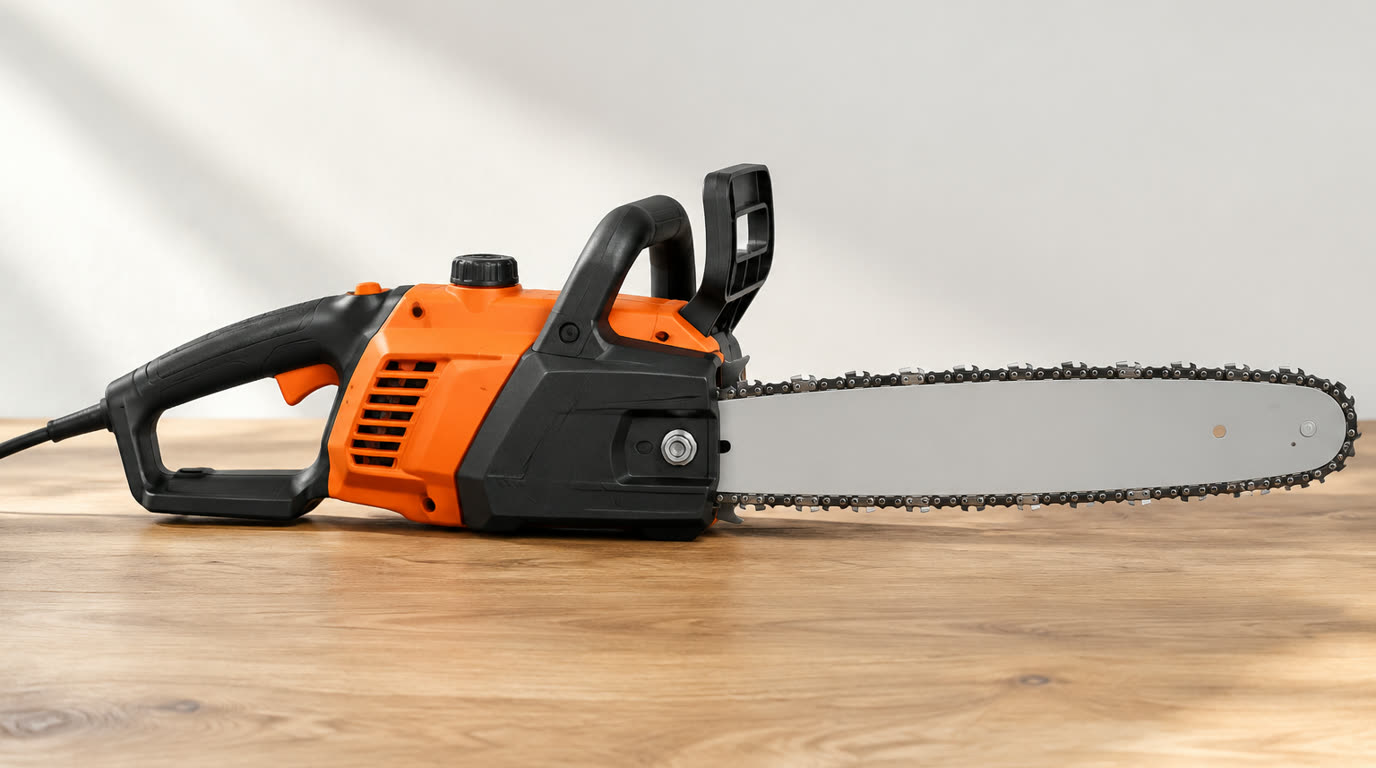
Spend this, not more: The honest spend band in this category is $79 to $199 for a working saw. The maker’s catalog quotes: $79.00 to $99.00 for the corded handheld bars at 14 to 18 inches, $109.00 to $119.00 for the two corded pole units, $149.00 for the 20-volt cordless 10-inch kit, $159.00 for the alligator-lopper style, and $199.00 for the 40-volt cordless 12-inch kit. The feature that changes at the top of the band is the voltage class and the bar length, not the cutting principle.
Quick answer:
- BLACK+DECKER LCS1240 (40V, 12-inch kit): The maker’s top cordless kit at $199.00, whose catalog title carries the 12-inch bar and the 40-volt class.
- BLACK+DECKER LLP120 (20V lopper): The maker’s alligator-lopper style chainsaw at $159.00, a scissor-jaw body rather than a bar-and-chain.
- BLACK+DECKER LCS1020 (20V, 10-inch kit): The maker’s cordless entry kit at $149.00, pack and charger in the box by catalog quote.
- BLACK+DECKER PP610 (corded pole saw): The maker’s 9.5-foot corded pole saw at $119.00, the reach tool in the corded band.
- BLACK+DECKER CS1518 (corded, 18-inch): The maker’s longest corded bar at $99.00, an 18-inch bar on a 15-amp motor class.
How much should you spend? The maker’s catalog splits the electric band into three tool styles. The corded handheld units run $79.00 to $99.00 for bars of 14 to 18 inches; the corded pole units run $109.00 to $119.00 for high branches in reach; and the cordless kits run $149.00 and $199.00 with packs and chargers in the box, the lopper body sitting between at $159.00. The honest sum for one season is the saw plus the maker’s own chain spare, both on the same catalog.
First: Answer These 3 Questions
- What bar length matches the job? The maker publishes the ladder this page ranks: 10 inches for pruning, 14 to 16 inches for rounds and small limbs, 18 inches for the heavy corded class, and the pole bodies for overhead reach. The honest rule in their own figures: a bar slightly longer than the wood through it keeps the nose out of the cut, and a much longer bar adds the weight the maker prices on every page.
- Why is one pick a lopper instead of a saw? Because the maker builds both bodies, and the honest difference is geometry rather than power. The alligator-lopper unit takes a branch between two scissor jaws with a chain driving the cut — the right shape for a clean pruning cut on a standing limb, and a clumsy shape for bucking firewood. A buyer whose jobs are pruning reads the lopper; firewood buyers read the bars.
- Corded or cordless for a saw? It is the same reach decision, sharpened by amps. The corded tools quote unlimited runtime at $79.00 to $119.00 with an outlet in reach; the cordless kits price pack and charger inside $149.00 to $199.00 and end the session where the pack drains. A backyard with a wall outlet never buys the pack twice, and the maker’s own ladder prices the freedom exactly $50 above the equivalent corded body.
- What does the pole saw reach? The maker publishes the reach figures on the two pole bodies: the 9.5-foot unit and the 10-inch bar one. Overhead limbs up to roughly one story sit inside their working band without a ladder, and the corded power paths mean the session does not end in the canopy. The honest limits are the cord and the printed reach; sparks of ambition higher than one story are the arborist’s job by every maker’s own safety note.
- Is the 40-volt kit worth $80 over the 10-inch cordless? The maker prices the step deliberately: $199.00 buys the 12-inch bar on the 40-volt class, $149.00 buys the 10-inch on 20 volts. The honest read is that the $50.00 gap covers bar length plus platform, and a firewood buyer’s thicker rounds sit inside the 40-volt kit’s published class. A pruning-first yard never opens the step and keeps the $50.
5 Checks Before You Buy
| Check | Target | Plain English |
|---|---|---|
| Bar length | 6 to 18 inches, quoted by the maker | Every bar figure is the maker’s own catalog spec; the 18-inch corded and 12-inch 40-volt are the long ends of their ladders. |
| Power class | Amps for corded, volts for kits | Corded units quote amp classes (6.5A/7A/8A/12A/15A in this line); the kits quote 20V and 40V families by the maker’s own platform names. |
| Tool style | Handheld, pole, or lopper | The maker separates the three styles in the catalog, and each sku’s page carries its own style words. |
| Kit content | Pack and charger on kit SKUs | The cordless picks quote battery and charger included on the maker’s pages. |
| Price on the page | $79.00 to $199.00, maker-quoted | All figures are the maker’s catalog prices with in-stock marks. |
| Chain consumable | Sold on the same catalog | The maker lists replacement chains and blades in the catalog; none of the kits prices a chain plan. |
8 Picks (By Bar, Power & Style)
BLACK+DECKER LCS1240 40V 12-inch kit – Top Cordless Kit
Price: $199.00 on the maker’s catalog, in stock.
Why: It is the maker’s top cordless kit at $199.00: the 12-inch bar on the 40-volt class, with the pack and charger included by their listing. The honest role is the cordless end of firewood rounds — the bar length and the platform voltage are both the maker’s top figures on this page.
Honest take: The bar and voltage figures plus the kit contents are the maker’s catalog lines, in stock at their published figure. The 40-volt family carries its own packs separate from the 20-volt tools. Downside: It is the highest figure in the band, and a pruning-focused yard never opens the 12-inch class; the 10-inch 20-volt kit below saves $50 on the same catalog.
BLACK+DECKER LLP120 20V alligator lopper – The Lopper Style
Price: $159.00 on the maker’s catalog, in stock.
Why: It is the maker’s scissor-jaw chainsaw body at $159.00 on the 20-volt family, with the pack and charger in the kit by their listing. For a standing-branch pruning job, the jaw shape holds the wood and cuts clean — a style the bar saws here do not offer, and the honest reason it occupies its own line.
Honest take: The style name, the 20-volt family and the kit content are the maker’s catalog words. The price sits $10 above the 10-inch bar kit, so the decision between them is style, not cost. Downside: It is the wrong shape for bucking firewood by the maker’s own style boundary, and pruning-only buyers may still prefer the cheaper bar kit at $149.00.
BLACK+DECKER LCS1020 20V 10-inch kit – The Cordless Entry
Price: $149.00 on the maker’s catalog, in stock.
Why: It is the maker’s cordless entry at $149.00: a 10-inch bar on the 20-volt family, pack and charger in the box. The honest role is pruning and small rounds on a yard where the outlet cannot reach — $50 under the 40-volt kit for the shorter bar and the smaller pack class.
Honest take: The kit contents, the bar figure and the 20-volt platform are the maker’s catalog lines, in stock. The pack cross-swaps within the 20-volt POWERCONNECT family by their own claim. Downside: Thicker rounds sit outside the 10-inch bar’s honest class, and the maker prices the 40-volt step at exactly $50 above on the same page.
BLACK+DECKER PP610 corded pole saw – The Pole Reach
Price: $119.00 on the maker’s catalog, in stock.
Why: It is the maker’s 9.5-foot corded pole saw at $119.00, the longer reach of the two pole bodies. Overhead limbs inside its published reach trim without a ladder, and the corded path keeps the session open for as long as the tree needs.
Honest take: The reach figure and the price are the maker’s catalog lines, in stock. It is a pole style by their own catalog classification rather than a handheld with an attachment. Downside: It is $20 above the second pole body, and the shorter pole unit at $109.00 covers the lower overhead band the same corded path serves.
BLACK+DECKER BECSP601 corded pole chainsaw – The Shorter Pole Body
Price: $109.00 on the maker’s catalog, in stock.
Why: It is the maker’s pole-unit at $109.00 with the 10-inch bar class quoted, the entry pole body in the corded band. The honest role is overhead pruning within arm-and-again reach, priced $10 below the 9.5-foot pole saw on the maker’s own ladder.
Honest take: The pole style and the price are the maker’s catalog statements, in stock. The amp class follows their listing rather than a vendor claim. Downside: Reach is the pole band’s shorter figure, and limbs at the top of the maker’s 9.5-foot quote are the $119.00 body’s job.
BLACK+DECKER CS1518 corded 18-inch 15-amp – The Long Corded Bar
Price: $99.00 on the maker’s catalog, in stock.
Why: It is the maker’s longest corded bar at $99.00: an 18-inch bar on the 15-amp class, priced $100 below the top cordless kit for the same bar-plus figure. The honest role is corded firewood rounds — the biggest bar in the band with unlimited runtime, outlet assumed.
Honest take: The bar and amp figures plus the price are the maker’s catalog lines, in stock. No pack is in the purchase and no recharge ends a session by the maker’s design. Downside: The corded path is the reach condition, and a woodlot beyond one extension cord is the cordless buyer; the maker prices the cordless freedom at $100 up.
BLACK+DECKER CS1216 corded 16-inch 12-amp – The Mid Corded Bar
Price: $89.00 on the maker’s catalog, in stock.
Why: It is the maker’s mid corded body at $89.00: a 16-inch bar on the 12-amp class, $10 below the 18-inch unit for the shorter bar. The honest role is rounds and limbs at backyard scale, where the 16-inch figure covers most cuts a log-holder sees.
Honest take: The figures and the price are the maker’s catalog statements, in stock. The corded class ties the session to the outlet rather than to a pack, and the maker’s page is the amp authority. Downside: Two inches under the long corded bar, and rounds at the top of the 18-inch body’s class need the $10 step the maker prices.
BLACK+DECKER BECS600 corded 14-inch 8-amp – The Entry Corded Bar
Price: $79.00 on the maker’s catalog, in stock.
Why: It is the maker’s corded entry at $79.00: a 14-inch bar on the 8-amp class, the lowest published figure in this selection. The honest role is light cutting around the garden — limbs, stakes, small rounds — at an entry figure the maker prices with the same corded design as the larger units.
Honest take: All figures are the maker’s catalog lines, in stock. The unit is the entry bar of their own format ladder rather than a downsized kit. Downside: The 8-amp class and 14-inch bar are the line’s smallest published powers, and heavy rounds sit outside what their own figures serve.
One-Line Decision Table
| Your situation | Pick this |
|---|---|
| Cordless firewood rounds | The LCS1240 at $199.00 — the maker’s 12-inch bar on the 40-volt kit. |
| Clean pruning on standing branches | The LLP120 at $159.00, the scissor-jaw body the bar saws do not offer. |
| Cordless pruning on a budget | The LCS1020 at $149.00 — the 10-inch bar on the 20-volt family. |
| Overhead limbs, longest pole | The PP610 at $119.00 with the maker’s 9.5-foot reach quote. |
| Corded firewood at the lowest per-bar figure | The CS1518 at $99.00, the 18-inch bar on the 15-amp class. |
| Garden-scale cuts at the entry figure | The BECS600 at $79.00 — the maker’s smallest corded body. |
Running Costs: What You Pay After You Buy
The purchase price is only part of the story. Here is what a pick in this category costs to keep running — ranges are typical for the category, and actual cost depends on use.
| Item | What it is | How often | Typical cost |
|---|---|---|---|
| The tool itself | The one-time price | Once | $79.00 to $199.00 across the eight picks, from the maker’s own catalog |
| Spare chains | The category’s true consumable | Per season | The maker lists chain replacements on the same catalog; the pole units take their own figures |
| Bar-and-chain oil | The saw’s consumable | Per use | Quoted by the maker’s page where stated; none of the kits prices an oil plan |
| A second pack | Cordless runtime ahead | Once | Priced inside the kit figures on the maker’s catalog; corded units need none |
| An extension cord | Corded tier’s reach cost | Once | An outdoor-rated cord is the corded bodies’ own assumed condition at $79.00 to $119.00 |
Skip It If… (When Buying Nothing Is the Right Call)
This is the section most buying guides leave out. If any of these describe you, the honest advice is to keep your money.
- You want a gas saw for milling or felling. Every pick here is electric by the maker’s titles, corded and cordless both; the fuel class is a different family.
- You want cordless firewood at entry figures. The maker prices the honest step: cordless rounds work is the $199.00 kit’s published class.
- You want one pack for saw and drill. The 40-volt saw kit and the 20-volt drill family are separate platforms on the maker’s catalog, and no kit bridges them.
- You want a pole saw in this band minus the pole. The pole bodies are the maker’s own style class; a handheld bar is the shape the other seven picks carry.
- You want a safety-feature bundle sheet. No pick here quotes a protective accessory package beyond the maker’s own listing; the user manual on their page is the safety authority.
- You expect a chain included for the lopper. The lopper body runs its own blade class, and the maker’s catalog lists its replacement separately from bar chains.
FAQ
Are electric chainsaws strong enough for firewood? The maker’s published ladder answers the range: the 18-inch corded unit at 15 amps is the strongest corded figure on this page, and the 40-volt 12-inch kit is their top cordless class. Rounds within those bar lengths are inside what their own figures serve; milling or tree felling is outside every saw here by the maker’s own design intent.
What does an alligator lopper do that a bar saw cannot? The jaw geometry: the maker’s lopper body clamps the branch between two blades driven by a chain, which holds the wood while it cuts. The honest use is a clean cut on a standing limb — the bar saw’s nose wants free movement, the lopper’s jaw wants a held branch. Bucking firewood wants the bar; pruning a hedge line wants the jaws, and the maker sells both bodies.
How high does a pole saw reach? The maker publishes the figure on the PP610: 9.5 feet of pole-saw reach, with the second pole body at the shorter end of the band. Both are corded, so the canopy session does not pause to recharge. The honest limit is one story plus the printed reach — higher limbs are the arborist’s own trade by every maker’s safety framing.
Why is the cordless kit $50 more than the 10-inch corded pole? Because the maker’s $149.00 buys a pack and charger inside the kit and the freedom to leave the outlet behind; the $119.00 pole body buys reach with an outlet condition. The comparison is class to class rather than price to price, and the maker’s catalog prints the terms on each line rather than bundling an advantage silently.
Does the 40-volt pack work in the 20-volt tools? No by the maker’s own platform design: the catalog keeps the 20-volt POWERCONNECT family and the 40-volt class as separate ladders, each with its own packs and chargers. The honest check before any kit purchase is the platform line on their page — a household that already owns 20-volt packs reads the 20-volt saw, and 40-volt owners read the $199.00 kit.
How often does a chain need sharpening or replacing? The maker sells chains as consumables on the same catalog rather than quoting a change interval, and their product pages carry the care figures. The honest read is that the saw’s published power class meets the wood it is rated for — cutting into the bar’s excess is where chains wear first, and the maker’s own manual is the care authority on their catalog.
Why are amps and volts compared per class? Because the maker publishes the two ladders separately — corded tools in amps, kits in volts — and the honest conversion across brands is not a published figure anywhere in this line. The page-by-page read is safer than a shop-floor rule of thumb: a 15-amp corded body and a 40-volt kit sit at different price levels on the same catalog for reasons each page states.
Which saw needs the least maintenance? The lopper body is the maker’s own answer on this line: a scissor-jaw unit whose chain is enclosed in the jaw design, versus a bar-and-chain exposed along its length. The $159.00 figure carries that design at the 20-volt family’s kit price. It is a style claim the maker publishes, not a maintenance schedule, and their pages remain the care authority.
Sources & Data
Prices in this guide are the figures the maker publishes on its own catalog pages, all checked and reachable on the publish date.
- BLACK+DECKER LCS1240 product page — 40V 12-inch cordless kit, $199.00 quoted from the maker’s catalog.
- BLACK+DECKER LLP120 product page — 20V alligator lopper chainsaw, $159.00 quoted from the maker’s catalog.
- BLACK+DECKER LCS1020 product page — 20V 10-inch cordless kit, $149.00 quoted from the maker’s catalog.
- BLACK+DECKER PP610 product page — Corded 9.5-foot pole saw, $119.00 quoted from the maker’s catalog.
- BLACK+DECKER BECSP601 product page — Corded 10-inch pole chainsaw, $109.00 quoted from the maker’s catalog.
- BLACK+DECKER CS1518 product page — Corded 18-inch 15-amp, $99.00 quoted from the maker’s catalog.
- BLACK+DECKER CS1216 product page — Corded 16-inch 12-amp, $89.00 quoted from the maker’s catalog.
- BLACK+DECKER BECS600 product page — Corded 14-inch 8-amp, $79.00 quoted from the maker’s catalog.
Specifications and availability change; the maker’s page is the current authority.
Real Pitfalls to Avoid
- Buying the longest bar for the smallest jobs. The maker prices the ladder from $79.00, and a pruning yard never opens the 18-inch class.
- Assuming pole reach replaces ladder safety. The maker’s own figures bound the pole bodies at published reach, and higher canopy is the professional’s trade.
- Skipping the corded class on principle. An outlet in reach buys the 18-inch bar at $99.00 — $100 under the equivalent cordless figure on the same catalog.
- Expecting one pack family to cover saw and drill. The maker separates 20-volt and 40-volt on their own catalog, and no kit here bridges the classes.
- Reading cut-capacity claims the pages did not print. Each maker page carries its own figures, and this guide quotes none it cannot source.
- Buying the lopper for firewood by mistake. The maker’s own style words make the boundary; firewood rounds belong to the bar saws, not the jaw.
Going deeper: The chainsaw covers standing wood; the rest of the yard line covers the ground its branches fall on. Our robot mower guide applies the same official-page method to the lawn, and the wet-dry vacuum mop guide shows the same method on indoor cleaning. The ranking method for every category is written up in how we rank products.
Update note: refreshed quarterly. Prices checked Sep 2026 – verify at checkout. Rankings based on published manufacturer specifications (guide bar length, power class, voltage, tool style), vendor prices on official pages, not paid placement.